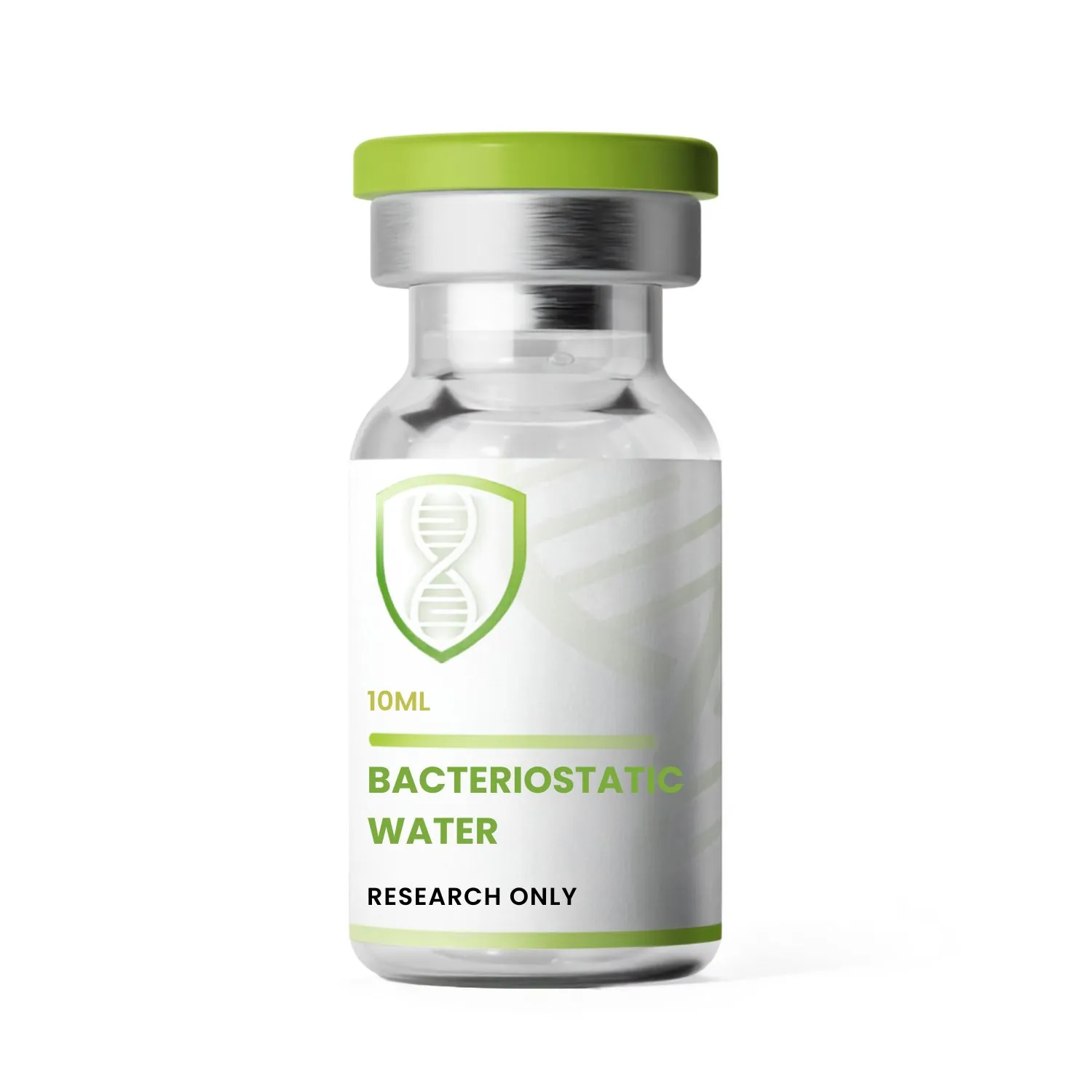
What Is Bacteriostatic Water (0.9% Benzyl Alcohol)?
Bacteriostatic water is sterile water designed for laboratory and scientific research applications. It contains 0.9% benzyl alcohol as a preservative. Benzyl alcohol helps prevent the growth of most bacteria, allowing the solution to remain sterile under controlled conditions even when accessed multiple times. Bacteriostatic water is widely used in research laboratories as a preferred solvent for reconstituting lyophilized peptides, proteins, and other experimental compounds. Unlike standard sterile water intended for single use, bacteriostatic water supports repeated withdrawals without compromising solution integrity when handled properly. Researchers commonly use bacteriostatic water when preparing multi-dose research solutions in cell culture studies, in vitro assays, and preclinical experimental models requiring contamination control and consistency.
Composition and Ingredients
Bacteriostatic water consists of sterile, highly purified non-pyrogenic water combined with 0.9% benzyl alcohol acting as a preservative. This formulation meets laboratory solvent standards used in controlled research environments. At this concentration, benzyl alcohol inhibits bacterial growth while maintaining compatibility with most research compounds. This allows experimental solutions to remain stable during repeated use. The formulation produces a clear isotonic solution suitable for dissolving peptides, proteins, and other lyophilized materials used in multi-dose research preparations while ensuring consistent laboratory handling.
Property and Mechanism of Preservation
Bacteriostatic water is a clear, colorless, and odorless solvent with a neutral pH, making it suitable as a laboratory-grade solvent. It is non-pyrogenic and isotonic, supporting osmotic conditions compatible with many research preparations. Preservation occurs through the inclusion of 0.9% benzyl alcohol, which inhibits bacterial reproduction by disrupting microbial cell membrane activity. This action is bacteriostatic rather than bactericidal, meaning bacterial growth is prevented rather than organisms being directly destroyed. The presence of benzyl alcohol helps inhibit microbial growth during repeated access, although proper aseptic handling remains essential to minimize the risk of contamination. In contrast, standard sterile water lacks preservatives and is typically limited to single-use applications.
Research Applications
Bacteriostatic water is extensively used in laboratory environments for preparing and storing research compound solutions, particularly when repeated vial access is required.
Solvent for Peptide Reconstitution
Bacteriostatic water is commonly used to reconstitute lyophilized peptides, proteins, and experimental compounds. The benzyl alcohol preservative helps maintain sterility during multiple withdrawals, allowing researchers to prepare stable stock solutions for assays and analytical studies.
Multi-Dose Research Solution Preparation
The solution enables preparation of multi-dose formulations usable over extended experimental periods. Researchers can perform serial dilutions, dose-response experiments, and long-duration protocols without repeatedly preparing fresh solutions.
Studies on Microbial Contamination Control
Bacteriostatic water may serve as a reference material in preservative performance and contamination-control studies, helping laboratories compare microbial inhibition across solvents and storage conditions.
Support for Preclinical and In Vitro Experiments
The solution provides a sterile and reproducible vehicle for compound preparation in cell culture systems, tissue studies, and approved preclinical research requiring repeated dosing or prolonged incubation periods.
Form and Specification of Compound
Bacteriostatic Water (0.9% Benzyl Alcohol) is supplied as a clear, sterile, non-pyrogenic solution packaged in a sealed 10 mL multi-dose glass vial manufactured under controlled laboratory conditions. The formulation contains purified water for injection combined with 0.9% benzyl alcohol as the sole preservative. No additional stabilizers, fillers, or additives are included. This ready-to-use format allows repeated withdrawals for peptide reconstitution and preparation of sterile research solutions.
Intended Research Use
This compound is intended strictly for laboratory and scientific research applications. It is commonly used as a solvent for reconstituting lyophilized compounds and preparing multi-dose experimental solutions in controlled research environments. Applications include in vitro assays, biochemical analysis, cell culture protocols, and approved preclinical research models requiring contamination-controlled dilution systems.
Storage and Handling
Store unopened vials at controlled room temperature (20–25°C) in a dry area protected from direct light and heat. Under proper storage conditions, the solution remains stable throughout its labeled shelf life. After opening, aseptic handling techniques must be followed to maintain sterility. Although benzyl alcohol allows multiple withdrawals, the solution should always be inspected for clarity and particulate contamination before use. For extended experiments, opened vials may be refrigerated at 2–8°C and typically discarded within 28 days according to laboratory standards. Always follow good laboratory practices, including disinfecting vial stoppers, using sterile syringes and needles, and operating within controlled environments such as laminar flow hoods.
Regulatory and Safety Disclaimer
Bacteriostatic Water (0.9% Benzyl Alcohol) is intended solely for laboratory and scientific investigation. It is not approved by regulatory authorities such as the FDA for therapeutic or consumer use outside controlled research settings. The compound is supplied exclusively for qualified researchers. No claims are made regarding safety or efficacy beyond laboratory applications. Users must comply with institutional safety regulations, ethical standards, and applicable laws. Appropriate personal protective equipment should be used, and laboratory waste must be disposed of according to approved procedures.
References
- Minogue SC, Sun DA (2005). Bacteriostatic saline containing benzyl alcohol decreases pain associated with propofol injection. Anesthesia & Analgesia.
- Alteplase as a catheter locking solution: in vitro evaluation of biochemical stability and antimicrobial properties
- Effects of benzyl alcohol on aggregation of recombinant human interleukin-1-receptor antagonist in reconstituted lyophilized formulations