BPC-157
BPC-157, also known as Body Protection Compound-157, is a man-made pentadecapeptide with a 15-amino-acid chain. It is derived from a protective protein found in human gastric juice. This stable research compound is widely studied in preclinical laboratory settings, including in vitro cell cultures and animal models, mainly rodents, due to its potential cytoprotective, regenerative, and anti-inflammatory properties. BPC-157 is mainly used for research purposes within
laboratories. It is not allowed for human consumption, therapeutic use, or veterinary application. It has no approval from regulatory agencies such as the FDA for human use and remains in the preclinical research phase.
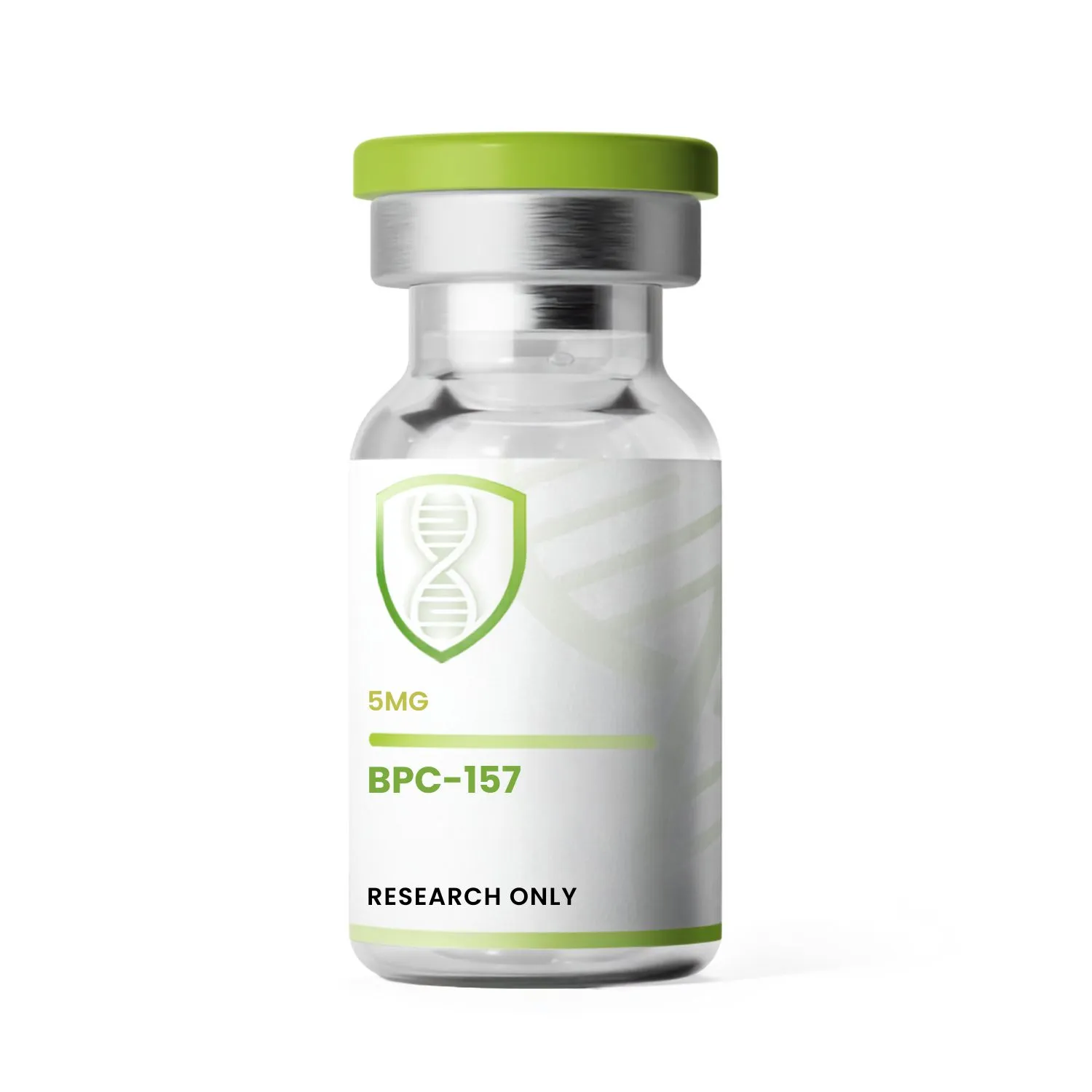
BPC-157 5MG
BPC-157 5MG is a vial containing 5 milligrams of the lyophilized peptide. It is commonly used in controlled laboratory experiments where lower concentrations are required. This quantity allows researchers to prepare solutions at different dilutions for in vitro assays, such as cell migration studies, or in vivo dosing in animal models, enabling precise titration in preclinical investigations.
How BPC-157 Works in Preclinical Models
In experimental research, BPC-157 acts in a pleiotropic manner by influencing several major signaling pathways. Studies indicate activation of VEGFR2 and downstream Akt-eNOS pathways, contributing to nitric oxide production and angiogenesis in both cellular and animal models. It also enhances FAK-paxillin signaling related to cell migration and survival, upregulates growth hormone receptor expression, and affects JAK-2 pathways. Additionally, BPC-157 may modulate inflammatory responses by reducing pro-inflammatory mediators such as Nos2 and Nfkb while supporting anti-inflammatory processes. These mechanisms are observed under controlled in vitro and in vivo experimental conditions where the peptide interacts with cellular and tissue systems.
BPC-157 and Recovery Support in Research Models
Preclinical animal studies using induced injury models have examined the role of BPC-157 in tissue recovery processes. Research findings demonstrate improved healing responses in musculoskeletal models, including tendon transection, ligament rupture, and muscle injury. Improvements in collagen organization, fibroblast activity, and biomechanical strength have also been observed.
BPC-157 and Digestive Balance in Research Models
BPC-157 has been evaluated in extensive preclinical studies involving rodent gut injury models such as NSAID-induced damage, ulcers, and inflammation. Laboratory findings suggest support for mucosal integrity, reduced lesion severity, and improved epithelial healing through angiogenesis and inflammation modulation.
BPC-157 and Tissue Support in Research Models
BPC-157 has also been studied in animal and cell culture research for its interaction with connective tissues including muscles, ligaments, and bones. Experimental observations indicate stimulation of fibroblast proliferation, collagen production, and tissue remodeling responses following injury or stress.
Choosing the Right BPC-157 Strength for Laboratory Use
BPC-157 is available in 5MG and 10MG vials to meet different research requirements. The 5MG option is suitable for lower-dose or titration-based studies, while 10MG vials may be preferred for larger-scale or extended experimental protocols.
How to Store and Handle BPC-157 Safely in the Laboratory
BPC-157 peptides should be stored in a dry, frozen environment protected from sunlight and temperature fluctuations. During reconstitution and handling, aseptic laboratory techniques and appropriate personal protective equipment (PPE) should always be used.
Intended Use & Disclaimer
BPC-157 is a research-grade peptide intended strictly for in vitro and in vivo laboratory research purposes. The compound is not approved by the FDA for human therapeutic use. The World Anti-Doping Agency classifies this compound as prohibited without authorized application. Results obtained from preclinical studies cannot be directly applied to humans. Human research remains limited, and potential risks such as immunogenicity may exist when sourced from unregulated materials. All information provided is for research and educational purposes only.
Referenced Citations
- Krivic A, et al. (2006). Achilles detachment in rat and stable gastric pentadecapeptide BPC 157. Journal of Orthopaedic Research.
- Cerovecki T, et al. (2010). Pentadecapeptide BPC 157 improves ligament healing. Journal of Orthopaedic Research.
- Vasireddi N, et al. (2025). Emerging Use of BPC-157 in Orthopaedic Sports Medicine: A Systematic Review. HSS Journal.
- Xu C, et al. (2020). Preclinical safety evaluation of body protective compound-157. Regulatory Toxicology and Pharmacology.
- Sikiric P, et al. (2013). Toxicity by NSAIDs counteracted by stable gastric pentadecapeptide BPC 157. Current Pharmaceutical Design.
- Additional insights from PubMed-indexed preclinical studies on musculoskeletal, gastrointestinal, and cytoprotective effects.