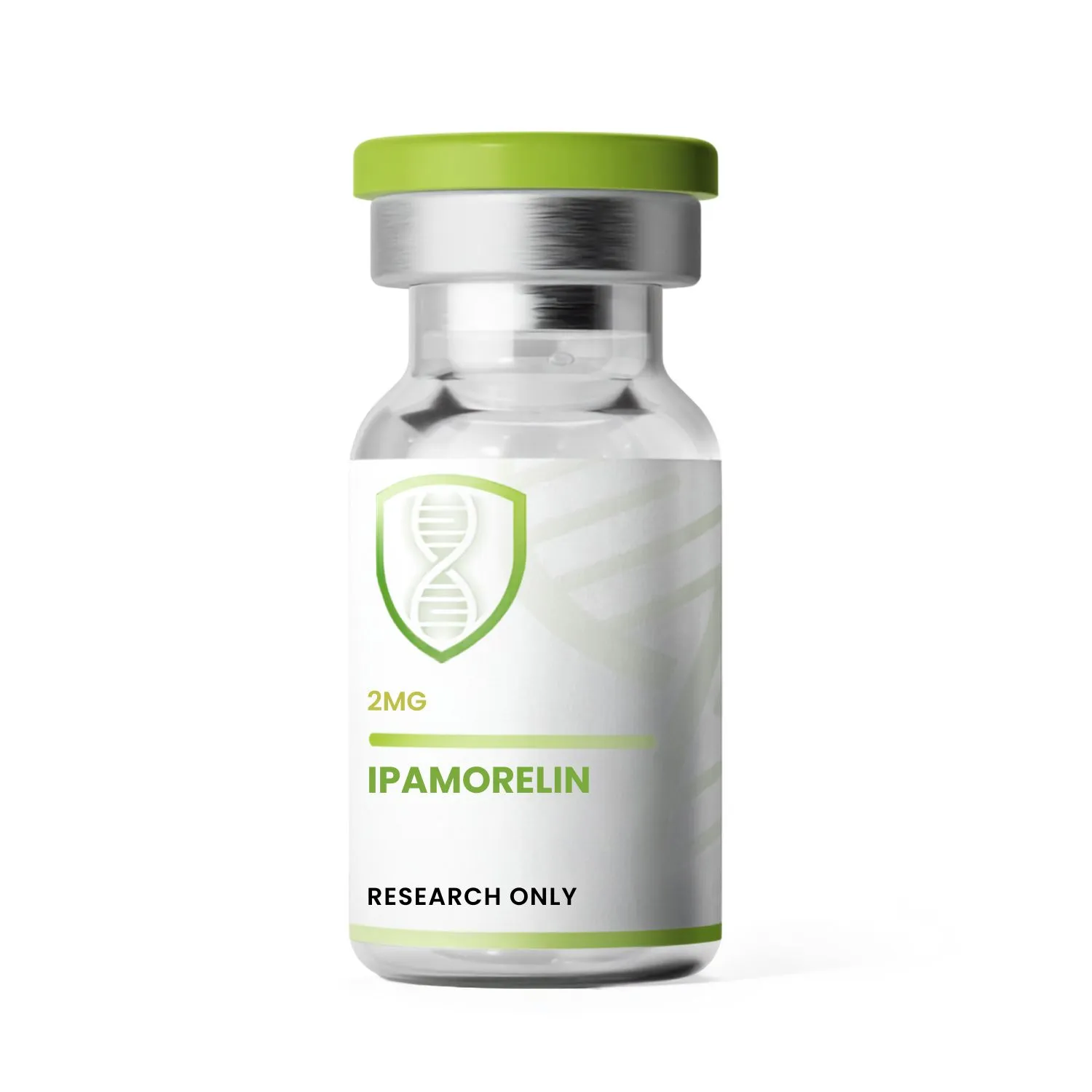
What is Ipamorelin?
Ipamorelin is a synthetic research peptide developed for laboratory and scientific research applications. It is produced under highly controlled conditions to ensure high purity and structural consistency. The peptide is supplied as a lyophilized powder, a format suitable for analytical research, molecular studies, and experimental laboratory work. Ipamorelin is strictly a research-only compound and is not approved for human or animal consumption. Researchers utilize Ipamorelin to study peptide behavior, molecular interactions, and analytical methodologies within controlled laboratory environments. Each batch undergoes quality verification to ensure reliable and reproducible research outcomes. Ipamorelin Molecular Formula
The molecular formula of Ipamorelin is C38H49N9O8. The compound consists of standard and modified amino acids forming a stable pentapeptide structure suitable for laboratory investigation. This defined molecular composition supports analytical studies, peptide modeling, and molecular research requiring accuracy and reproducibility. What is Ipamorelin 2 MG?
The Ipamorelin 2 mg vial contains a high‑purity lyophilized peptide designed for laboratory use. The smaller quantity allows researchers to perform precise, low‑volume experiments and accurate peptide concentration studies. This vial size is commonly selected for preliminary screening, pilot studies, or experimental analysis. It helps laboratories minimize material waste while maintaining consistent research quality. The sterile sealed vial forms a clear solution after reconstitution with bacteriostatic water, suitable for laboratory and molecular research applications. Structural Characteristics of Ipamorelin
The amino acid sequence of Ipamorelin is: Aib‑His‑D‑2‑Nal‑D‑Phe‑Lys‑NH₂ Its structure contains modifications that distinguish it from naturally occurring peptides. The Aib (2‑aminoisobutyric acid) residue at the N‑terminus improves resistance to enzymatic degradation, while modified amino acids such as D‑2‑naphthylalanine and D‑phenylalanine enhance stability during laboratory handling. The C‑terminal amide group reduces rapid degradation, contributing to improved peptide stability during storage and experimental procedures used in analytical and molecular studies. What is Ipamorelin Research?
Ipamorelin research focuses on laboratory and preclinical investigation of molecular mechanisms and peptide‑receptor interactions. Scientists employ cell‑based assays and in vitro systems to evaluate binding characteristics, structural stability, and signaling activity under controlled conditions. These investigations support assay development, peptide modeling, and reproducible experimental results while remaining strictly within scientific research applications. Research findings assist in designing further in vitro studies but do not imply therapeutic or clinical outcomes. Peptide Interaction in Laboratory Studies
Laboratory studies evaluate Ipamorelin’s interaction with growth hormone secretagogue receptors (GHS‑R1a) using controlled cellular bioassays. Experimental systems analyze receptor responses, binding behavior, and dose‑dependent activity. These studies focus on peptide selectivity and molecular signaling mechanisms without implying therapeutic or human effects. Synthesis & Batch Standards
Ipamorelin is synthesized through solid‑phase peptide synthesis under controlled manufacturing conditions. Amino acids are sequentially assembled on a resin support followed by peptide cleavage and purification. Each batch undergoes quality testing using high‑performance liquid chromatography (HPLC) for purity verification and mass spectrometry for molecular identification, ensuring research‑grade consistency. Analytical Observations
Batch testing confirms peptide purity using HPLC, while mass spectrometry verifies molecular weight and identity. Ipamorelin appears as a white lyophilized powder that dissolves readily in sterile water or diluted acetic acid to produce a clear, colorless solution. Additional analytical methods such as thin‑layer chromatography and amino acid analysis confirm structural integrity and minimal contamination. These analytical procedures maintain lot‑to‑lot consistency and support reliable laboratory research. Ipamorelin Assessment
Laboratory assessments evaluate peptide selectivity, receptor binding characteristics, and experimental reproducibility through dose‑response analysis, receptor binding studies, and functional testing. Batch consistency testing ensures uniform activity and structural integrity across controlled preclinical research applications. Storing Ipamorelin
For long‑term stability, store lyophilized Ipamorelin at −20°C and protect it from light and moisture using sealed or opaque containers. Short‑term storage at room temperature for several weeks generally does not affect quality. After reconstitution with bacteriostatic water or a sterile solvent, store the solution at 2–8°C and use within the recommended timeframe. Avoid repeated freeze‑thaw cycles, as they may reduce peptide stability and affect experimental consistency. Intended Research Use & Disclaimer
Ipamorelin is supplied exclusively for laboratory and scientific research purposes. It is not intended for human or animal consumption, therapeutic use, dietary supplementation, or diagnostic applications. All information provided is educational and research‑focused. Researchers must comply with applicable local, state, and federal regulations when handling this compound. Referenced Studies
Proper laboratory handling ensures safe usage and dependable experimental outcomes.