Popular
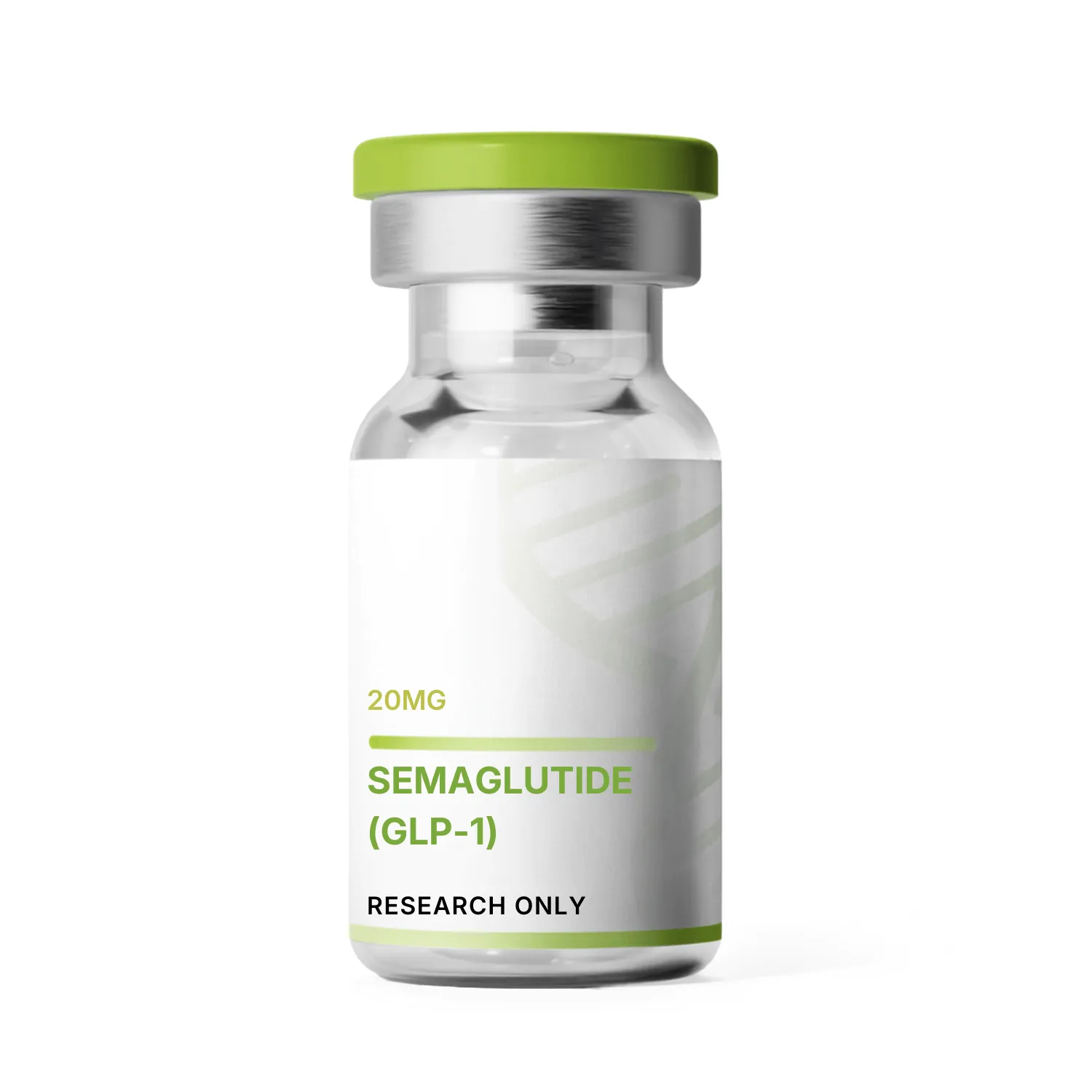
Semaglutide buy (GLP-1) – 20mg

Sema (G.L.P) (G.L.P-1) – 20mg

| Third-Party Tested | 99% Purity | COA Available | Research Use Only

Sema (G.L.P) is a man-made peptide that mimics the appearance of a natural hormone, G.L.P-1, within the body.

$99.00

0 out of 5 · 0 ratings
Be the first to rate this compound:

Out of stock

Out of stock

Email when stock available

Sema (G.L.P) (G.L.P-1) 20mg

Sema (G.L.P) is a man-made peptide that mimics the appearance of a natural hormone, G.L.P-1, within the body. In laboratory studies, researchers investigate Sema (G.L.P) to understand its effects on cellular mechanisms involved in blood sugar regulation, appetite signaling, and metabolic pathways. It is a common choice in laboratory research due to its stability and protracted activity. The peptide is useful to scientists to investigate the role of G.L.P-1 receptors in the production of insulin, glucagon, and in energy regulation. Semalutide is also distributed in various doses for research purposes, such as Sema (G.L.P) 5Mg, Sema (G.L.P) 10MG, and Sema (G.L.P) 15MG, which offer the flexibility of the dosage to various research needs. Sema (G.L.P) has been appreciated in research studies because it has a long active duration. This gives scientists the opportunity to see biological reactions that are slow and steady. It is not to be used on humans and animals but only in laboratory research unless prescribed by the doctor.

What is Sema (G.L.P) 20Mg?

Sema (G.L.P) 20Mg is a research-grade peptide that is provided in a lyophilized (freeze-dried) solution to be used in the lab. This strength is commonly used in preliminary studies or experiments that need smaller amounts of the peptide. Sema (G.L.P) 20Mg is the drug that is used by researchers to investigate the impact of G.L.P-1 receptors on blood sugar levels, the insulin signal pathway, and appetite. Its ability to be stable and act over a long period of time enables scientists to monitor progressive biological changes with time. Sema (G.L.P) 5Mg is the right choice in research settings where accuracy matters. It offers a predictable and dependable method to examine the impact of G.L.P-1 receptor triggering in the absence of habitual re-dosing.

What is Sema (G.L.P) 10MG?

Sema (G.L.P) 10MG is a synthetically available peptide used in laboratory studies in research grade (lyophilized (freeze-dried)). This strength is also realized to be applied in experiments that are harder to observe or when peptides are larger. Sema (G.L.P) 10MG is used to investigate the activation of the G.L.P-1 receptor and its role in blood sugar regulation, insulin signaling, and appetite. Its stability and prolonged activity enable scientists to track long-term and slow responses of the biology on a long-term basis. This is a strength best suited to studies that cover dose-dependent effects that assist the researcher in comprehending the effects of varying concentrations on metabolic pathways. Sema (G.L.P) 10MG provides receptor interaction in controlled laboratory settings. Its presence in the body is not allowed as it is used in laboratory research purposes,, like other Sema (G.L.P) compounds, and not as a human or animal preparation.

What is Sema (G.L.P) 15MG?

Sema (G.L.P) 15MG is a high-concentration research-grade peptide that is provided in a cable-freeze-dried (lyophilized) state of the peptide to be used in laboratory experiments. This strength is commonly employed when the experiment or study is long-term, or it involves more peptides. Sema (G.L.P) 15MG is used by researchers in preclinical models to study G.L.P-1 receptors and their role in the regulation of blood sugar, insulin signal transduction, appetite, and metabolism. Its long-term stability enables the scientists to monitor long-term biological reactions. This strength is especially applicable in studies that examine the long-term effects or repeated dose model. Researchers can compare the results of various concentrations using Sema (G.L.P) 5Mg, Sema (G.L.P) 10MG and Sema (G.L.P) 15 mg and then conclude on the dose-response.

How does Sema (G.L.P) work in the body?

In a research setting, Sema (G.L.P) stimulates G.L.P-1 receptors in the organism, which is an important part of regulating blood sugar levels, insulin secretion, and appetite. In response to stimulation of these receptors, they assist in enhancing glucose regulation through facilitating the release of insulin and inhibiting glucagon production in preclinical animals models. In laboratory studies, Sema (G.L.P) is used to examine cellular and molecular mechanisms that regulate appetite and digestion. It helps researchers study pathways involved in gastric emptying and signaling to the brain that influence satiety, supporting investigations into metabolic and weight-related processes.” Different strengths, such as Sema (G.L.P) 5Mg, Sema (G.L.P) 10MG and Sema (G.L.P) 15MG, are used by researchers to study the interaction between the peptide and the receptors in the short term or the long-term. Its protracted action enables researchers to monitor slow gradual biological reactions without the need to re-dose often. On the whole, Sema (G.L.P) is a suitable study model to investigate the metabolic pathways, energy balance, and appetite control in laboratory studies. It is highly stable and predictable in its interactions with the receptor, making it a favorite tool in controlled experiments.

Molecular Structure of Sema (G.L.P)

Sema (G.L.P) is a synthetic peptide consisting of 31 amino acids. It is formed based on the naturally occurring G.L.P-1 hormone with some particular modifications that promote its stability and its prolonged effect. The changes make the peptide more resistant to enzymatic degradation, which enables it to be used in research studies over a long duration. The alterations in the overall structure also enhance its affinity to the G.L.P-1 receptors that are necessary to investigate glucose regulation, insulin signaling, and the pathways related to appetite. Due to these properties, Sema (G.L.P) can be manipulated in laboratory experiments and predictable results can be obtained. One of the main reasons why Sema (G.L.P) 5Mg, Sema (G.L.P) 10MG, and Sema (G.L.P) 15MG are used as a controlled metabolic agent in metabolomic research is their molecular stability.

Mechanism Behind Sema (G.L.P) Activity

The mechanism of action of Sema (G.L.P) is to stimulate G.L.P-1 receptors that exist in a number of tissues that regulate metabolism. When these receptors are activated, they cause a cascade of biological events that will assist in regulating the blood sugar levels, insulin secretion, and the production of glucagon. This is also associated with the retarded gastric emptying and appetite control in research studies. Sema (G.L.P) helps to regulate the intake of energy and promote research on weight and metabolic regulation, as it signals the brain about the presence of fullness. The prolonged stability of the peptide enables it to retain the activation of the receptor over a longer duration. This is especially helpful with regard to laboratory research, where long-term and repeated activity is required to examine relative changes in glucose regulation, insulin sensitivity, and metabolic signaling. Different strengths, such as Sema (G.L.P) 5Mg, Sema (G.L.P) 10MG and Sema (G.L.P) 15MG will help researchers investigate the dose variations on the receptor response and downstream signaling pathways. On the whole, the knowledge of the mechanism of Sema (G.L.P) action assists researchers in creating more precise experiments and further understanding of the functionality of the G.L.P-1 receptor.

Sema (G.L.P) and Glucose Regulations

The role of Sema (G.L.P) in the regulation of glucose has been widely researched. In preclinical models, it increases insulin release and decreases glucagon, which is the activation of G.L.P-1 receptors. This renders it an important instrument when it comes to learning the way the body maintains a steady level of blood sugar. There are various strengths employed in different studies by the researchers, namely Sema (G.L.P) 5mg, 10mg, 20mg, and 15mg, to explore the effect of variation in dose on glucose management. Its long-term effect makes it possible to observe a gradual change over time, giving information about the immediate and the long-term metabolic reactions. Besides the effects of insulin and glucagon, the receptor activation of Sema (G.L.P) facilitates the research of glucose uptake in tissues and the metabolism of energy in general. Such models aid researchers in investigating the possible use of the models in metabolic studies and revealing the biological mechanisms of glucose regulation.

Sema (G.L.P) and Insulin Sensitivity

Sema (G.L.P), in a research setting, has a significant role in the insulin-sensitivity studies. It enhances the response of insulin in the body and increases the uptake of glucose in tissues by stimulating G.L.P -1 receptors. Researchers study the effects of Sema (G.L.P) on insulin -signaling pathways in controlled models. The 5,10 and 15 mg doses of Sema (G.L.P) enable the researcher to realize the effect of dosage on the receptor response and effectiveness of insulin. The long-acting character of it simplifies the process of monitoring changes over time and explains the impact of long-term G.L.P-1 activation on metabolic processes.

Sema (G.L.P) and Appetite Control

Sema (G.L.P) is commonly researched concerning its appetite-controlling properties. G.L.P -1 receptors are activated, and the brain sends the message that it is fuller and decreases hunger. Laboratory studies concentrate on the effects that these pathways have on eating habits and metabolic signaling. Sema (G.L.P) 5 mg, 10mg, and 15mg are doses that are used by researchers to examine dose-dependent effects on appetite. The long-acting nature of the peptide and its stability allow slow signaling to be observable with precision, which is important in metabolic studies on appetite control.

Sema (G.L.P) and Weight Management

The studies on Sema (G.L.P) examine its effects on weight management. The peptide assists the researchers in investigating energy balance and the weight of laboratory animals by regulating appetite and enhancing glucose levels. The varying doses of Sema (G.L.P) 5mg, 10mg, and 15mg enable the scientific community to study the impact of different doses on metabolism. Prolonged receptor stimulation provides reproducible outcomes and allows the study of long-term cumulative effects.

Sema (G.L.P) and Energy Balance

Sema (G.L.P) is a research instrument that is utilized to test energy balance and metabolic efficiency. In the manner of modulating insulin signaling, energy consumption, and appetite circuits, it aids researchers in the comprehension of the mechanisms of energy consumption and expenditure management. The use of Sema (G.L.P) 5 mg, 10 mg, and 15mg is the subject of laboratory research on the different dosage levels and impact on energy metabolism and long-term signaling. Its stability also allows the researchers to trace gradual variants of the metabolic pathways, and it gives information on systemic energy regulation.

Intended Research Use & Disclaimer

Sema (G.L.P) should be used only in the laboratory and for research. It is intended to conduct a controlled experimental study in metabolic research, insulin signaling, glucose regulation, appetite control, and the associated pathways. It is utilized by researchers to understand more about the activity of the G.L.P -1 receptor, as well as its biological action. It is not a human or veterinary compound. It is not designed to be used diagnostically, therapeutically, or clinically. Experiments must be conducted in accordance with general safety in the laboratory as well as the relevant regulations. The same usage restrictions apply to all the strengths- Sema (G.L.P) 5mg, 10mg, and 15mg. Adherence to these principles facilitates safe and effective application in the research setting and conservation of integrity within an experiment. Through precaution and observation of the planned research application, laboratories can research Sema (G.L.P) safely and reliably.

References:

  1. StatPearls Overview of Sema (G.L.P) Mechanism
  2. Spotlight on Sema (G.L.P) Mechanism of Action
  3. Molecular Mechanisms of Sema (G.L.P) and Liraglutide

Research Use Only

This compound is intended for laboratory research use only. It is not intended for human or animal consumption, or for use in diagnostic or therapeutic procedures.

Chemical Properties

Molecular Formula C187H291N45O59
Molecular Mass 4114 g/mol
Monoisotopic Mass 4111.115377
Polar Area 2250
Complexity 12200
XLogP -43.5
Heavy Atom Count 347
Hydrogen Bond Donor Count 72
Hydrogen Bond Acceptor Count 88
Rotatable Bond Count 180
CID 16132341
InChI InChI=1S/C187H291N45O59/c1-18-105(10)154(180(282)208-108(13)159(261)216-133(86-114-89-200-119-50-40-39-49-117(114)119)170(272)218-129(82-102(4)5)171(273)…
InChIKey DLSWIYLPEUIQAV-CCUURXOWSA-N
IUPAC Name 18-[[(1R)-4-[2-[2-[2-[2-[2-[2-[[(5S)-5-[[(2S)-2-[[(2S)-2-[[(2S)-5-amino-2-[[2-[[(2S)-2-[[(2S)-2-[[(2S)-2-[[(2S)-2-[[(2S)-2-[[(2S)-2-[[(2S)-2-[[(2S,3R)-2-[[(2S)-2-[[(2S,3R)-2-[[2-[[(2S)-2-[[2-[[(2S)-2-amino-3-(1H-imidazol-5-yl)propanoyl]amino]-2-methylpropanoyl]amino]-4-carboxybutanoyl]amino]acetyl]amino]-3-hydroxybutanoyl]amino]-3-phenylpropanoyl]amino]-3-hydroxybutanoyl]amino]-3-hydroxypropanoyl]amino]-3-carboxypropanoyl]amino]-3-methylbutanoyl]amino]-3-hydroxypropanoyl]amino]-3-hydroxypropanoyl]amino]-3-(4-hydroxyphenyl)propanoyl]amino]-4-methylpentanoyl]amino]-4-carboxybutanoyl]amino]acetyl]amino]-5-oxopentanoyl]amino]propanoyl]amino]propanoyl]amino]-6-[[(2S)-1-[[(2S)-1-[[(2S,3S)-1-[[(2S)-1-[[(2S)-1-[[(2S)-1-[[(2S)-1-[[(2S)-5-carbamimidamido-1-[[2-[[(2S)-5-carbamimidamido-1-(carboxymethylamino)-1-oxopentan-2-yl]amino]-2-oxoethyl]amino]-1-oxopentan-2-yl]amino]-3-methyl-1-oxobutan-2-yl]amino]-4-methyl-1-oxopentan-2-yl]amino]-3-(1H-indol-3-yl)-1-oxopropan-2-yl]amino]-1-oxopropan-2-yl]amino]-3-methyl-1-oxopentan-2-yl]amino]-1-oxo-3-phenylpropan-2-yl]amino]-4-carboxy-1-oxobutan-2-yl]amino]-6-oxohexyl]amino]-2-oxoethoxy]ethoxy]ethylamino]-2-oxoethoxy]ethoxy]ethylamino]-1-carboxy-4-oxobutyl]amino]-18-oxooctadecanoic acid
SMILES CC[C@H](C)[C@@H](C(=O)N[C@@H](C)C(=O)N[C@@H](CC1=CNC2=CC=CC=C21)C(=O)N[C@@H](CC(C)C)C(=O)N[C@@H](C(C)C)C(=O)N[C@@H](CCCNC(=N)N)C(=O)NCC(=O)N[C@@H](CCCNC(=N)N)C(=O)NCC(=O)O)NC(=O)[C@H](CC3=CC=CC=C3)NC(=O)[C@H](CCC(=O)O)NC(=O)[C@H](CCCCNC(=O)COCCOCCNC(=O)COCCOCCNC(=O)CC[C@H](C(=O)O)NC(=O)CCCCCCCCCCCCCCCCC(=O)O)NC(=O)[C@H](C)NC(=O)[C@H](C)NC(=O)[C@H](CCC(=O)N)NC(=O)CNC(=O)[C@H](CCC(=O)O)NC(=O)[C@H](CC(C)C)NC(=O)[C@H](CC4=CC=C(C=C4)O)NC(=O)[C@H](CO)NC(=O)[C@H](CO)NC(=O)[C@H](C(C)C)NC(=O)[C@H](CC(=O)O)NC(=O)[C@H](CO)NC(=O)[C@H]([C@@H](C)O)NC(=O)[C@H](CC5=CC=CC=C5)NC(=O)[C@H]([C@@H](C)O)NC(=O)CNC(=O)[C@H](CCC(=O)O)NC(=O)C(C)(C)NC(=O)[C@H](CC6=CN=CN6)N

Certificate of Analysis

Quality

Every batch of Sema (G.L.P) (G.L.P-1) – 20mg is tested for purity and identity using industry-standard methods.

HPLC Analysis

High-Performance Liquid Chromatography confirms purity ≥99%. Each batch is analyzed to ensure consistent quality.

Mass Spectrometry (MS)

Identity verification via mass spectrometry confirms correct molecular weight of 4113.58 g/mol.

Third-Party Testing

All compounds undergo independent third-party laboratory testing for quality assurance.

Request COA

Certificate of Analysis documents are available for all compounds. Contact us with your order number to request batch-specific documentation.

COA Lab Tests

Each compound batch is tested by independent laboratories to verify purity, identity, and quality. The Certificate of Analysis (COA) provides transparent lab results, ensuring the compound meets strict research-grade standards.

Storage & Handling

R⁠efrigeratio‌n Guideline‌s‌

  • Store unused pens in the refrigerator at 36°F to 46°F
  • Do no⁠t fr⁠ee⁠ze t‌he medication
  • After‍ f⁠irst use, Ozemp‍ic can be at 36°F–46°‌F (2°C–8°C) or‌ 59°F‍–86°F (15°C–‍30°C) for up to 56 d⁠ays.
  • Oze⁠mpic pens can be used up⁠ t‍o 56 days a⁠fter first use; Wegovy si‍ngle-dose pens must be discarded af⁠ter use.
  • Wegovy m‌ay stored 8°C–30°C (46‍°F–86°F)⁠ up to 28 days before use.

General Storage Tips

  • Keep the pen cap on when storing
  • Sto‌re away from dir‍ec⁠t light and heat
  • Keep in its origina⁠l provided conta⁠iner.
  • Room temp storage duratio‍ns a‍re defin⁠ed by‍ compound: 56 days for‌ Oz‍empic, 28 days for‍ Wegovy (single dose).
  • Mu⁠st remove and discard‍ needle after each⁠ injectio‍n; do n⁠ot st‍ore pen with needle att⁠ached.⁠
  • Visual inspec⁠ti‌on before‌ injection (clear, colo‌rl‌ess) is critical.
  • Once the first dose is taken, you should note the date to track its usable period (56 days for Ozempic; 28 days for Wegovy)

Sa‌fety⁠ Prec‍autions

  • Keep out‌ of reach of children⁠
  • Store in a high, secure location
  • Always lock safety caps‌ on con⁠tainers
  • Ensure med‍ication is not access⁠i‌ble t‍o pe‍ts
  • Do not store pens with needles attached.

General Storage Tips

  • Keep the pen cap on when storing
  • Sto‌re away from dir‍ec⁠t light and heat
  • Keep in its origina⁠l provided conta⁠iner.
  • Room temp storage duratio‍ns a‍re defin⁠ed by‍ compound: 56 days for‌ Oz‍empic, 28 days for‍ Wegovy (single dose).
  • Mu⁠st remove and discard‍ needle after each⁠ injectio‍n; do n⁠ot st‍ore pen with needle att⁠ached.⁠
  • Visual inspec⁠ti‌on before‌ injection (clear, colo‌rl‌ess) is critical.
  • Once the first dose is taken, you should note the date to track its usable period (56 days for Ozempic; 28 days for Wegovy)

×
On Sale
Out of Stock

Storage

Store at -20°C.
Protect from light and moisture.

Added to cart successfully!

Certificate of Analysis

ORP#00067

Client:
Orion Peptides
Sample:
Semaglutide (GLP-1) 20mg
Batch:
202609SEMA20

Tests Requested:
Standard + Endotoxins + Sterility
Appearance:
White Lyophilized Powder in 5mL Vial

Analysis Conducted on:
09/01/2026
Report Issued on:
09/02/2026
Test Method Result Specification  
Identity HPLC-DAD Semaglutide Semaglutide Pass
Purity HPLC-DAD 99.41 >99% by HPLC Pass
Quantity HPLC Analyte Concentration Curve Assay 20.24 20mg Pass
Endotoxins LAL ELISA 0.109 EU/mL ≤ 0.5 EU/mL Pass
Sterility Pour Plate No Growth No Growth Pass