

An Overview
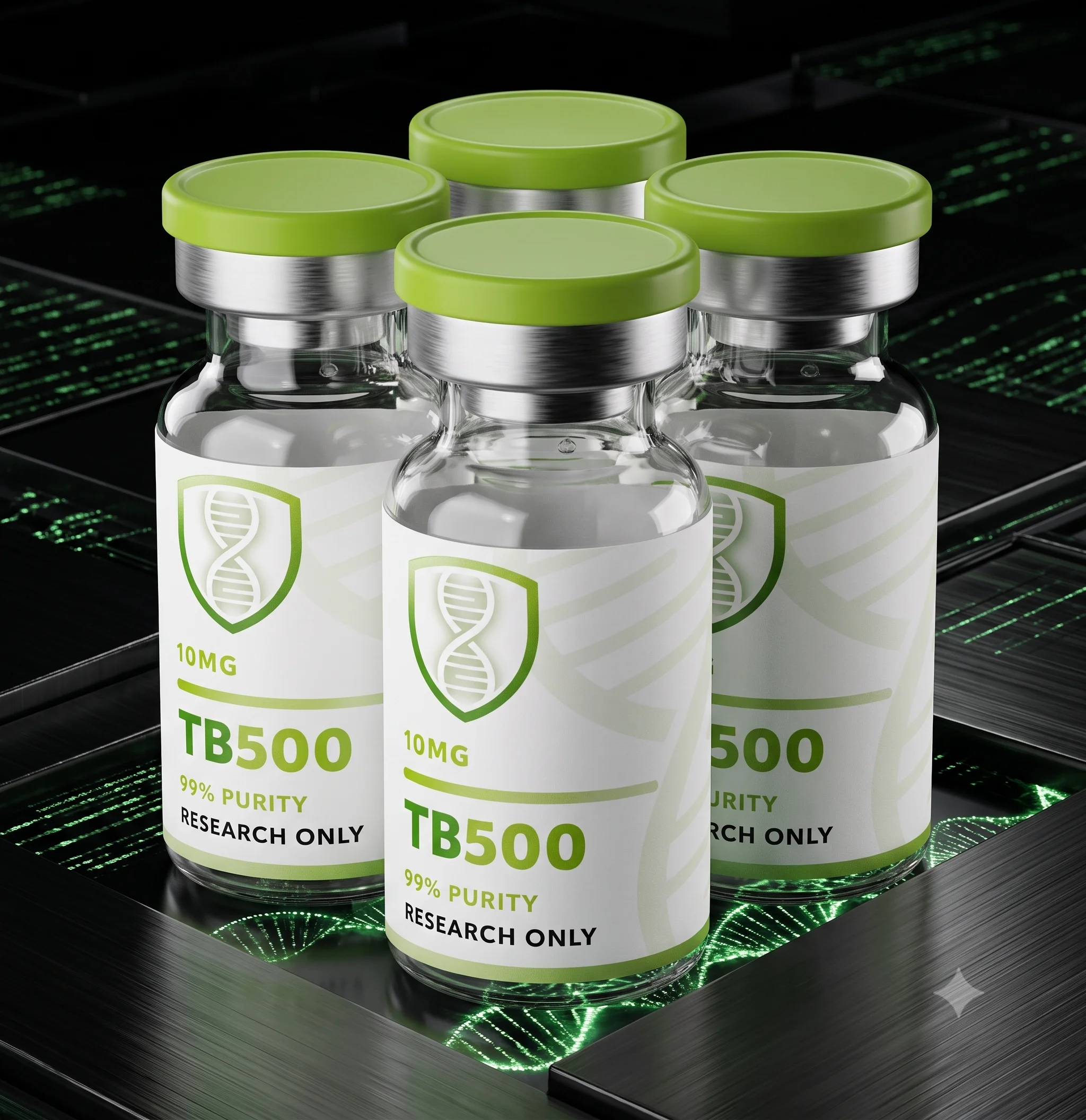
TB-500 is a research peptide used as an essential tool in the investigation of tissue repair and migration of endothelial cells. Research in areas such as regenerative biology and molecular biology focuses on synthetic peptides in preclinical research involving peptides. Compounds under investigation that focus on cellular movement and structural rebuilding offer valuable information concerning intricate biological processes.
This comprehensive guide focuses on the TB-500 mode of action, including its structural relation to Thymosin Beta-4, its effects on the cellular cytoskeleton, and varied applications in laboratory-based peptide investigations.
Definition of TB-500
TB-500 refers to a synthetic peptide chain that is similar to the active domain of Thymosin Beta-4 (Tβ4), but shorter in length. Normally, Thymosin Beta-4 is an endogenous messenger molecule that contains 43 amino acid residues. This protein is abundantly present in most mammalian cells, especially in blood platelets and leukocytes.
[Thymosin Beta-4 Protein: 43 Amino Acids]
│
▼ (Isolating the Active Motif)
[TB-500 Peptide Sequence: Ac-LKKTETQ]
│
▼
[Synthetic Peptide Fragment]
Full-length Tβ4 can be difficult and expensive to isolate for broad testing in a lab setting. The core regenerative properties have been identified by structural biologists to a short 7-amino-acid sequence, Ac-LKKTETQ. This sequence is the peptide TB500. Because of its low molecular weight, this experimental peptide exhibits advanced bioactivity and superior cellular permeability compared to its parent protein.
TB-500 is offered only as an in vitro research compound and for use in preclinical laboratory testing by OrionPeptide.com. It is not approved for use in humans or in animals.
TB-500 Main Mode of Action
For the understanding of the TB-500 mode of action, the analysis of the interaction between TB-500 and the internal cellular framework, i.e, the cytoskeleton. The basic mode of action of the TB-500 peptide is based on three fundamental biological mechanisms.
1. Actively Regulating Actin Dynamics via G-Actin Binding
The key TB-500 mechanism involves regulation of the cellular cytoskeleton by means of binding to G-actin. Actin is a major component of the cytoskeleton existing in two forms:
- monomeric globular (G-actin)
- polymerized filamentous (F-actin) actin.
The TB-500 peptide acts as a G-actin sequestrant. It binds to G-actin monomers reversibly, thus controlling the actin polymerization rate. This regulates the process of actin dynamics in cells, providing them with sufficient structural plasticity to undergo cytoskeleton restructuring. Such restructuring enables repair cells to migrate towards injured areas.
[TB-500 Research Peptide] + [Free G-Actin Monomers]
│
▼
[Reversible Binding Complex]
│
▼
[Regulated Actin Polymerization Rate]
│
▼
[Cytoskeletal Remodeling & Swift Cell Migration]
2. Promotion of research on angiogenesis
An integral phase of long-term tissue restoration involves restoring blood flow to damaged microenvironments. Research on angiogenesis has demonstrated that the mechanism of TB-500 interacts closely with the Vascular Endothelial Growth Factor ( VEGF ) pathway.
Data from the National Institutes of Health archives, all peer-reviewed, show this portion of thymosin accelerates the creation of capillary tubules. The peptide stimulates endothelial cells to migrate and form new, stable vascular networks that supply essential oxygen and nutrients to tissues that are being remodeled.
3. Modulation of Inflammatory Cytokines
Inflammation that is sustained and uncontrolled can inhibit cell regeneration and cause the formation of thick scar tissue. It is noted in the studies using the TB-500 peptide that it shows an ability to modulate the expression of major pro-inflammatory signaling proteins.
The data found in the NCBI database states that the main active peptide sequence plays a role in reducing the transcription of major inflammatory proteins. By reducing inflammation and local oxidative stress, it contributes to the formation of healthy tissue.
TB-500: Prominent Research Applications
TB-500 is heavily utilized across multiple branches of preclinical peptide research because of its fundamental influence over peptide bioactivity and cellular motility
| Area of Research Within Laboratory | Key Molecular Target | Preclinical Outcomes: On the Record |
| Tendon Research | Fibroblasts & Myotendinous Junctions | Collagen Upregulation Types I and III |
| Muscle Regeneration Research | Satellite Cells & Myoblasts | Differentiation and Activation of Progenitor Cells |
| Wound Healing Research Models | Keratinocytes & Epithelial Layers | Rapid re-epithelialization and wound closure |
| Cardiovascular Studies | Progenitor Cells of Heart | Better cellular survival under hypoxic conditions |
1. Research on Musculoskeletal and Tendon
Minimal natural blood supply in tendons and ligaments causes slow recovery parameters in experiments with TB-500 in a laboratory setting.
With soft-tissue animal models, TB-500 induces fibroblasts’ proliferation. These cells coordinate extracellular matrix remodelling through the deposition of matrix proteins. According to official literature, there is a substantial enhancement of collagen production, improving tensile strength and alignment of the matrix being formed.
2. Research on Muscle Regeneration
In models of skeletal muscle, localized injury necessitates the mobilization of myogenic precursor cells.
From preclinical data, it is evident that TB-500 peptide functions involve activation of satellite cells. Upon activation, these stem cells move to areas of disruption of myofibrils and differentiate into muscle fibers.
3. Research on Ocular and Epithelial Wound Healing Models
In full-thickness dermal injury studies, investigators use a precise measure of epithelial closure rate.
The NIH ( National Institutes of Health) conducted a definitive study that demonstrated the Tβ4-derived sequences significantly improve wound contraction velocities. TB-500 helps prevent the development of dense, fibrotic scarring by regulating cell locomotion and suppressing hyper-proliferation of rigid myofibroblasts, yielding more pliable, functional tissue repair.
Laboratory Storage and Stability Guidelines
Structural integrity is vital to ensure accurate data collection during laboratory peptide studies. Because the TB-500 peptide sequence is susceptible to enzymatic cleavage, researchers adhere to stringent protocols:
- Lyophilized Form: Powder in unreconstituted vials should be stored at a stable -20°C for long-term molecular preservation.
- Reconstitution: Vials are usually reconstituted with sterile bacteriostatic water under strict aseptic conditions.
- Refrigerated Phase: After the fluid integration, the active liquid mixture needs to be kept at a temperature of 2°C to 8°C and tested in short windows of time to avoid degradation.
FAQs
1. What is TB-500?
TB-500 is a lab-manufactured peptide sequence that mimics the key activity region of the naturally produced intracellular protein called Thymosin Beta-4. In experimental testing facilities, TB-500 is used as a research instrument for investigating structural changes and mobility in cells.
2. How does TB-500 work?
Mainly, it works by binding to free G-actin monomers in the cells, regulating the rate of polymerization of actin and triggering quick restructuring of the cytoskeleton with accelerated cellular migration to the site of injury.
3. Is TB-500 the same as Thymosin Beta-4?
No, because the difference lies in their molecular structure. Thymosin Beta-4 is a full naturally occurring protein consisting of 43 amino acids in mammals. TB-500 is a shorter, synthesized 7-amino acid sequence (Ac-LKKTETQ) which corresponds to the actin-binding motif of that protein.
4. What is the mechanism of action of TB-500?
The mechanism of action of the TB-500 peptide is performed through:
- Sequestration of G-actin to enhance cellular locomotion
- Stimulation of VEGF pathways for promotion of local angiogenesis
- Regulation of pro-inflammatory cytokines (such as TNF-α, IL-6)
5. What is the application of TB-500 in the study?
It is applied in preclinical investigations to study soft tissue repair, angiogenesis, accelerated wound healing, and extracellular matrix reformation using cell lines and animals.
6. Does TB-500 interact with actin?
Yes, binding with monomeric globular actin (G-actin) is the key molecular feature of this heptapeptide, which interferes with building blocks of actin to control the cell’s skeleton construction.
7. What is the difference between TB-500 and BPC-157?
While both of them are studied in tissue repair model systems, they work via totally different mechanisms. TB-500 works by targeting Tβ4 signaling, actin regulation, and cell motility. However, BPC-157 is an organic gastric juice fragment acting mainly via cell membrane stabilization and growth factor receptor up-regulation.
8. Is TB-500 approved by the FDA?
No. TB-500 is a research peptide not FDA-approved for therapeutic purposes and/or preventing human diseases or conditions or for any other medical purposes.
9. Is TB-500 a synthetic peptide?
Yes, it is an artificial heptapeptide synthesized in a laboratory to mimic the biological activity of the endogenous thymosin signaling peptides.
Concluding Remarks
The TB-500 research overview points to its standing as a helpful resource for studying modern cellular repair mechanisms. The peptide gives critical insights into how tissues recover from structural trauma through specialized TB-500 actin-binding mechanisms, angiogenesis promotion, and matrix remodeling.
Looking for high-purity, fully authenticated chemical sequences for testing in your next round of testing regimens for your facility? Check out the extensive inventory at OrionPeptide.com.
Research Disclaimers
All materials described in this profile are for in vitro laboratory profiling and controlled preclinical research models only. The informational manual is addressed to qualified scientific researchers and experimental specialists only.
