

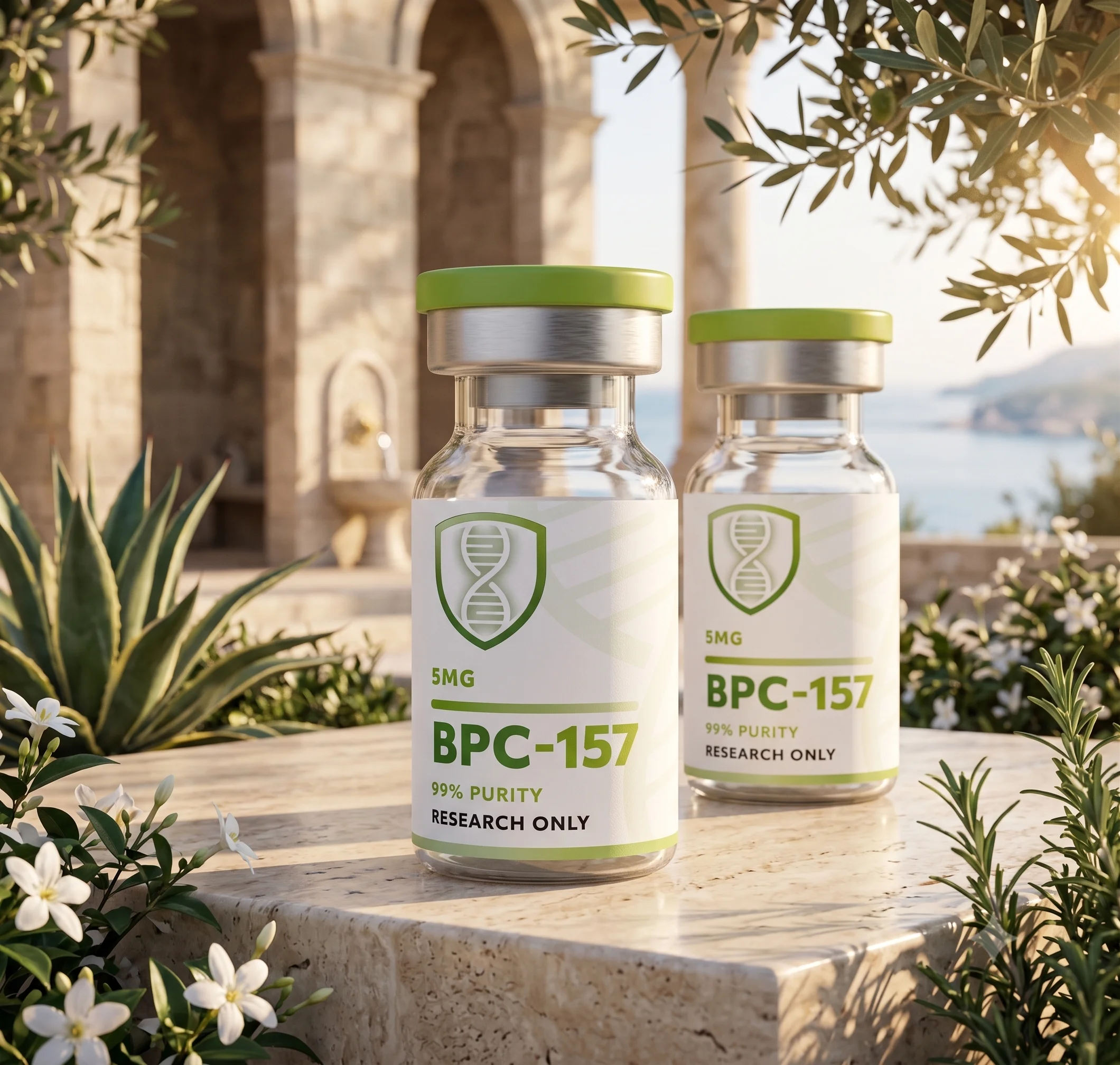
The current scientific literature shows that BPC-157 and KPV are experimental peptides that target different pathways to accelerate healing. BPC-157 is a 15-amino-acid peptide that mainly promotes structural tissue repair and wound healing by stimulating angiogenesis (new blood vessel growth) and collagen synthesis. KPV, on the other hand, is a 3-amino-acid peptide with potent anti-inflammatory activity, calming down immune overreactions by blocking the master inflammatory NF-κB pathway.
What is BPC-157? (The Regenerative Powerhouse)
BPC-157 (Body Protection Compound-157) is a chain of 15 amino acids it is a synthetic pentadecapeptide.
What’s unique about BPC-157 is its origin. It is a partial sequence of a naturally occurring protective protein present in human gastric juice. BPC-157 is naturally stable because its parent protein has adapted to survive the extremely acidic, harsh environment of the stomach. This molecular stability makes it resistant to enzymatic degradation much better than most other peptides, which is the reason for the huge interest in BPC 157 benefits for digestive healing.
If you want to know in detail about the history and research on BPC-157 until now, you may go through the following article:
The Evolution of BPC-157 Research From 1993 to 2026
BPC-157: Mechanism of Action
The primary mechanism of BPC-157 is tissue regeneration, and it accomplishes this along three different biological pathways:
Angiogenesis: BPC-157 Promotes New Blood Vessel Formation. This is achieved by upregulating Vascular Endothelial Growth Factor (VEGF) expression. More blood vessels = better blood flow = more oxygen and nutrients to damaged tissues that are usually slow healers (think tendons and cartilage).
Fibroblast Migration: The peptide induces fibroblast activation and migration. These are the cells that make collagen, the building block for skin, muscle, and connective tissue.
Nitric Oxide (NO) Modulation: BPC-157 modulates nitric oxide production. This protects the endothelium of blood vessels and modulates systemic blood pressure during recovery from injury.
What is KPV?
According to research, BPC-157 focuses on structural rebuilding, while on the other hand, the main purpose of KPV is to restore immune harmony. KPV is a tripeptide that is found naturally, and it has three amino acids, i.e Lysine, Proline, and Valine. It is a structural C-terminal fragment of Alpha-Melanocyte-Stimulating Hormone (α-MSH). α-MSH is a hormone naturally produced by the bodies of humans, and it plays a major role in regulating pigmentation, appetite, and immune responses.
Despite being a tiny fragment, KPV retains the profound healing properties highlighted in KPV peptide inflammation literature without causing skin darkening or altering pigmentation.
How does KPV work?
KPV acts directly on the inner cellular machinery to cool overactive immune responses:
Inhibition of NF-κB: The NF-kappa B (Nuclear Factor Kappa B) pathway is the master “switch” for inflammation in the body. When turned on, it tells cells to pump out destructive, pro-inflammatory proteins. KPV gets into the cell and blocks this switch to stop inflammation before it even starts.
Cytokine Suppression: KPV substantially suppresses the secretion of inflammatory cytokines, including Tumor Necrosis Factor-alpha (TNF-α), Interleukin-1 beta (IL-1β), and Interleukin-6 (IL-6) by inhibiting the NF-κB pathway.
Antimicrobial Effects: Emerging cellular evidence indicates that KPV possesses structural characteristics that interfere with the cell walls of certain pathogens, especially fungi like Candida albicans, which helps in restoring balance within local microbiomes.
Comparison of BPC-157 and KPV:
To understand BPC-157 and KPV for tissue repair and immune control, it is helpful to look at their target areas, mechanisms, and scientific status side by side.
| Characteristics | BPC-157 | KPV |
| Size of Peptide | 15 Amino Acids, i.e Pentadecapeptide | 3 Amino Acids, i.e Tripeptide |
| Main Function | Repair of structural tissue and growth of blood vessels | Advanced inflammation and regulation of the immune system |
| Major Pathways | VEGF upregulation and activation of the FAK-paxillin pathway | NF-κB pathway inhibition and suppression of cytokine |
| Targets | Ligaments, Tendons, muscles, and gastric mucosal lining | Skin barrier, Intestinal tract, and systemic immune cells |
| Recent Research Status | Preclinical data (animal/cellular models) | Preclinical data (animal/cellular models) |
| Human Clinical Trials | Limited early-stage trials (ulcerative colitis, knee pain) | Limited phase I safety profiling; skin-specific trials |
A Detailed Analysis of the Current Literature
1. Gut Health and Inflammatory Bowel Disease (IBD)
BPC-157 and KPV have the most overlap in their applications within the gastrointestinal tract, making them prime candidates for peptide therapy in this area, but they take a different approach to the therapy of gut health therapy.
- BPC-157 is very effective in the repair of the physical structure. Animal studies of IBD indicate that the BPC-157 peptide has a positive effect on repairing gastric ulcers, sealing leaky gut junctions, and even reversing fistulas. It’s like a “biological sealant”, which encourages the lining of the mucosa to regenerate its physical barrier.
- KPV is going to the gut and dampening the immune “storm. With chronic inflammation, such as with Crohn’s or Ulcerative Colitis, the immune system is extremely active in attacking its own gut tissue. Oral KPV is very effective in the literature for reducing swelling, leukocyte infiltration, and mucosal bleeding in colitis by preventing the immune cells from generating inflammatory chemicals.
2. Musculoskeletal and Soft Tissue Injury
Literature analysis of peptides for tissue repair in the context of physical injuries is clearly in favor of one peptide.
- BPC-157 is the clear winner in the field of soft tissue repair literature. Its effect has been tested in dozens of rodent studies for complete Achilles tendon and medial collateral ligament (MCL) tears and crushed muscles. All the data indicate that BPC-157 promotes quicker and more complete recovery from injury, with collagen fibres realigning faster and stronger.
- In this role, KPV is a secondary player. It has no mechanisms that stimulate the growth of collagen or new blood vessels. It can, however, help to reduce chronic, localized swelling around an injured joint, indirectly helping to prevent the formation of scar tissue and lessen pain over the long-term.
Click on the following link if you are interested in how BPC-157 works in tendon models:
BPC-157 in Tendon Models: A Review of Published Studies
3. Skin Repair and Dermatology.
Another place where anti-inflammatory peptides excel is their ability to reduce inflammation and wounding at the same time.
- KPV has a solid literary basis. The skin cells are very sensitive to it due to its origin in α-MSH. A study has revealed that KPV, when applied to the skin, is able to lessen the severity of psoriasis, eczema, and severe allergic dermatitis by inhibiting the specific interleukins that trigger flaking and severe itching.
- BPC-157 only targets the wound. BPC-157 accelerates the re-epithelialization (growth of new skin over a wound) and reduces systemic tissue damage caused by severe burns in burn models and deep skin incisions.
Safety Profiles and Potential Risks: A Realistic View
However, no biological compound is completely free of risks.
In fact, taking a true scientific approach to studying these peptides means we have to acknowledge areas where there are still gaps in our data.
1. The Status of Human Trials
There are no large-scale Phase 3 human clinical trials being run currently in the Peptide field.
Most of the data surrounding BPC-157/KPV at this point is based upon In-Vitro studies (using cell cultures), as well as animal testing (rats/mice). Although they have many similarities with humans from a biochemical standpoint, that doesn’t necessarily mean their results will translate identically into us.
2. Angiogenesis and Tumor Concerns
When looking at this compound’s safety profile, we can start by examining its mode of action. BPC-157 is one of the most effective agents when it comes to encouraging angiogenesis (new blood vessel formation), and these malignant masses depend on a massive influx of new blood vessels for them to proliferate and begin to metastasize. Although there hasn’t been evidence that BPC-157 causes cancer itself, its ability to sprout new blood vessels might theoretically fuel the proliferation of an already-existing malignancy.
3. Immunosuppression vs. Immunomodulation
KPV has a very good safety profile overall due to being more of an immunomodulator than an extremely harsh immunosuppressant drug. Systemic corticosteroids like Prednisone don’t just turn your immune system off – they also cause muscle wasting and bone thinning.
KPV doesn’t do that. It turns overstimulated pathways down to baseline without turning things off completely.
The Synergy: Why Researchers “Stack” BPC-157 and KPV
Because these two peptides use different biological pathways, inside the body, they do not compete with one another. Instead, they help each other. In modern-day peptide literature and clinical research, we term this phenomenon a synergistic effect.
Let’s suppose there is a heavily damaged house. To fix it, we will need two things: a team of construction workers to physically rebuild the broken walls, and a fire department to put out the active fire in the living room.
KPV works like the fire department. It goes quickly to put out the active immune fire, calming down the inflammation and stopping the cellular destruction.
BPC-157 works just like the construction crew. Once the fire is controlled, it starts rebuilding the blood vessels, laying down collagen, and restoring structural integrity to the tissue.
This dual-action approach is precisely why researchers studying severe systemic issues—like refractory leaky gut or severe, multi-joint autoimmune arthritis—frequently look at the combination of BPC-157 and KPV rather than evaluating them in isolation.
Frequently Asked Questions
1. Can BPC-157 and KPV be combined in experimental models?
Yes. Based on the current laboratory protocols and literature in the preclinical field, it is safe to use BPC-157 and KPV in research designs. They work on entirely different biochemical pathways (BPC-157 targets angiogenic growth factors and the architecture of cellular tissue; KPV acts as a blocker of intracellular inflammatory cascades) and therefore do not compete for the same receptor sites in test animals.
2. What is the recommended route of administration for these peptides in studies?
Preliminary studies in the literature rely on the experimental target for the method of delivery. Local injection around the area of interest is widely explored for studying localized tissue injuries (tendon or ligament models). In gastrointestinal research models (like simulated leaky gut or colitis), it is better to administer via the oral route using orally stable, gastric-resistant formulations to ensure direct exposure to the intestinal epithelium.
3. Is BPC-157 legal in sports?
BPC-157 is classified under the “S2. Peptide Hormones, Growth Factors, Related Substances, and Mimetics” section of the World Anti-Doping Agency (WADA) Prohibited List, indicating that it is prohibited and banned from competitive sports. Although KPV is not listed as a banned substance, users who are evaluating these substances should be aware of the fact that neither of them is allowed for human or athletic consumption and is only available for laboratory research.
4. Are there pigmentation pathways in cellular or animal models that are affected by KPV?
No. KPV is a structural C-terminal fragment of Alpha-Melanocyte-Stimulating Hormone (α-MSH) but without the specific molecular sequence needed for binding to melanocortin 1 receptors (MC1R). Therefore, experimental data show that KPV has pronounced anti-inflammatory activity in the assay models and does not activate melanogenesis or affect the expression of pigment in these models.
Conclusions
The reviewed scientific studies clearly differentiate the functional utility of these two research compounds. BPC-157 is an investigational regenerative agent, often used in modeling structural repair in cells, fast wound healing assays, and restoration of tissue integrity. In contrast, the KPV is a specialised biochemical modulator which can modulate inflammatory pathways within cells, to promote the stabilisation of immune-cell microenvironments and to provide protection to epithelial barriers in laboratory models.
With the growing amount of preclinical data, the mechanistic characterization of these molecules in in vitro and in vivo test systems will be further defined. The current available scientific literature offers a very promising framework for considering the application of these targeted peptides in controlled research designs to understand recovery mechanisms and the pathways of chronic inflammation.
Research Use Only
Made specifically for laboratory research, in vitro testing, and in vivo modeling of animal assays. It is not a drug, food, or cosmetic and is not approved for human use, medical use, or therapeutic use. Any administration to humans is strictly prohibited. When ordering, you are confirming that you have read and understand laboratory safety procedures.
References
1. https://pmc.ncbi.nlm.nih.gov/articles/PMC12446177/
2. https://pmc.ncbi.nlm.nih.gov/articles/PMC4425239/
3. https://pubmed.ncbi.nlm.nih.gov/18061177/
Overall KPI: 9.3/10
