Popular
Buy Tb 500 10mg

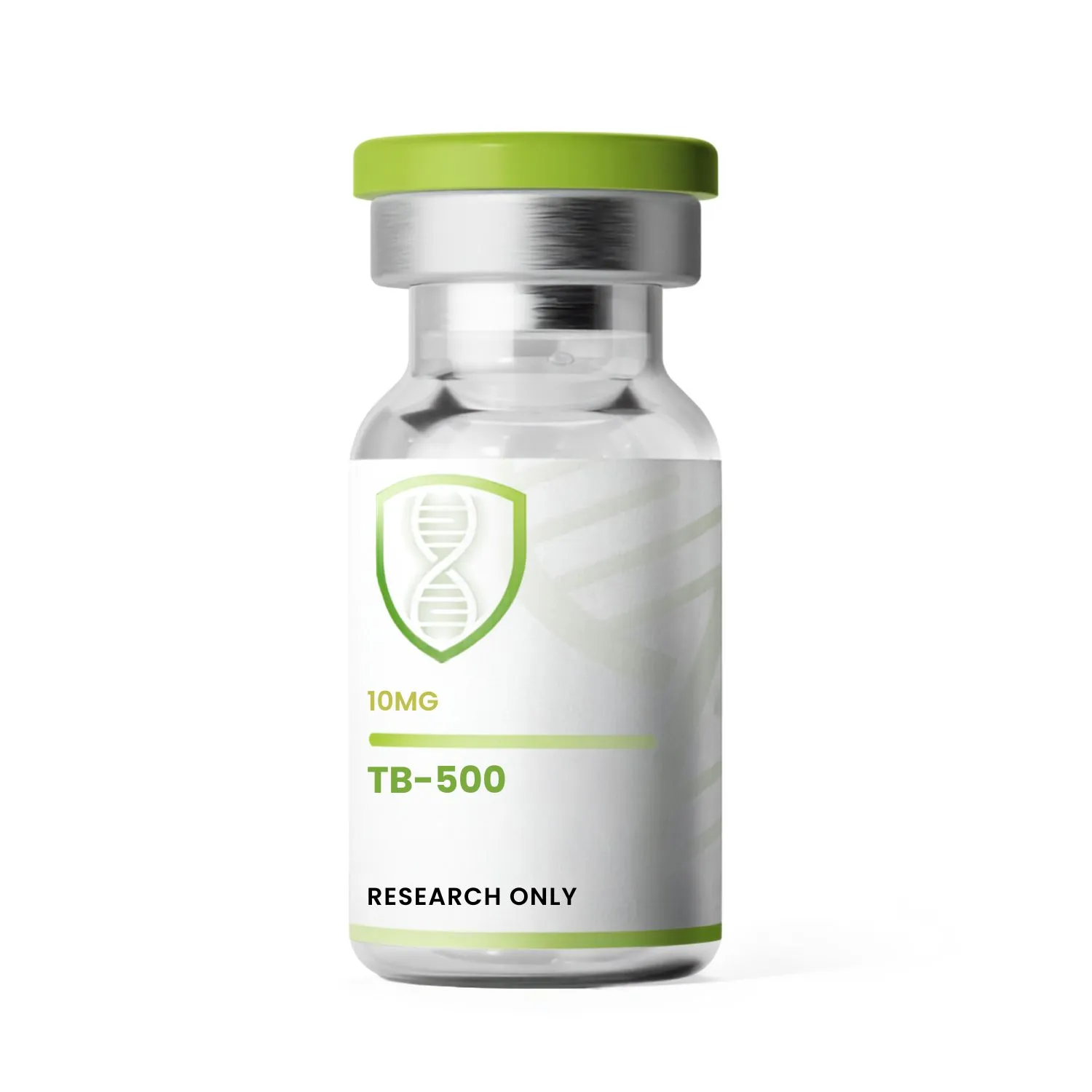
Buy TB-500 – 10mg

| Third-Party Tested | 99% Purity | COA Available | Research Use Only

TB-500 is a synthetic research peptide based on a biologically important region of thymosin beta-4 (Tβ4).

$60.00

0 out of 5 · 0 ratings
Be the first to rate this compound:

32 in stock

32 in stock

Bulk Pricing – Save More

3
Buy 3 units 5% OFF
$57.00 each Total: $171.00 (Save $9.00)
5
Buy 5 units 10% OFF
$54.00 each Total: $270.00 (Save $30.00)
10
Buy 10 units 15% OFF
$51.00 each Total: $510.00 (Save $90.00)

TB-500 10mg For Sale| 99% Purity| COA Available

TB-500 10mg is a synthetic research peptide based on a biologically important region of thymosin beta-4 (Tβ4). It is primarily studied in laboratory models related to actin regulation, cell migration, angiogenesis, tissue-repair pathways, and peptide metabolism. Researchers can buy TB-500 10mg from Orion Peptides for laboratory and analytical research. Orion Peptides supplies research-grade peptide material intended strictly for research purposes. TB-500 should not be confused with full-length thymosin beta-4. Thymosin beta-4 is a naturally occurring 43-amino-acid peptide that is widely distributed in mammalian tissues. TB-500 has been identified in the scientific literature as the shorter N-terminally acetylated sequence Ac-LKKTETQ, corresponding to residues 17–23 of thymosin beta-4. This distinction is important because much of the published literature on wound repair, angiogenesis, inflammation, and cellular migration examines full-length thymosin beta-4 rather than TB-500 itself.

What Is TB-500?

TB-500 is commonly described as an acetylated fragment derived from the actin-binding region of thymosin beta-4. A 2012 study by Esposito et al. analyzed a TB-500 preparation using high-resolution mass spectrometry. Researchers identified the compound as the N-terminally acetylated 17–23 fragment of human thymosin beta-4. TB-500 sequence: Ac-LKKTETQ The sequence contains seven amino-acid residues:
  • Leucine (L)
  • Lysine (K)
  • Lysine (K)
  • Threonine (T)
  • Glutamic acid (E)
  • Threonine (T)
  • Glutamine (Q)
The “Ac” indicates N-terminal acetylation. Research into this sequence is especially relevant because the LKKTETQ region is associated with actin-related biological activity within thymosin beta-4.

TB-500 and Actin Research

One of the main areas of TB-500 research involves actin. Actin is a highly conserved cellular protein involved in cell structure, movement, adhesion, and cytoskeletal organization. The interaction between thymosin beta-4 and actin has therefore received considerable scientific attention. Research by Philp et al. examined a seven-amino-acid actin-binding region within thymosin beta-4. The investigators reported that this motif played an important role in endothelial cell migration and angiogenesis-related activity in experimental models. The sequence studied corresponds closely to the region from which TB-500 is derived. These findings make TB-500 relevant for controlled laboratory studies investigating:
  • Actin-related signaling
  • Cytoskeletal organization
  • Cell migration
  • Endothelial cell behavior
  • Angiogenesis-related pathways
  • Peptide-protein interactions
However, results obtained with full-length thymosin beta-4 should not automatically be attributed to TB-500. The two compounds are structurally different and should be evaluated separately.

TB-500 and Cell Migration Research

Cell migration is an important biological process in tissue remodeling and experimental wound models. Thymosin beta-4 has been extensively studied for its relationship with cell migration. Earlier research demonstrated increased migration of endothelial cells and keratinocytes in laboratory models. The actin-binding sequence represented by residues 17–23 appears to play an important role in some of these effects. In a 2003 study published in The FASEB Journal, researchers examined thymosin beta-4, its fragments, and synthetic peptides. They found that the seven-amino-acid actin-binding motif was important for endothelial cell migration, adhesion, vessel sprouting, and angiogenesis-related activity. This makes TB-500 particularly interesting for laboratory models focused on cellular movement and actin-associated biological pathways.

TB-500 and Angiogenesis Research

Angiogenesis is the biological process through which new blood vessels develop from existing vessels. Thymosin beta-4 has been studied extensively in angiogenesis models. Research has reported effects involving endothelial cell migration, adhesion, tube formation, and blood-vessel development. Philp et al. found that a seven-amino-acid actin-binding motif within thymosin beta-4 was important for this angiogenic activity. The study compared full-length thymosin beta-4 with smaller synthetic peptide fragments. The results supported the importance of the central actin-binding region in experimental angiogenesis models. TB-500 therefore remains of interest for researchers studying the molecular relationship between peptide fragments, actin regulation, endothelial migration, and angiogenic signaling.

TB-500 and Tissue-Repair Research

A large portion of the scientific interest surrounding TB-500 comes from research involving thymosin beta-4 and tissue-repair pathways. In a classic 1999 study, Malinda et al. investigated full-length thymosin beta-4 in a rat dermal wound model. The researchers reported increased re-epithelialization, wound contraction, collagen deposition, and angiogenesis. It is important to note that this experiment examined thymosin beta-4 rather than TB-500 itself. Later studies investigated the active regions within thymosin beta-4. Research suggested that its central actin-binding sequence contributes to cellular migration and angiogenesis-related processes. For this reason, TB-500 is now studied as a separate research peptide when investigating the biological importance of this shorter sequence.

What Does Recent TB-500 Research Show?

A 2024 study by Rahaman et al. provides particularly useful evidence because it examined TB-500 itself rather than simply full-length thymosin beta-4. The researchers studied TB-500, identified as Ac-LKKTETQ, together with several of its metabolites. The investigation used UHPLC-Q-Exactive Orbitrap mass spectrometry to analyze TB-500 metabolism in experimental systems. Researchers identified several metabolites, including:
  • Ac-LK
  • Ac-LKK
  • Ac-LKKT
  • Ac-LKKTE
The study found that Ac-LK was the major metabolite during the first 0–6 hours in the rat model, while Ac-LKK remained detectable for up to 72 hours. Researchers also compared TB-500 and its metabolites using an in-vitro fibroblast wound-healing assay. Interestingly, the parent TB-500 peptide did not produce the strongest activity in this assay. The metabolite Ac-LKKTE showed significant wound-healing activity compared with the control. The researchers suggested that some biological activity previously attributed to TB-500 may potentially involve one or more of its metabolites. This study highlights why TB-500 remains an interesting compound for peptide metabolism, analytical chemistry, fibroblast, and cellular-repair research.

TB-500 vs Thymosin Beta-4

TB-500 and thymosin beta-4 are closely related, but they should not be described as identical compounds. Thymosin beta-4 is a naturally occurring peptide consisting of 43 amino acids. It is widely studied for its interaction with G-actin and its involvement in cell migration, angiogenesis, inflammatory signaling, and tissue-remodeling pathways. TB-500, as identified in direct analytical research, is the acetylated seven-amino-acid fragment: Ac-LKKTETQ This fragment corresponds to residues 17–23 within thymosin beta-4. Researchers should therefore avoid applying every finding from full-length thymosin beta-4 directly to TB-500. Direct experimental evidence involving the shorter TB-500 sequence remains much more limited.

Key Areas of TB-500 Research

Current and historical research makes TB-500 relevant to several laboratory research areas, including:

Actin-Binding Research

The LKKTETQ region is associated with the actin-binding domain of thymosin beta-4. This makes it useful for research into actin regulation and cytoskeletal processes.

Cell Migration

Actin dynamics are important for cellular movement. TB-500-related sequences are therefore studied in models involving endothelial cells, fibroblasts, and other migrating cell types.

Angiogenesis

Experimental studies involving the actin-binding motif of thymosin beta-4 have examined endothelial migration, adhesion, vessel sprouting, and angiogenesis-related processes.

Peptide Metabolism

Recent research has investigated how TB-500 is metabolized and which peptide fragments appear after exposure to biological systems.

Fibroblast Research

TB-500 and its metabolites have also been examined using cultured fibroblast models to evaluate cellular migration and experimental wound-closure activity.

TB-500 10mg From Orion Peptides

Orion Peptides offers TB-500 10mg for laboratory research. Researchers looking to buy TB-500 10mg can use the compound for controlled laboratory investigations involving peptide chemistry, actin-related mechanisms, peptide metabolism, cell migration, angiogenesis pathways, and other qualified research applications. Compound documentation such as the available Certificate of Analysis (COA) should be reviewed before laboratory use. Orion Peptides compounds are supplied strictly for research purposes and are not intended for human or veterinary use.

TB-500 Research Limitations

TB-500 research should be interpreted carefully. A significant amount of information published online about TB-500 comes from experiments involving full-length thymosin beta-4. Those findings cannot automatically be considered evidence for the shorter Ac-LKKTETQ peptide. Direct research on TB-500 remains comparatively limited. The 2024 study by Rahaman et al. is particularly important because it directly investigated TB-500 and its metabolites. That research also demonstrated that biological activity may differ between the parent peptide and its metabolic fragments. More controlled research is needed to establish the molecular properties and biological activity of TB-500 independently from full-length thymosin beta-4.

Research Use Only

TB-500 10mg available from Orion Peptides is intended strictly for laboratory research purposes. It is not intended for human or veterinary use, consumption, diagnosis, treatment, or therapeutic applications.

References

  1. Esposito S, Deventer K, Goeman J, Van der Eycken J, Van Eenoo P. Synthesis and characterization of the N-terminal acetylated 17–23 fragment of thymosin beta 4 identified in TB-500, a compound suspected to possess doping potential. Drug Testing and Analysis. 2012;4(9):733–738. DOI: 10.1002/dta.1402. PMID: 22962027.
  2. Rahaman KA, Muresan AR, Min H, et al. Simultaneous quantification of TB-500 and its metabolites in in-vitro experiments and rats by UHPLC-Q-Exactive Orbitrap MS/MS and their screening by wound healing activities in-vitro. Journal of Chromatography B. 2024;1235:124033. DOI: 10.1016/j.jchromb.2024.124033. PMID: 38382158.
  3. Philp D, Scheremeta B, Sibliss K, et al. The actin binding site on thymosin β4 promotes angiogenesis. The FASEB Journal. 2003. DOI: 10.1096/fj.03-0121fje.
  4. Malinda KM, Sidhu GS, Mani H, et al. Thymosin beta4 accelerates wound healing. Journal of Investigative Dermatology. 1999;113(3):364–368. DOI: 10.1046/j.1523-1747.1999.00708.x. PMID: 10469335.
  5. Philp D, Goldstein AL, Kleinman HK. Thymosin β4 promotes angiogenesis, wound healing, and hair follicle development. Mechanisms of Ageing and Development. 2004;125(2):113–115. DOI: 10.1016/j.mad.2003.11.005.

Research Use Only

This compound is intended for laboratory research use only. It is not intended for human or animal consumption, or for use in diagnostic or therapeutic procedures.

Chemical Properties

Molecular Formula C212H350N56O78S
Molecular Mass 4963 g/mol
Monoisotopic Mass 4960.4863169 Da
Polar Area 2250 Ų
Complexity 12200
XLogP -43.5
Heavy Atom Count 347
Hydrogen Bond Donor Count 72
Hydrogen Bond Acceptor Count 88
Rotatable Bond Count 180
CID 16132341
InChI InChI=1S/C212H350N56O78S/c1-16-106(7)166(261-190(323)131(64-75-160(292)293)231-172(305)109(10)228-174(307)134(78-91-347-15)245-196(329)140(98-165(302)303)255-201(334)147-53-39-88-266(147)209(342)135(52-29-38-87-221)250-197(330)139(97-164(300)301)254-198(331)143(100-269)229-113(14)276)204(337)246-129(62-73-158(288)289)187(320)233-118(47-24-33-82-216)179(312)252-137(94-114-42-19-18-20-43-114)194(327)253-138(96-163(298)299)195(328)237-121(50-27-36-85-219)181(314)258-144(101-270)199(332)239-119(48-25-34-83-217)178(311)251-136(92-104(3)4)193(326)236-116(45-22-31-80-214)175(308)235-122(51-28-37-86-220)189(322)263-168(110(11)273)207(340)249-133(66-77-162(296)297)192(325)264-169(111(12)274)206(339)248-126(58-69-152(224)279)184(317)243-128(61-72-157(286)287)186(319)234-120(49-26-35-84-218)180(313)256-142(95-153(225)280)211(344)268-90-40-54-148(268)202(335)257-141(93-105(5)6)210(343)267-89-41-55-149(267)203(336)259-145(102-271)200(333)238-117(46-23-32-81-215)177(310)244-132(65-76-161(294)295)191(324)265-170(112(13)275)208(341)262-167(107(8)17-2)205(338)247-130(63-74-159(290)291)188(321)241-125(57-68-151(223)278)183(316)242-127(60-71-156(284)285)185(318)232-115(44-21-30-79-213)176(309)240-124(56-67-150(222)277)173(306)227-108(9)171(304)226-99-154(281)230-123(59-70-155(282)283)182(315)260-146(103-272)212(345)346/h18-20,42-43,104-112,115-149,166-170H,16-17,21-41,44-103,213-221H2,1-15H3,(H2,222,277)…
InChIKey UGPMCIBIHRSCBV-XNBOLLIBSA-N
IUPAC Name (4S)-4-[[2-[[(2S)-2-[[(2S)-2-[[(2S)-2-[[(2S)-2-[[(2S)-2-[[(2S)-2-[[(2S,3S)-2-[[(2S,3R)-2-[[(2S)-2-[[(2S)-2-[[(2S)-1-[(2S)-2-[[(2S)-1-[(2S)-2-[[(2S)-2-[[(2S)-2-[[(2S)-2-[[(2S,3R)-2-[[(2S)-2-[[(2S,3R)-2-[[(2S)-2-[[(2S)-2-[[(2S)-2-[[(2S)-2-[[(2S)-2-[[(2S)-2-[[(2S)-2-[[(2S,3S)-2-[[(2S)-2-[[(2S)-2-[[(2S)-2-[[(2S)-2-[[(2S)-1-[(2S)-2-[[(2S)-2-[[(2S)-2-acetamido-3-hydroxypropanoyl]amino]-3-carboxypropanoyl]amino]-6-aminohexanoyl]pyrrolidine-2-carbonyl]amino]-3-carboxypropanoyl]amino]-4-methylsulfanylbutanoyl]amino]propanoyl]amino]-4-carboxybutanoyl]amino]-3-methylpentanoyl]amino]-4-carboxybutanoyl]amino]-6-aminohexanoyl]amino]-3-phenylpropanoyl]amino]-3-carboxypropanoyl]amino]-6-aminohexanoyl]amino]-3-hydroxypropanoyl]amino]-6-aminohexanoyl]amino]-4-methylpentanoyl]amino]-6-aminohexanoyl]amino]-6-aminohexanoyl]amino]-3-hydroxybutanoyl]amino]-4-carboxybutanoyl]amino]-3-hydroxybutanoyl]amino]-5-amino-5-oxopentanoyl]amino]-4-carboxybutanoyl]amino]-6-aminohexanoyl]amino]-4-amino-4-oxobutanoyl]pyrrolidine-2-carbonyl]amino]-4-methylpentanoyl]pyrrolidine-2-carbonyl]amino]-3-hydroxypropanoyl]amino]-6-aminohexanoyl]amino]-4-carboxybutanoyl]amino]-3-hydroxybutanoyl]amino]-3-methylpentanoyl]amino]-4-carboxybutanoyl]amino]-5-amino-5-oxopentanoyl]amino]-4-carboxybutanoyl]amino]-6-aminohexanoyl]amino]-5-amino-5-oxopentanoyl]amino]propanoyl]amino]acetyl]amino]-5-[[(1S)-1-carboxy-2-hydroxyethyl]amino]-5-oxopentanoic acid
Smiles CC[C@H](C)[C@@H](C(=O)N[C@@H](CCC(=O)O)C(=O)N[C@@H](CCCCN)C(=O)N[C@@H](CC1=CC=CC=C1)C(=O)N[C@@H](CC(=O)O)C(=O)N[C@@H](CCCCN)C(=O)N[C@@H](CO)C(=O)N[C@@H](CCCCN)C(=O)N[C@@H](CC(C)C)C(=O)N[C@@H](CCCCN)C(=O)N[C@@H](CCCCN)C(=O)N[C@@H]([C@@H](C)O)C(=O)N[C@@H](CCC(=O)O)C(=O)N[C@@H]([C@@H](C)O)C(=O)N[C@@H](CCC(=O)N)C(=O)N[C@@H](CCC(=O)O)C(=O)N[C@@H](CCCCN)C(=O)N[C@@H](CC(=O)N)C(=O)N2CCC[C@H]2C(=O)N[C@@H](CC(C)C)C(=O)N3CCC[C@H]3C(=O)N[C@@H](CO)C(=O)N[C@@H](CCCCN)C(=O)N[C@@H](CCC(=O)O)C(=O)N[C@@H]([C@@H](C)O)C(=O)N[C@@H]([C@@H](C)CC)C(=O)N[C@@H](CCC(=O)O)C(=O)N[C@@H](CCC(=O)N)C(=O)N[C@@H](CCC(=O)O)C(=O)N[C@@H](CCCCN)C(=O)N[C@@H](CCC(=O)N)C(=O)N[C@@H](C)C(=O)NCC(=O)N[C@@H](CCC(=O)O)C(=O)N[C@@H](CO)C(=O)O)NC(=O)[C@H](CCC(=O)O)NC(=O)[C@H](C)NC(=O)[C@H](CCSC)NC(=O)[C@H](CC(=O)O)NC(=O)[C@@H]4CCCN4C(=O)[C@H](CCCCN)NC(=O)[C@H](CO)NC(=O)C

Certificate of Analysis

Quality

Every batch of Buy TB-500 – 10mg is tested for purity and identity using industry-standard methods.

HPLC Analysis

High-Performance Liquid Chromatography confirms purity ≥99%. Each batch is analyzed to ensure consistent quality.

Mass Spectrometry (MS)

Identity verification via mass spectrometry confirms correct molecular weight of 4113.58 g/mol.

Third-Party Testing

All compounds undergo independent third-party laboratory testing for quality assurance.

Request COA

Certificate of Analysis documents are available for all compounds. Contact us with your order number to request batch-specific documentation.

COA Lab Tests

Each compound batch is tested by independent laboratories to verify purity, identity, and quality. The Certificate of Analysis (COA) provides transparent lab results, ensuring the compound meets strict research-grade standards.

Storage & Handling

B‍efore Reco‌nstitution (‌Powder Fo‌rm)‍

  • Lon‌g-Term Storage (⁠Over 4 Weeks⁠)
  • Store in fr⁠eezer at -80°C or colder
  • Ideally main⁠tain temper⁠ature at -80°⁠C
  • Can rem‌ain stable for years when stored properly
  • Use desiccant pack to pr‌event moisture exposure

After Reconstitution (Liquid Form)

  • Must be refrigerated at 2-4°C immed‌iately
  • Pl‍ace on the middle shelf, not on the door
  • Protect the solution from light exposure‌
  • Stable for several weeks up to 6 weeks‌

‌S‍hort-Te‍rm⁠ Stor⁠age‍ (Up to 4 Weeks)

  • Short-term refri⁠geration under 4-°C is generally acceptable
  • ⁠Cold storage is recommended for o‌ptimal stability

After Reconstitution (Liquid Form)

  • Must be refrigerated at 2-4°C immed‌iately
  • Pl‍ace on the middle shelf, not on the door
  • Protect the solution from light exposure‌
  • Stable for several weeks up to 6 weeks‌

×
On Sale
Out of Stock

Storage

Store at -20°C.
Protect from light and moisture.

Added to cart successfully!

Certificate of Analysis

ORP#00077

Client:
Orion Peptides
Sample:
TB-500 10mg
Batch:
202609TB500-10

Tests Requested:
Standard + Endotoxins + Sterility
Appearance:
White Lyophilized Powder in 3mL Vial

Analysis Conducted on:
09/02/2026
Report Issued on:
09/03/2026
Test Method Result Specification  
Identity HPLC-DAD TB-500 TB-500 Pass
Purity HPLC-DAD 99.43 >99% by HPLC Pass
Quantity HPLC Analyte Concentration Curve Assay 10.41 10mg Pass
Endotoxins LAL ELISA 0.105 EU/mL ≤ 0.5 EU/mL Pass
Sterility Pour Plate No Growth No Growth Pass