

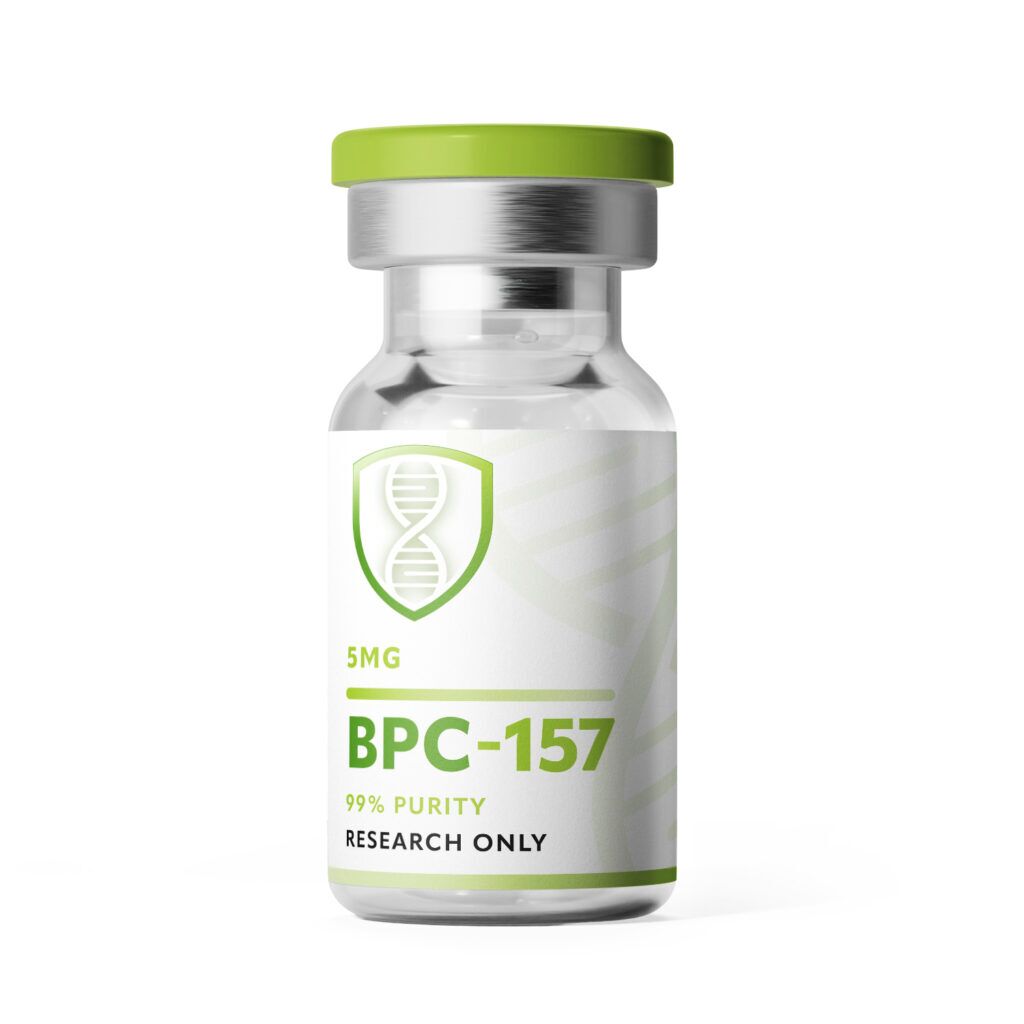
BPC-157 (Body Protection Compound-157) is a synthetic 15-amino acid peptide based on a protective protein found in human gastric juice. It has generated significant interest in preclinical studies due to its potential significance for tissue repair, recovery after injury, intestinal health, and anti-inflammation.
There has been much discussion in recent months regarding its regulatory status. Reports from both Reuters and The New York Times (March 31, 2026) say the U.S. FDA plans to relax some restrictions on several peptides, including BPC-157. This would enable licensed compounding pharmacies to resume production under stricter guidelines and physician oversight. However, as of May 2026, BPC-157 is not FDA-approved for any medical use. It is still only classified as a research compound.
Important Disclaimer:
BPC-157 is available as a research chemical only. It is not an F.D.A.-approved drug or treatment for humans yet; it has no therapeutic value, and it does not cure any medical condition. This article is intended for informational purposes related to its research status and should not be construed as medical advice.
What Is BPC-157?
BPC-157 is a stable gastric pentadecapeptide with the amino acid sequence GEPPPGKPADDAGLV. It was first isolated from human gastric juice and subsequently synthesized for laboratory study. More specifically, its cytoprotective properties and the ability to support healing processes in models of animals have caught the attention of researchers.
Because it remains stable against gastric acid, it is typically studied through oral dosing in preclinical work — a suspiciously rare trait among peptides.
Research-Based Benefits of BPC-157
BPC-157 has been studied in animal and in-vitro studies for several major areas:
1. Tendon and Ligament Healing
In several rodent studies, BPC-157 speeds the healing of injured tendons and ligaments. It seems to enhance collagen alignment and biomechanical strength at the site of injury.
2. Muscle Injury Recovery
Studies have shown enhanced functional recovery following contusion or tears of muscle, with reduced fibrosis (scar tissue formation) in treated animals.
3. Gastrointestinal Protection
Moroever, it has shown potent protective effects on the gut lining in models of ulcers, fistulas, and inflammatory bowel disease. It supports mucosal integrity and decreases inflammation in research studies.
4. Promotion of Angiogenesis
Research suggests that BPC-157 promotes angiogenesis (the development of new blood vessels) by increasing the levels of vascular endothelial growth factor (VEGF), which is essential for tissue healing. But this is limited to lab use only.
5. Anti-Inflammatory Effects
BPC-157 seems to regulate inflammatory cytokines and has been demonstrated to ameliorate edema and inflammatory cell infiltration in multiple injury research models.
6. Neuroprotective Potential
Initial studies indicate that there may be beneficial effects in models of spinal cord injury and traumatic brain injury via decreased inflammation and enhanced nerve regeneration.
Note: The above-mentioned benefits are only observed in animal and in-vitro studies. So far, there have been no large human clinical trials to demonstrate what effects it has on people. BPC-157 has not been approved for any medical use.
Current FDA Status of BPC-157
The FDA has not approved BPC-157 as of April 2026. It had previously been listed as restricted compounding under the FDA because of safety and characterization concerns.
According to both Reuters and The New York Times, which reported on March 31, 2026, the FDA is beginning the process of re-evaluating and possibly removing restrictions from nearly 14 peptides; this includes BPC-157. This would enable certain licensed compounding pharmacies to restart in the presence of a physician. But just because restrictions are lifted doesn’t mean BPC-157 is now a drug. Full FDA approval entails well-documented clinical trials demonstrating safety and efficacy for particular indications — a process that has not yet taken place with BPC-157.
Limitations of Current Research
Most evidence on the effects of BPC-157 has been obtained from animal models (eg, rats and mice) and cell culture studies. Data on humans are scarce and preliminary. The long-term safety in humans has not been ascertained, and animal results may not necessarily apply to humans. It needs to be replicated in more independent, larger-scale human trials.”
Final Thoughts
BPC-157 is a tantalizing research peptide with some interesting preclinical data regarding tissue healing and cytoprotection. The legitimate news recently reported by Reuters and The New York Times has sparked a sound of interest, but (Important)’BPC-157 is not an FDA-approved drug, only for research use.
If you are a qualified researcher, ensure the source of BPC-157 is reputable with validated purity metrics, Certificates of Analysis, and “Research Use Only” labeling. Adhere to all institutional and ethical research standards.
Notice: All peptides and Research Peptides are intended for laboratory research purposes only.
References
- Reuters (March 31, 2026). The FDA in the US plans to release restrictions on particular peptides.
- The New York Times (Mar. 31, 2026) Restrictions on US Peptides to be Lifted by FDA
- Seiwerth S, et al. BPC 157 vs regular angiogenic growth factors. Curr Pharm Des. 2014.
- Sikiric P, et al. BPC 157 stable gastric pentadecapeptide in inflammatory bowel disease trials. Curr Pharm Des. 2014.
- Chang CH, et al. Pentadecapeptide BPC 157 promotes tendon healing: Involvement of tendon outgrowth, cell survival and angiogenesis J Appl Physiol. 2011.
- Hsieh MJ, et al. Cited by: Therapeutic potential of proangiogenic BPC-157 in tendon healing. J Orthop Res. 2017.
- Vukojevic J, et al. Uses in muscle, tendon ligament healing. Curr Pharm Des. 2020.
