Popular
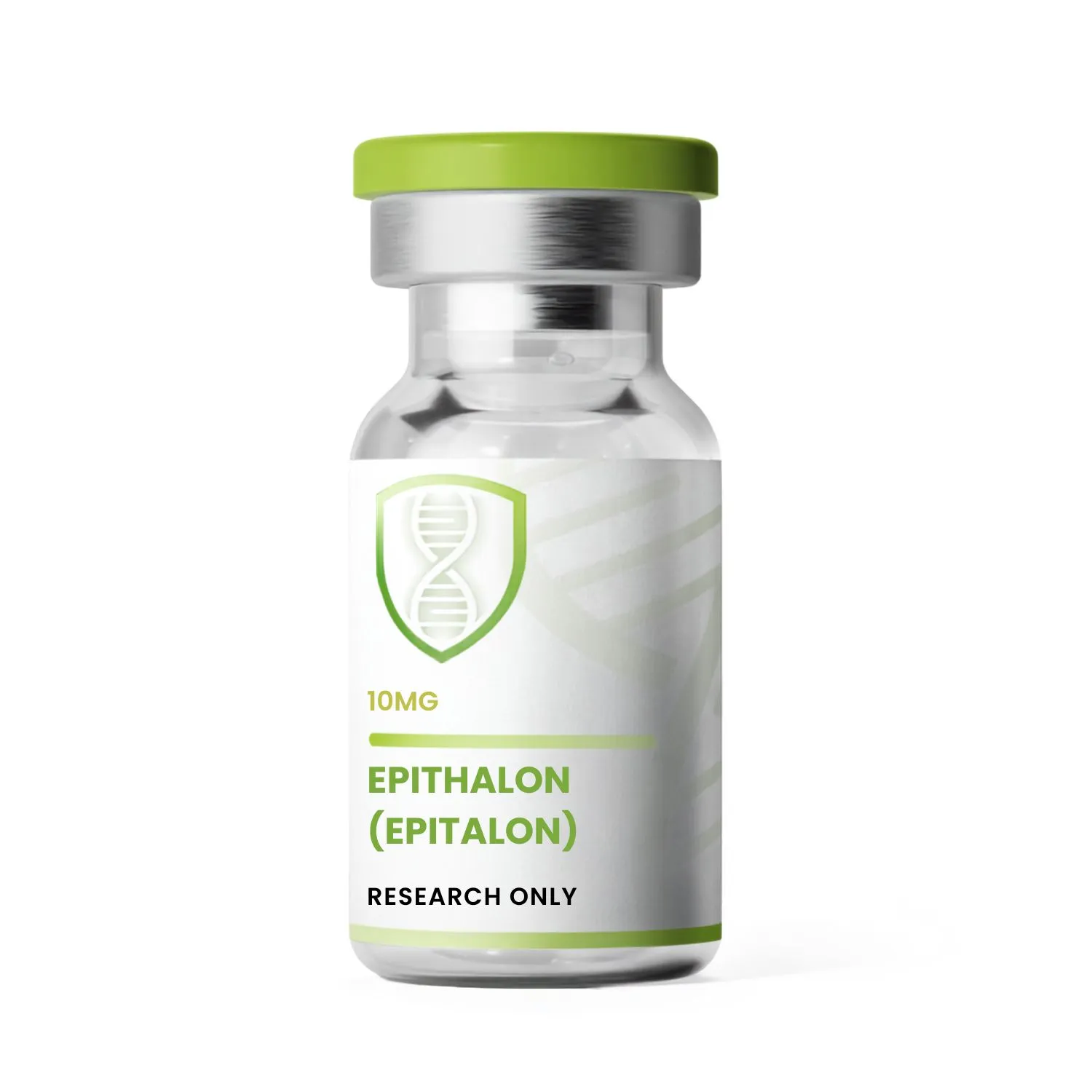
Order online Epithalon (Epitalon) 10mg

Buy Epithalon (Epitalon) – 10mg

| Third-Party Tested | 99% Purity | COA Available | Research Use Only

Epithalon 10 mg is a synthetic peptide designed exclusively for laboratory and scientific research.

$77.00

0 out of 5 · 0 ratings
Be the first to rate this compound:

17 in stock

17 in stock

Bulk Pricing – Save More

3
Buy 3 units 5% OFF
$73.15 each Total: $219.45 (Save $11.55)
5
Buy 5 units 10% OFF
$69.30 each Total: $346.50 (Save $38.50)
10
Buy 10 units 15% OFF
$65.45 each Total: $654.50 (Save $115.50)

Epithalon 10mg For Sale

Epithalon, also known as Epitalon, is a synthetic tetrapeptide consisting of four amino acids. Its sequence is Alanine-Glutamic Acid-Aspartic Acid-Glycine (AEDG). The compound was developed from research on Epithalamin, a peptide preparation associated with the pineal gland. Epithalon has attracted scientific attention for its potential involvement in telomere regulation, cellular aging, and neuroendocrine signaling. Early laboratory studies have investigated its effects on telomerase activity, chromosome stability, and the replicative capacity of cultured cells. Researchers have also examined Epithalon in animal models involving circadian regulation, oxidative stress, and age-related biological changes. Although some findings are promising, its biological effects remain investigational and should not be interpreted as established therapeutic benefits. At Orion Peptides, we offer Epithalon 10mg as a research-grade peptide supplied in lyophilized powder form. Each vial contains 10mg of the compound for laboratory investigation. Research Use Only: Epithalon is intended strictly for laboratory research purposes. It is not FDA-approved for human consumption, therapeutic use, or veterinary applications.

Epithalon 10mg Compound Specifications

Specification Details
Compound Name Epithalon 10mg
Alternative Name Epitalon
Peptide Classification Synthetic tetrapeptide
Amino Acid Sequence Ala-Glu-Asp-Gly (AEDG)
Molecular Formula C₁₄H₂₂N₄O₉
Molecular Weight 390.35 g/mol
Quantity 10mg per vial
Physical Form Lyophilized powder
Primary Research Areas Telomerase, cellular aging, pineal signaling
Intended Use Laboratory research only

Molecular Structure and Scientific Background

Epithalon is a synthetic peptide developed through research led by Professor Vladimir Khavinson and colleagues at the St. Petersburg Institute of Bioregulation and Gerontology in Russia. Its molecular structure contains four amino acids arranged in a specific sequence: Ala-Glu-Asp-Gly. The compound was designed based on research involving Epithalamin, a peptide preparation derived from pineal gland tissue. Unlike Epithalamin, which contains a mixture of naturally extracted peptides, Epithalon has a defined four-amino-acid structure. This structural consistency allows researchers to investigate its molecular behavior in controlled experimental settings. Published studies have explored its interactions with cellular signaling, chromatin organization, telomerase expression, and neuroendocrine processes.

How Does Epithalon Work in Laboratory Research?

Epithalon is primarily investigated for its interaction with telomerase, an enzyme involved in maintaining the protective structures at the ends of chromosomes. These structures, known as telomeres, become progressively shorter during repeated cell division. When telomeres reach a critical length, cells may enter a state of senescence, a process in which they stop dividing. Experimental studies suggest that Epithalon may influence certain biological processes associated with telomere maintenance. However, its complete mechanism of action remains under investigation.

Telomerase Activation and Telomere Maintenance

One of the most frequently cited Epithalon studies was published by Khavinson and colleagues in 2003. Researchers examined the peptide in cultured human fetal fibroblasts that initially lacked detectable telomerase activity. The study reported that Epithalon exposure induced expression of the catalytic component of telomerase, increased enzyme activity, and promoted telomere elongation. A subsequent study in 2004 investigated its effects on the replicative capacity of cultured fibroblasts. Researchers observed that Epithalon-treated cells underwent approximately 10 additional divisions compared with untreated controls. These findings provide an experimental basis for continued investigation into the relationship between Epithalon, cellular senescence, and telomere biology. They do not demonstrate extended lifespan or anti-aging effectiveness in humans. References: Khavinson et al., 2003 and Khavinson et al., 2004.

Key Areas of Epithalon Research

1. Cellular Aging and Longevity Research

Epithalon has been examined in preclinical studies investigating biological aging, chromosome stability, and survival-related outcomes. A 2003 study published in Biogerontology evaluated the effects of Epithalon in female Swiss-derived SHR mice. Researchers observed a reduction in chromosome abnormalities and an increase in maximum lifespan in the experimental group. However, the study did not identify a significant improvement in mean lifespan or overall spontaneous tumor incidence. These findings suggest that Epithalon may influence selected age-related biological markers in experimental models. Additional research is necessary to establish the reproducibility and broader significance of these observations. Reference: Anisimov et al., 2003.

2. Pineal Gland and Circadian Rhythm Research

The pineal gland is a small neuroendocrine organ involved in producing melatonin, a hormone associated with sleep-wake cycles and biological timing. Because Epithalon was developed from pineal peptide research, scientists have investigated its potential effects on pineal signaling and circadian regulation. A study involving stress-exposed rats reported changes in C-Fos expression in pineal cells following Epithalon exposure. Other experimental research has examined how the peptide interacts with disrupted biological rhythms in animal models. Findings are not uniform. A separate study involving isolated pineal glands from young and old rats reported no significant change in melatonin secretion under its tested conditions. These findings highlight the importance of evaluating Epithalon under different experimental conditions rather than assuming a consistent effect on melatonin production. References: Sibarov et al., 2002 and Study on Pineal Melatonin Secretion.

3. Chromatin Structure and Gene Expression

Chromatin consists of DNA and associated proteins that help organize genetic material inside the cell nucleus. Its structure influences how genetic information becomes accessible during transcription and other cellular processes. A study published in Neuroendocrinology Letters investigated the interaction between Epithalon and chromatin in experimental aging models. Researchers reported changes in chromatin activity following exposure to the synthetic peptide. These observations have contributed to interest in short peptides as experimental tools for studying gene regulation and age-associated cellular changes. However, the precise molecular pathways and long-term biological implications require further investigation. Reference: Khavinson et al., 2003, Chromatin Research.

4. Oxidative Stress and Antioxidant Research

Oxidative stress occurs when reactive oxygen species exceed the capacity of a biological system to regulate them. Excessive oxidative activity can affect proteins, membrane lipids, and genetic material. Epithalon has been included in experimental research investigating antioxidant activity and the regulation of cellular defense systems. One study examined the antioxidant properties of pineal peptides in older rats. Researchers assessed antioxidant enzyme activity and biological markers associated with oxidative stress. The findings suggested that pineal peptides, including Epithalon, may influence antioxidant defense mechanisms under controlled experimental conditions. These findings remain limited to the models and conditions investigated. Reference: Antioxidant Properties of Pineal Peptides, 2007.

5. Experimental Oncology Research

Researchers have also examined Epithalon in animal models investigating age-related tumor development and cellular proliferation. The previously mentioned 2003 mouse study reported no significant difference in overall spontaneous tumor incidence between the experimental and control groups, although differences were observed for certain tumor types. Separate experimental investigations have examined its interactions with cell proliferation and apoptosis in chemically induced colon tumor models. These findings do not establish Epithalon as an anticancer compound or support therapeutic use. References: Anisimov et al., 2003 and Epitalon and Colon Carcinogenesis in Rats

Why Is Epithalon Studied in Cellular Aging Research?

Epithalon is of scientific interest because of its reported interaction with telomerase and cellular replication. Telomeres help protect chromosomes during cell division. Their progressive shortening is associated with cellular senescence and several aging-related biological processes. Unlike general antioxidant compounds, Epithalon has been investigated for its potential effects on telomerase expression and the replicative capacity of certain cultured cells. Its short amino acid sequence also makes it suitable for controlled laboratory experiments involving defined peptide structures. Nevertheless, cellular aging is a complex biological process involving multiple molecular pathways. Findings from isolated cell cultures cannot establish whether a compound affects organism-wide aging or lifespan.

Epithalon 10mg Storage and Laboratory Handling

Proper storage helps maintain the integrity of research peptides and reduces the risk of sample deterioration. Epithalon is supplied as a lyophilized powder, which allows laboratory personnel to store and prepare the compound under controlled conditions. Recommended laboratory storage considerations:
  • Lyophilized material: Store at -20°C for long-term preservation, subject to batch-specific stability documentation.
  • Light exposure: Keep sealed vials protected from direct sunlight.
  • Moisture: Maintain dry storage conditions and avoid unnecessary exposure to humidity.
  • Reconstituted solutions: Refrigerate at 2–8°C when supported by the laboratory’s validated protocol.
  • Handling: Use appropriate PPE and aseptic laboratory procedures.
  • Temperature changes: Avoid repeated freeze-thaw cycles.
The usable period after reconstitution depends on the solvent, concentration, handling conditions, and available stability data. A universal 30-day expiration period should not be assumed without compound-specific validation.

Why Buy Epithalon 10mg From Orion Peptides?

At Orion Peptides, we focus on providing research peptides with clear compound information and supporting quality documentation. Our Epithalon 10mg is supplied for laboratory research, with a focus on compound consistency and reliable fulfillment. Researchers purchasing from Orion Peptides can expect:
  • Third-party-tested research peptides.
  • Certificate of Analysis (COA) availability.
  • 10mg lyophilized research vials.
  • Same-day dispatch for eligible orders.
  • Estimated delivery within 3–5 business days across the USA.

Frequently Asked Questions About Epithalon 10mg

Is Epithalon the same as Epitalon?

Yes. Epithalon and Epitalon are two commonly used names for the same synthetic tetrapeptide, Ala-Glu-Asp-Gly (AEDG).

Is Epithalon 10mg third-party tested?

Yes. Orion Peptides provides third-party testing for its research peptides to support compound purity and quality verification.

Is a Certificate of Analysis available for Epithalon 10mg?

Yes. A Certificate of Analysis (COA) is available. Researchers can review the applicable analytical documentation to verify compound quality and purity.

How long does Epithalon 10mg take to ship?

Orion Peptides offers same-day dispatch for eligible orders. Delivery typically takes 3–5 business days, depending on location and shipping conditions.

What is Epithalon primarily studied for?

Epithalon is primarily studied for its interaction with telomerase activity, telomere maintenance, cellular senescence, chromatin organization, and pineal gland signaling in experimental models.

What is the molecular weight of Epithalon?

Epithalon has a molecular weight of approximately 390.35 g/mol and consists of four amino acids arranged in the AEDG sequence.

How should Epithalon 10mg be stored?

Unopened lyophilized vials should generally be stored at -20°C for long-term preservation, protected from light and moisture. Follow the compound’s batch-specific storage documentation.

Where can I buy Epithalon 10mg for laboratory research?

You can purchase Epithalon 10mg from Orion Peptides. We provide research-grade peptides, third-party testing documentation, and fast shipping across the USA.

Intended Research Use and Safety Disclaimer

Epithalon 10mg is supplied strictly for laboratory research purposes. It is not intended for human consumption, veterinary administration, diagnostic procedures, or therapeutic applications. Research findings from isolated cells and animal models cannot be directly applied to humans. Its clinical effectiveness and long-term safety have not been established. All handling must follow applicable laboratory safety procedures, institutional requirements, and relevant regulations.

Research Use Only

This compound is intended for laboratory research use only. It is not intended for human or animal consumption, or for use in diagnostic or therapeutic procedures.

Chemical Properties

Property GHRP-2
Molecular Formula C14H22N4O9
Molecular Mass 390.35 g/mol
Monoisotopic Mass 390.13867829 Da
Polar Area 225 Ų
Complexity 607
XLogP -5.5
Heavy Atom Count 27
Hydrogen Bond Donors 7
Hydrogen Bond Acceptors 10
Rotatable Bonds 12
PubChem CID 219042
InChIKey HGHOBRRUMWJWCU-FXQIFTODSA-N
IUPAC Name (4S)-4-[[(2S)-2-aminopropanoyl]amino]-5-[[(2S)-3-carboxy-1-(carboxymethylamino)-1-oxopropan-2-yl]amino]-5-oxopentanoic acid
SMILES C[C@@H](C(=O)N[C@@H](CCC(=O)O)C(=O)N[C@@H](CC(=O)O)C(=O)NCC(=O)O)N

Certificate of Analysis

Quality

Every batch of Buy Epithalon (Epitalon) – 10mg is tested for purity and identity using industry-standard methods.

HPLC Analysis

High-Performance Liquid Chromatography confirms purity ≥99%. Each batch is analyzed to ensure consistent quality.

Mass Spectrometry (MS)

Identity verification via mass spectrometry confirms correct molecular weight of 4113.58 g/mol.

Third-Party Testing

All compounds undergo independent third-party laboratory testing for quality assurance.

Request COA

Certificate of Analysis documents are available for all compounds. Contact us with your order number to request batch-specific documentation.

COA Lab Tests

Each compound batch is tested by independent laboratories to verify purity, identity, and quality. The Certificate of Analysis (COA) provides transparent lab results, ensuring the compound meets strict research-grade standards.

Storage & Handling

Before R‌econstitution (Powder⁠ Form‌)

  • S‌table at room temperature for 3 we⁠e‍ks only
  • ‍Not⁠ recommended for long-term room temperature storage
  • Use refri‍gerated⁠ or f⁠rozen storage for optima‍l stabi‍lity
  • For long-term st‌orage, store desiccated b⁠elow -18°C‌ or 0°F
  • Keep frozen⁠ for extended shelf life
  • Ma⁠intai‍n consistently frozen temp⁠erature

After Reconstitution (Liquid⁠ Form)

  • Store at 4°C or 39°F i⁠mmediately‍
  • Use withi‍n 2-7 days o‌f reconstitution
  • ⁠Keep re‍frigerated between uses
  • Place in the main compartment of the refrigerat‍or
  • D⁠o not store in r‌efrigerat⁠or door

Impo⁠rtant Storage Precautions

  • ⁠Mainta⁠in proper temperature at‍ all ti‍mes
  • Keep aw⁠ay from direct sunlight always
  • Us‍e high-quality insulated c⁠ooler during travel
  • Avoid direct contact between v⁠ials and ice
  • Look for unexpected cloudiness or haziness
  • Never l⁠ea‍ve vials or syringes unattende‌d

After Reconstitution (Liquid⁠ Form)

  • Store at 4°C or 39°F i⁠mmediately‍
  • Use withi‍n 2-7 days o‌f reconstitution
  • ⁠Keep re‍frigerated between uses
  • Place in the main compartment of the refrigerat‍or
  • D⁠o not store in r‌efrigerat⁠or door

×
On Sale
Out of Stock

Storage

Store at -20°C.
Protect from light and moisture.

Added to cart successfully!

Certificate of Analysis

ORP#00044

Client:
Orion Peptides
Sample:
Epithalon (Epitalon) 10mg
Batch:
202609EPI10

Tests Requested:
Standard + Endotoxins + Sterility
Appearance:
White Lyophilized Powder in 3mL Vial

Analysis Conducted on:
09/02/2026
Report Issued on:
09/03/2026
Test Method Result Specification  
Identity HPLC-DAD Epithalon Epithalon Pass
Purity HPLC-DAD 99.61 >99% by HPLC Pass
Quantity HPLC Analyte Concentration Curve Assay 10.23 10mg Pass
Endotoxins LAL ELISA 0.176 EU/mL ≤ 0.5 EU/mL Pass
Sterility Pour Plate No Growth No Growth Pass