Popular
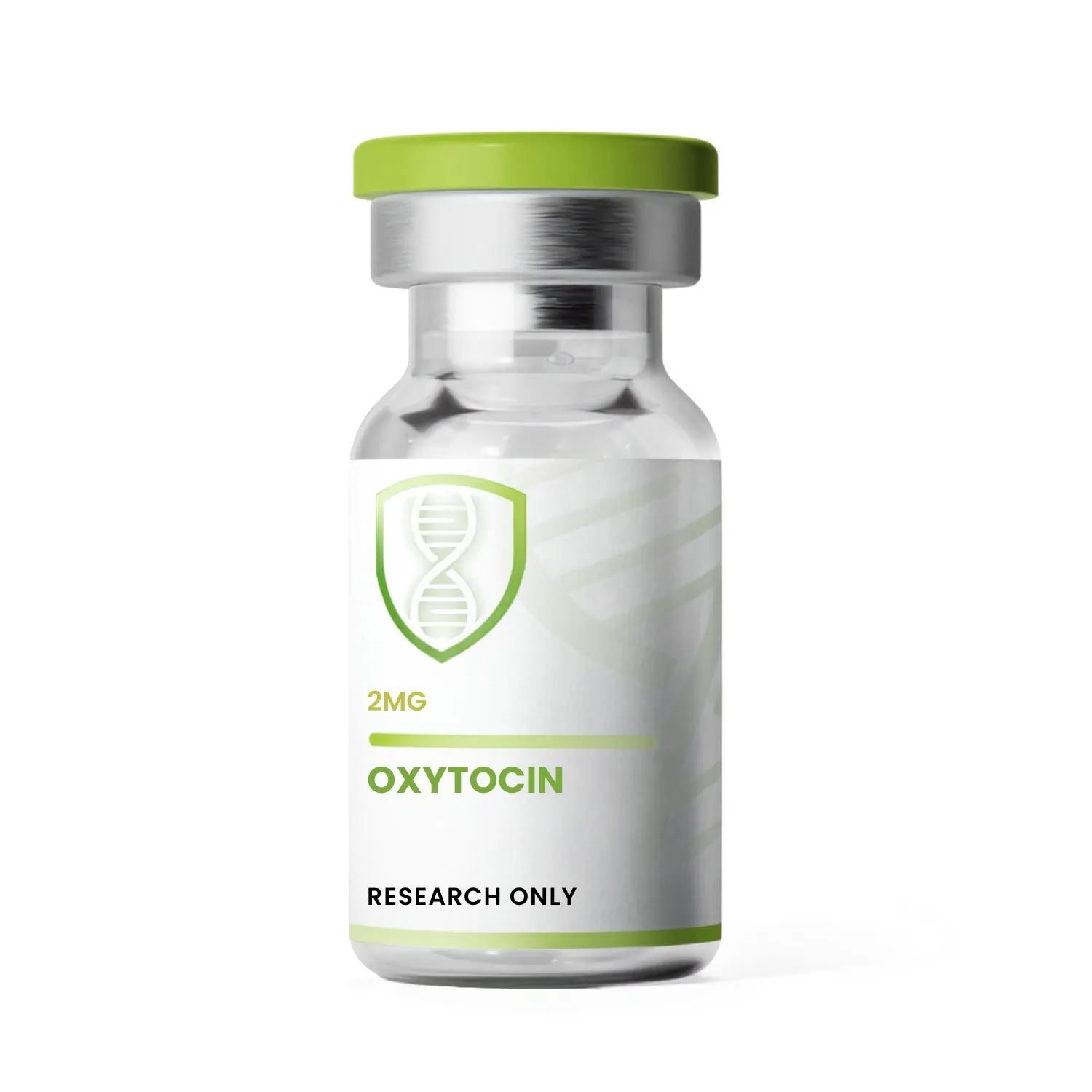
Buy Oxytocin 2mg

Buy Oxytocin – 2mg

| Third-Party Tested | 99% Purity | COA Available | Research Use Only

Oxytocin is a naturally occurring nonapeptide hormone synthesized primarily in the hypothalamus and transported to the posterior pituitary, where it is stored and released into the bloodstream.

$26.00

0 out of 5 · 0 ratings
Be the first to rate this compound:

13 in stock

13 in stock

Bulk Pricing – Save More

3
Buy 3 units 5% OFF
$24.70 each Total: $74.10 (Save $3.90)
5
Buy 5 units 10% OFF
$23.40 each Total: $117.00 (Save $13.00)
10
Buy 10 units 15% OFF
$22.10 each Total: $221.00 (Save $39.00)

Oxytocin 2mg For Sale

Oxytocin is a naturally occurring nonapeptide hormone, which is synthesized in the hypothalamus and secreted by the posterior pituitary gland. It is a nonapeptide that is most well-known in research for its functions in social bonding, reproductive physiology, stress modulation, and neuroendocrine signaling. Synthetic Oxytocin is studied in the laboratory regarding its role in the contraction of uterine smooth muscle, milk ejection, pair-bonding behaviors (in mammals), attenuation of anxiety and pain perception, as well as through anti-inflammatory pathways. It is supplied as high-purity lyophilized powder ( ≥99% via HPLC ) in 2mg vials, manufactured in the USA. Oxytocin is designed only for in vitro and in vivo laboratory research — not intended for human consumption, therapeutic use, or any non-research application, they wrote.

Oxytocin Mechanism of Action in Research

Oxytocin acts mainly by binding to the oxytocin receptor (OXTR), a class I G-protein-coupled receptor expressed in the uterus, mammary glands, brain (e.g., amygdala, hypothalamus, nucleus accumbens), and immune cells. Upon binding and receptor activation, the G protein coupled to the receptors is activated, leading to G_q/11-protein signaling via phospholipase C and IP3 pathway, increasing intracellular calcium and causing smooth muscle contraction (uterine myometrium) and secretion (milk ejection). Oxytocin also acts centrally by modulating the GABAergic and glutamatergic transmission, stimulating dopamine secretion in reward pathways, lowering amygdala activity with consequent anxiolytic and prosocial effects in behavioral models. It also mediates vasopressin pathways through partial cross-reactivity with V1a receptors, and it has been shown to exert anti-inflammatory effects by inhibiting NF-κB and pro-inflammatory cytokines (TNF-α, IL-6) in immune cells. These mechanisms are examined in models of social behavior, reproduction, stress resilience, pain modulation, and neuroinflammation.

Oxytocin Peptide Sequence and Chemical Properties

Oxytocin is a cyclic nonapeptide composed of nine amino acids. Its structure contains a disulfide bond between two cysteine residues (Cys¹ and Cys⁶), forming a six-residue ring. The peptide also has an amidated C-terminus, which contributes to its molecular structure and biological activity.

Oxytocin Chemical Properties

Property Correct Information
Compound Name Oxytocin
Molecular Formula C₄₃H₆₆N₁₂O₁₂S₂
Molecular Weight 1007.19 g/mol (approximately)
CAS Number 50-56-6
PubChem CID 439302
Amino Acid Length 9 amino acids
Amino Acid Sequence Cys-Tyr-Ile-Gln-Asn-Cys-Pro-Leu-Gly-NH₂
One-Letter Sequence CYIQNCPLG
Peptide Structure Cyclic nonapeptide
Disulfide Bond Cys¹–Cys⁶
C-Terminal Modification Amidation (–NH₂)
Molecular Classification Peptide hormone
Primary Receptor Oxytocin receptor (OXTR)
Reference: Oxytocin

Oxytocin Research

1. Reproductive and Uterine Effects

Oxytocin induces dose-dependent contractions through OXTR-mediated calcium influx in isolated uterine smooth muscle preparations and animal models. Research demonstrates that it improves myometrial contractility under labor-like conditions and facilitates milk ejection via mammary gland myoepithelial cell activation. Studies have addressed their involvement in the timing of parturition, involution of the postpartum uterus, and lactation physiology. Note: These studies are still limited and only true in the research environment. Oxytocin is not approved by the FDA for human consumption.

2. Social Behavior and Bonding

In rodent and primate models, Oxytocin administration (intracerebroventricular or peripheral) engages in pair-bonding, maternal care, and social recognition more readily. It increases time spent in social proximity, reduces aggression, and induces behaviour similar to trust in cooperative tasks. These effects are associated with OXTR activation in the nucleus accumbens and amygdala, which modulate reward and fear circuits.

3. Anxiolytic and Stress-Modulating Properties

Rodents show reduced anxiety-like behaviour on elevated plus-maze (EPM) and open-field tests with oxytocin. It inhibits hypothalamic CRH neurons and attenuates stress-induced ACTH and cortisol secretion. Research indicates it protects heart health and nervous system responses to stressors, with potential relevance in paradigms of anxiety disorders and PTSD.

4. Pain Modulation and Analgesia

Oxytocin exerts antinociceptive effects through both spinal and supraspinal mechanisms in models of acute and chronic pain. It suppresses nociceptive transmission in dorsal horn neurons and potentiates descending inhibitory pathways. Additionally, studies are being conducted on its use in reducing visceral pain, inflammatory hyperalgesia, and postoperative opioid sparing analgesia.

5. Neuroprotective and Anti-Inflammatory Actions

Oxytocin protects against excitotoxicity and oxidative stress in neuronal cultures and an ischemia model. In brain injury models, it decreases both microglial activation and pro-inflammatory cytokine secretion. Research explores its potential role in neurodegenerative diseases and neuroinflammation through oxytocin receptor (OXTR)-mediated anti-apoptotic and immunomodulatory mechanisms. Oxytocin is still investigational — no widespread human approval for non-obstetric uses bolsters its use. What continues to be explored is how it works in social neuroscience, reproductive physiology, stress resilience, pain ad neuroprotection.

Storage and Handling of Oxytocin

Unopened vials: Store at 2–8°C, protect from light and moisture. Do not freeze. Preserved with bacteriostatic water or sterile diluent in azide conditions. Refrigerate reconstituted solutions. To use Preservative within the stability window (usually 4–6 weeks at 2–8°C): Avoid repeated freeze-thaw cycles. Always use sterile technique, gloves, and appropriate PPE.

Important Disclaimer

Oxytocin is an investigational research peptide. For in vitro or in vivo laboratory research use only. Not FDA, EMA, or any authority approved for human therapeutic/reproductive/behavioural/analgesic/medical use outside specific obstetric indications. Research chemical (category: WADA S0 non-approved substances). Preclinical data do not predict human events. No claims are made for safety, efficacy, or benefits in humans. Immunogenicity or impurities could be among the possible risks. Only in qualified research facilities under institutional supervision. For the use of laboratories only — not for human or veterinary consumption.

Referenced Citations

Research Use Only

This compound is intended for laboratory research use only. It is not intended for human or animal consumption, or for use in diagnostic or therapeutic procedures.

Chemical Properties

Molecular Formula C43H66N12O12S2
Molecular Mass 1007.2 g/mol
Monoisotopic Mass 1006.43645793 Da
Polar Area 450 Ų
Complexity 1870
XLogP -2.6
Heavy Atom Count 69
Hydrogen Bond Donor Count 12
Hydrogen Bond Acceptor Count 15
Rotatable Bond Count 17
CID 439302
InChI InChI=1S/C43H66N12O12S2/c1-5-22(4)35-42(66)49-26(12-13-32(45)57)38(62)51-29(17-33(46)58)39(63)53-30(20-69-68-19-25(44)36(60)50-28(40(64)54-35)16-23-8-10-24(56)11-9-23)43(67)55-14-6-7-31(55)41(65)52-27(15-21(2)3)37(61)48-18-34(47)59/h8-11,21-22,25-31,35,56H,5-7,12-20,44H2,1-4H3,(H2,45,57)(H2,46,58)(H2,47,59)(H,48,61)(H,49,66)(H,50,60)(H,51,62)(H,52,65)(H,53,63)(H,54,64)/t22-,25-,26-,27-,28-,29-,30-,31-,35-/m0/s1
InChIKey XNOPRXBHLZRZKH-DSZYJQQASA-N
IUPAC Name (2S)-1-[(4R,7S,10S,13S,16S,19R)-19-amino-7-(2-amino-2-oxoethyl)-10-(3-amino-3-oxopropyl)-13-[(2S)-butan-2-yl]-16-[(4-hydroxyphenyl)methyl]-6,9,12,15,18-pentaoxo-1,2-dithia-5,8,11,14,17-pentazacycloicosane-4-carbonyl]-N-[(2S)-1-[(2-amino-2-oxoethyl)amino]-4-methyl-1-oxopentan-2-yl]pyrrolidine-2-carboxamide
Smiles CC[C@H](C)[C@H]1C(=O)N[C@H](C(=O)N[C@H](C(=O)N[C@@H](CSSC[C@@H](C(=O)N[C@H](C(=O)N1)CC2=CC=C(C=C2)O)N)C(=O)N3CCC[C@H]3C(=O)N[C@@H](CC(C)C)C(=O)NCC(=O)N)CC(=O)N)CCC(=O)N

Certificate of Analysis

Quality

Every batch of Buy Oxytocin – 2mg is tested for purity and identity using industry-standard methods.

HPLC Analysis

High-Performance Liquid Chromatography confirms purity ≥99%. Each batch is analyzed to ensure consistent quality.

Mass Spectrometry (MS)

Identity verification via mass spectrometry confirms correct molecular weight of 4113.58 g/mol.

Third-Party Testing

All compounds undergo independent third-party laboratory testing for quality assurance.

Request COA

Certificate of Analysis documents are available for all compounds. Contact us with your order number to request batch-specific documentation.

COA Lab Tests

Each compound batch is tested by independent laboratories to verify purity, identity, and quality. The Certificate of Analysis (COA) provides transparent lab results, ensuring the compound meets strict research-grade standards.

Storage & Handling

Before Use (Unopened)

  • Store in a refrigerator at 2°C to 8°C (36°F to 46°F)
  • Keep the temperature constant at all times
  • Store in the main refrigerator compartment — avoid the door

After Reconstitution (Liquid Form)

  • Continue storing at 2°C to 8°C (36°F to 46°F)
  • Keep the liquid form refrigerated between doses
  • Return to the refrigerator immediately after each use
  • Do not shake; handle gently to maintain stability

Storage During Travel

  • Keep in original packaging for protection
  • Minimize time outside the proper temperature range
  • Use an insulated cooler pack if traveling for more than 30–60 minutes
  • Return to the refrigerator as soon as you arrive
  • Plan for long trips to avoid temperature fluctuations

After Reconstitution (Liquid Form)

  • Continue storing at 2°C to 8°C (36°F to 46°F)
  • Keep the liquid form refrigerated between doses
  • Return to the refrigerator immediately after each use
  • Do not shake; handle gently to maintain stability

×
On Sale
Out of Stock

Storage

Store at -20°C.
Protect from light and moisture.

Added to cart successfully!

Certificate of Analysis

ORP#00058

Client:
Orion Peptides
Sample:
Oxytocin 2mg
Batch:
202609OXY2

Tests Requested:
Standard + Endotoxins + Sterility
Appearance:
White Lyophilized Powder in 3mL Vial

Analysis Conducted on:
09/01/2026
Report Issued on:
09/02/2026
Test Method Result Specification  
Identity HPLC-DAD Oxytocin Oxytocin Pass
Purity HPLC-DAD 99.10 >99% by HPLC Pass
Quantity HPLC Analyte Concentration Curve Assay 2.06 2mg Pass
Endotoxins LAL ELISA 0.060 EU/mL ≤ 0.5 EU/mL Pass
Sterility Pour Plate No Growth No Growth Pass