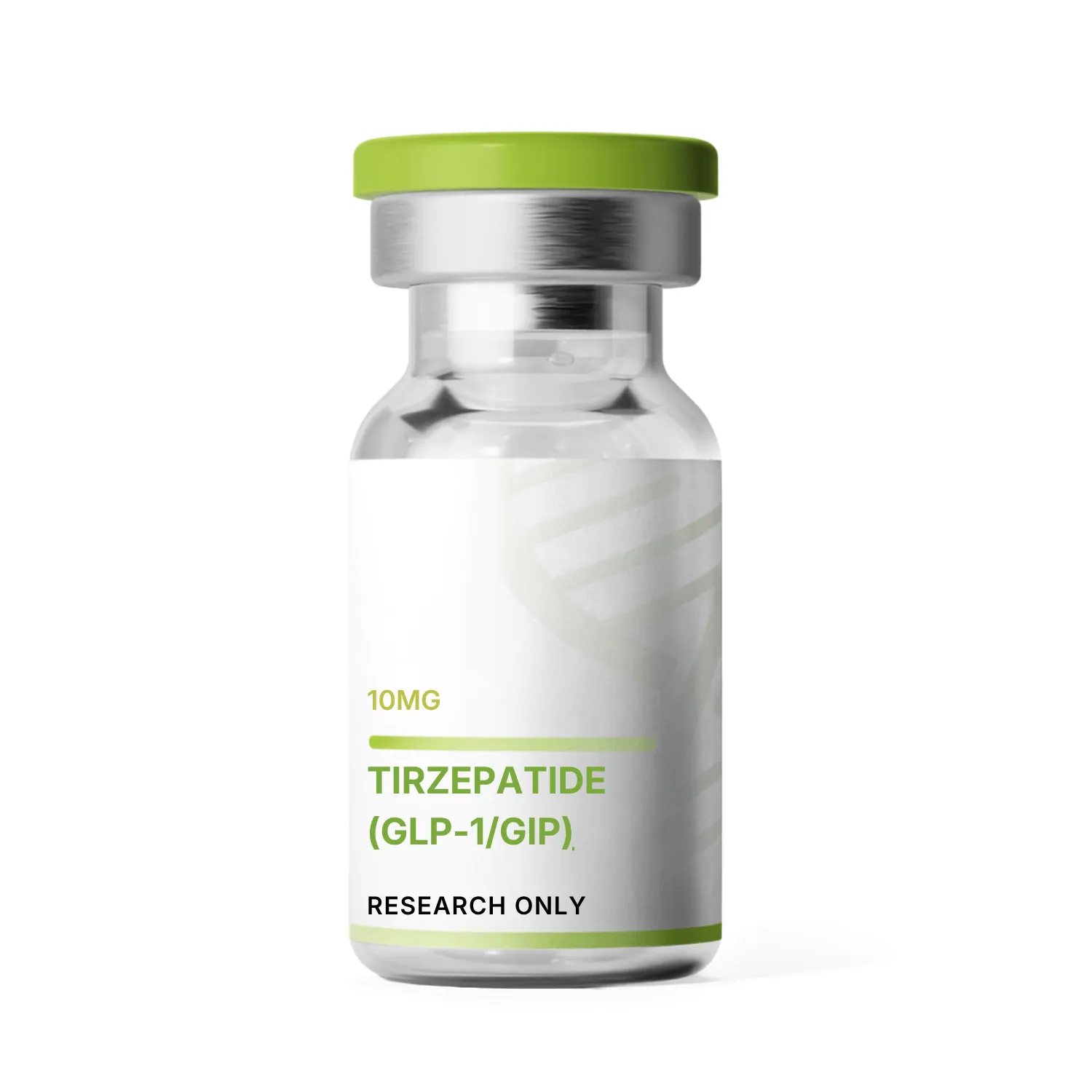
Buy Tirz (G.L.P) 10mg
Tirz (G.L.P) is a synthetic peptide developed for laboratory and scientific research. It is studied for its interaction with biological pathways controlling energy, metabolic signaling, and recovery in controlled experiments. The peptide is made with a specific amino acid sequence to ensure stability and consistency during research use. Its formulation supports structured investigation and repeatable observations in different experimental models. Tirz (G.L.P) is available in doses of 5 mg, 10 mg, and 15 mg,
30 mg enabling researchers to select a suitable quantity depending on the study and analytical requirements. All quantities are produced to support accuracy and reliability in research environments. This compound is for research purposes only and is not approved for human or veterinary use.
Tirz (G.L.P) Molecular Structure and Chemical Properties
Tirz (G.L.P) is a synthetic peptide containing 39 amino acids. Its structure is based on glucose-dependent insulinotropic polypeptide (G.I.P) and includes modifications that support its activity at both G.I.P and G.L.P-1 receptors. It also contains a C20 fatty diacid side chain that contributes to its extended half-life.
Tirz (G.L.P) Chemical Properties Table
| Property | Correct Information |
| Compound Name | Tirz (G.L.P) |
| Research Code | LY3298176 |
| Molecular Formula | C₂₂₅H₃₄₈N₄₈O₆₈ |
| Molecular Weight | Approximately 4,813 g/mol |
| CAS Number | 2023788-19-2 |
| PubChem CID | 156588324 |
| Amino Acid Length | 39 amino acids |
| Peptide Classification | Synthetic dual G.I.P/G.L.P-1 receptor agonist |
| Peptide Structure | Linear, lipidated peptide |
| Lipid Modification | C20 fatty diacid |
| Lipid Attachment Site | Lysine residue at position 20 |
| Disulfide Bonds | None |
| Primary Receptor Targets | GIPR and G.L.P-1R |
| Research Applications | Incretin signaling, receptor activation, and metabolic regulation |
The molecular formula, molecular weight, and chemical identifiers are
documented in PubChem. Tirz (G.L.P) 10MG
Tirz (G.L.P) 10MG is a mid-range research quantity used for studies involving extended analysis or progressive evaluation. It is commonly used when protocols require increased exposure of the peptide. It is applied in long-term studies to facilitate continuous observation and allow comparisons across different levels of exposure. Studies indicate that this dosage can influence pathways related to metabolic activity and recovery processes.
What is Tirz (G.L.P) Research?
Research on Tirz (G.L.P) examines its role in controlled laboratory studies. Researchers investigate interactions with biological pathways involved in energy signaling, metabolic regulation, and recovery processes. Different doses (5MG, 10MG, and 15MG) are tested to evaluate how exposure levels influence pathway activity. Observations are made under standardized conditions to ensure consistency and repeatability. These studies aim to identify trends and potential interactions rather than make clinical or therapeutic claims. All research is conducted in laboratory settings with proper protocols for handling and measurement. Tirz (G.L.P) is intended solely for scientific investigation and is not approved for human or veterinary use.
Tirz (G.L.P) and Daily Energy Related Pathways
In lab studies, Tirz (G.L.P) is tested for correlations with pathways involved in energy signaling and utilization. Observations monitor the response of biological systems to peptide exposure over time. Different research quantities allow evaluation of response patterns under standardized conditions. These investigations are intended to detect trends, not definitive outcomes.
Tirz (G.L.P) and Metabolic Pathway Activities
Tirz (G.L.P) is applied in experiments studying metabolic signaling. Researchers examine its potential interaction with pathways affecting energy efficiency and regulation. Comparative analyses across multiple conditions help understand variations in responses relative to peptide exposure. Findings are experimental and observational.
Tirz (G.L.P) and Recovery Process
Research applications include evaluating pathways related to system recovery and adaptation following experimental stress. Studies observe how biological systems stabilize and respond under controlled conditions. Dose selection depends on the research scope, duration, and objectives.
Choosing the Right Tirz (G.L.P) Strength
Tirz (G.L.P) comes in 5mg, 10mg, and 15mg doses to support different research goals. Lower doses are typically used in initial studies, while higher doses are applied in advanced or extended protocols. Each option ensures consistency, accuracy, and reliability in research.
How to Store and Handle Tirz (G.L.P) Safely
Tirz (G.L.P) should be stored in a cool, dry area, protected from direct light and moisture. Contamination should be avoided by using clean tools and following standard laboratory practices. All samples should be handled and stored under these recommended conditions.
Intended Research Use & Disclaimer
Tirz (G.L.P) is provided solely for laboratory and scientific research. It is not for human or veterinary use and is not approved for clinical, therapeutic, or diagnostic applications. Any references to potential activity are based on experimental observations and do not indicate medical efficacy. Use the peptide according to all laboratory safety regulations and guidelines.
Referenced Citation
- Jastreboff AM, et al. (2022). Tirz (G.L.P) once weekly for the treatment of obesity. New England Journal of Medicine.
- Frías JP, et al. (2021). Tirz (G.L.P) versus semaglutide once weekly in patients with type 2 diabetes. New England Journal of Medicine.
- Heise T, et al. (2023). Effects of Tirz (G.L.P) on body weight and glycemic control in patients with type 2 diabetes. Diabetes Care.
- Dahl D, et al. (2022). Tirz (G.L.P) reduces appetite, energy intake, and fat mass in people with type 2 diabetes. Diabetes Care.