

BPC-157, TB-500 and GHK-Cu are three of the most common research peptides used by researchers investigating tissue repair, wound healing, and regenerative processes. Different molecules have unique mechanisms and are tested in various preclinical models. This article compares their performance side-by-side, confined to laboratory and animal studies.
Important Disclaimer:
BPC-157, TB-500, and GHK-Cu are all sold as research chemicals only. They are not approved for human consumption, therapeutic use or any medical purpose by the F.D.A. This comparison is for research purposes only.
What Is BPC-157?
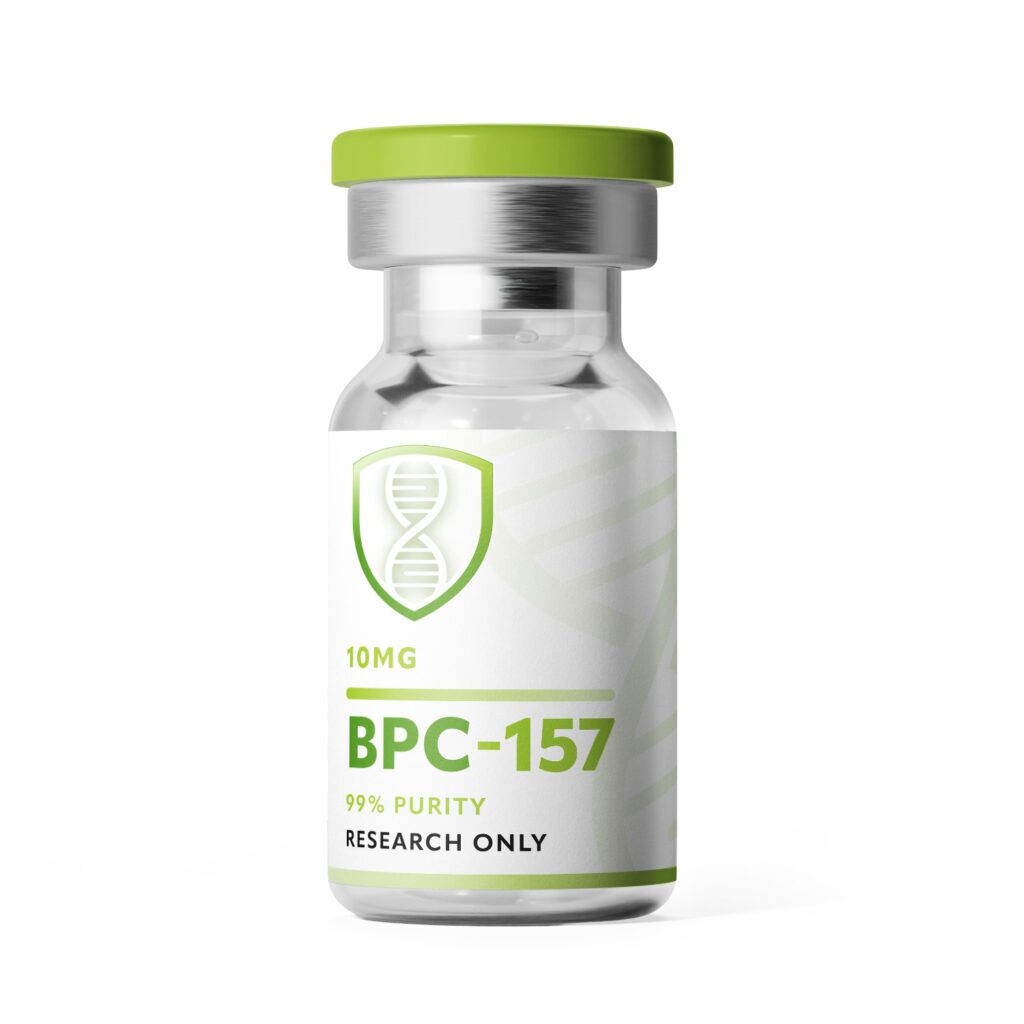
BPC-157 (Body Protection Compound-157) is a synthetic 15 amino acid peptide derived from the protective protein found in human gastric juice. It is mainly studied in laboratory research for its cytoprotective and healing mechanism. It is commonly studied in animal injury models for its effect on tendon, ligament, muscle, and gastrointestinal tissue repair.
Key research focus:
- New blood vessel formation ( angiogenesis)
- Collagen organization & tissue remodeling
- Gastrointestinal mucosal protection
- Anti-inflammatory modulation
What Is TB-500?
TB-500 is a synthetic imitation of Thymosin Beta-4, a 43-amino acid peptide that occurs naturally in the body. As a research chemical, TB-500 is investigated for its actin-sequestering properties as well as the role it plays in cell migration, differentiation, and tissue regeneration. It is widely applied in animal models of muscle, tendon and ligament injury.
Key research focus:
- Cell motility and actin sequestration
- Healing of wounds and tissue restoration
- Anti-inflammatory and anti-fibrotic effects
- Blood vessel development and angio-genesis
What Is GHK-Cu?
GHK-Cu (Glycyl-L-Histidyl-L-Lysine Copper) is a naturally occurring copper-binding tripeptide which decreases with age. In preclinical research, it is being evaluated for its copper-binding and gene-induction potential in repair/remodeling/antioxidant pathways. It is widely studied in models of skin, wound and cellular regeneration.
Key research focus:
- Collagen and elastin synthesis
- Antioxidant and anti-inflammatory activity
- Healing wounds and regenerating skin
- Modulation of gene expression (over 4,000 genes)
BPC-157 vs TB-500 vs GHK-Cu: Key Differences in Research
| Aspect | BPC-157 | TB-500 (Thymosin Beta-4) | GHK-Cu |
| Primary Mechanism | Cytoprotective, growth factor modulation | Actin sequestration, cell migration | Copper binding, gene expression |
| Main Research Focus | Tendon/ligament healing, gut repair | Muscle/tendon repair, angiogenesis | Skin regeneration, collagen synthesis |
| Tissue Types Studied | Tendon, ligament, muscle, GI tract | Muscle, tendon, ligament, skin | Skin, wound, extracellular matrix |
| Angiogenesis | Strong | Strong | Moderate |
| Anti-inflammatory | Yes | Yes | Yes |
| Route in Studies | Oral, subcutaneous, intraperitoneal | subcutaneous, intraperitoneal | Topical , subcutaneous |
| Stability | Highly stable in gastric acid | Moderate | Stable |
Summary of Differences:
- BPC-157 is commonly studied for its wide cytoprotective effects, most notably in GI and MSK injuries.
- In muscle and tendon models, TB-500 is often selected for both cell migration and rapid tissue regeneration studies.
- GHK-Cu is best known for skin regeneration and collagen production, as well as antioxidant activity.
Such sorts of work is limited to those in controlled lab and animal models, with the most far-reaching and possible applications being some researchers working these peptides in combination studies to evaluate a synergistic effect on healing pathways.
BenefitsBased on Research (Only Within a Lab Scope)
BPC-157
- Enhanced tendon and ligament healing in rodent injury models
- Ulcer and fistula models: protection and repair of gastrointestinal mucosa
- Angiogenesis promotion and collagen organization
TB-500
- Promotion of cell migration and differentiation in wound healing models
- Enhanced Muscle Recovery (Contusion Studies)
- Organization of collagen and promotion of angiogenesis
GHK-Cu
- Enhanced production of collagen, elastin and glycosaminoglycans in skin models
- Decrease of oxidative stress and inflammation in cultured dermal cells
- Animal studies showing better wound closure and tissue remodeling
Disclaimer: All the above findings are strictly from preclinical animal or in-vitro studies only. There are no large human clinical trials for any of these peptides. Findings may not apply to humans.
Current Regulatory Status (2026)
As of April 2026, BPC-157, TB-500 or GHK-Cu are not FDA-approved for human use. According to recent reports by Reuters and The New York Times (March 31, 2026), the FDA plans to ease certain compounding restrictions around a number of peptides; some of these may be included. But easing restrictions would not equal F.D.A. approval. Full approval requires data from extensive clinical trials, which have not yet taken place with these compounds.
Final Thoughts
Each of BPC-157, TB-500, and GHK-Cu provides distinct advantages for analysing different facets of tissue mending and regeneration in the research setting. BPC-157 is often preferred for GI and more general cytoprotective studies, TB-500 for cell migration / muscle repair and GHK-Cu or skin regen/antioxidant research. Many labs study these peptides in isolation or in combination to understand mechanisms of healing.
Researchers must source only from reputable suppliers providing verified purity, Certificates of Analysis (COAs), and clear “Research Use Only” labeling. Solemn adherence to institutional guidelines and morality in research practice is a must.
Note: All research peptides are provided for laboratory use only.
References
1. Seiwerth S, et al. BPC 157 and standard angiogenic growth factors. Curr Pharm Des. 2014.
https://pubmed.ncbi.nlm.nih.gov/25415413
2. Sikiric P, et al. Stable gastric pentadecapeptide BPC 157 in trials for inflammatory bowel disease. Curr Pharm Des. 2014.
https://pubmed.ncbi.nlm.nih.gov/25415414
3. Chang CH, et al. The promoting effect of pentadecapeptide BPC 157 on tendon healing involves tendon outgrowth, cell survival, and angiogenesis. J Appl Physiol. 2011.
https://pubmed.ncbi.nlm.nih.gov/21030674
4. Hsieh MJ, et al. Therapeutic potential of pro-angiogenic BPC 157 in tendon healing. J Orthop Res. 2017.
https://pubmed.ncbi.nlm.nih.gov/28205242
5. Vukojevic J, et al. BPC 157 and its role in healing of muscle, tendon and ligament injuries. Curr Pharm Des. 2020.
https://pubmed.ncbi.nlm.nih.gov/32957874
6. Malinda KM, et al. Thymosin beta4 accelerates wound healing. J Invest Dermatol. 1999.
https://pubmed.ncbi.nlm.nih.gov/10594724
7. Pickart L, et al. GHK-Cu peptide as a natural modulator of multiple cellular pathways in skin regeneration and repair. Biochim Biophys Acta. 2015.
