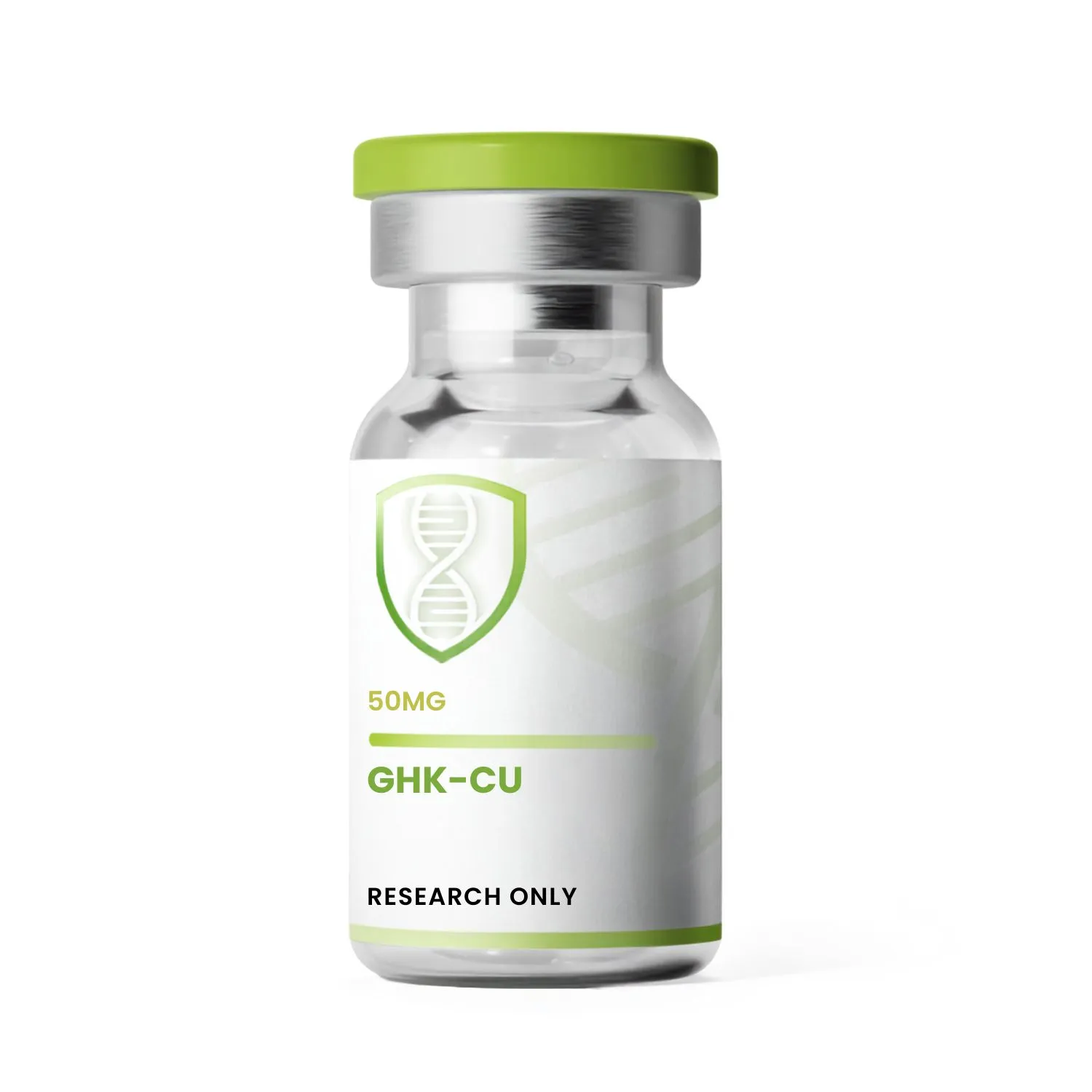
GHK-Cu 50mg – Copper Peptide for Laboratory Research
Buy GHK-Cu 50mg at Orion Peptides — Third-Party Tested Research Peptide with COA Documentation GHK-Cu 50mg is a copper-binding tripeptide research compound containing glycyl-L-histidyl-L-lysine complexed with copper. Recognized for its distinctive blue appearance and metal-binding properties, GHK-Cu has been investigated for decades in studies involving extracellular matrix biology, collagen regulation, cellular signaling, and copper-peptide interactions. At
Orion Peptides, GHK-Cu 50mg is offered as a lyophilized research material intended exclusively for controlled laboratory investigation. Researchers can review the available batch-specific Certificate of Analysis (COA) documentation to evaluate reported analytical results. For laboratories exploring copper coordination chemistry, fibroblast responses, or peptide-related molecular mechanisms, GHK-Cu remains a relevant compound with an established body of published experimental research.
Compound highlights - 50mg GHK-Cu copper peptide per labeled vial
- Lyophilized powder for laboratory research
- Third-party analytical documentation available
- Batch-specific COA and quality information
- Research-grade material supplied by Orion Peptides
- Intended strictly for laboratory research, not human or animal use
What Is GHK-Cu?
GHK-Cu is a copper(II)-binding complex of the naturally occurring tripeptide GHK, an abbreviation for glycyl-L-histidyl-L-lysine. The GHK sequence comprises three amino acids:
- Glycine (Gly): The first amino acid in the sequence.
- Histidine (His): Contains an imidazole group that can participate in metal coordination.
- Lysine (Lys): Contributes additional chemical functionality to the tripeptide.
GHK was originally identified in human plasma, and subsequent research explored its affinity for copper ions. Unlike the free GHK peptide, GHK-Cu incorporates coordinated copper, creating a distinct chemical system whose behavior depends on factors such as pH, ligand availability, and the surrounding molecular environment. These characteristics have made GHK-Cu an important research subject in bioinorganic chemistry, extracellular matrix investigations, and experimental skin biology. For a more detailed examination of its molecular characteristics, explore the
GHK-Cu technical compound reference in Orion Peptides’ research library.
GHK-Cu 50mg Compound Specifications
| Specification | Details |
| Compound | GHK-Cu |
| Full designation | Glycyl-L-histidyl-L-lysine copper complex |
| Peptide sequence | Gly-His-Lys |
| Compound category | Copper-binding tripeptide |
| Copper ion | Copper(II), Cu²⁺ |
| Labeled quantity | 50mg per vial |
| Physical form | Lyophilized powder |
| Typical appearance | Blue powder |
| Analytical information | Batch-specific COA |
| Intended application | Laboratory research only |
GHK-Cu is not identical to free GHK. Its elemental composition and reported molecular mass also depend on the chemical species and coordination representation being described. Researchers should use the chemical identity and analytical characterization stated in the applicable supplier documentation rather than assuming every published formula describes the same species.
Why Is GHK-Cu Studied in Laboratory Research?
The scientific interest surrounding GHK-Cu comes from its combination of peptide chemistry and copper-binding behavior. Copper participates in numerous biological processes, including the activity of certain enzymes and proteins. When associated with a short peptide such as GHK, copper can form a coordination complex with properties that differ from those of either component considered separately. Published investigations have examined GHK-Cu across several experimental areas.
1. Collagen Synthesis and Fibroblast Research
One of the foundational areas of GHK-Cu research concerns fibroblasts, the cells involved in producing and maintaining components of the extracellular matrix. In a 1988 study published in
FEBS Letters, Maquart and colleagues investigated the effects of GHK-Cu on collagen synthesis in fibroblast cultures. The researchers reported increased collagen synthesis under their experimental conditions, demonstrating that the copper-peptide complex could influence extracellular matrix production in a controlled cell-culture system. This study remains a frequently cited foundation for understanding the relationship between GHK-Cu and connective tissue biology.
Research reference: Maquart et al. (1988), Stimulation of collagen synthesis in fibroblast cultures by GHK-Cu.
2. Extracellular Matrix Remodeling
Beyond collagen production, GHK-Cu has been investigated for its interactions with enzymes involved in extracellular matrix regulation. Matrix metalloproteinases (MMPs) participate in the breakdown and remodeling of extracellular matrix components. Their activity is balanced by tissue inhibitors of metalloproteinases, commonly known as TIMPs. A published study of dermal fibroblast cultures reported that GHK-Cu increased MMP-2 expression and influenced TIMP-1 and TIMP-2 secretion. These findings suggest that GHK-Cu can participate in experimental matrix remodeling pathways rather than acting solely through a single collagen-related mechanism. However, the observed responses are specific to the study’s experimental conditions and should not be interpreted as established clinical outcomes.
Research reference: GHK-Cu and MMP-2 expression in fibroblast cultures.
3. Gene Expression and Cellular Signaling
GHK and its copper-associated form have also received attention in studies examining gene expression and molecular signaling. A 2015 review by Pickart and colleagues discussed experimental findings relating GHK to multiple cellular pathways, including extracellular matrix regulation, inflammatory signaling, and tissue-related molecular processes. These observations have encouraged further investigation into how peptide-copper interactions may influence cellular responses across different experimental models. Importantly, changes in gene expression do not automatically establish a therapeutic effect. Researchers must evaluate whether observed molecular changes translate into reproducible biological outcomes.
Research reference: GHK Peptide as a Natural Modulator of Multiple Cellular Pathways in Skin Regeneration.
4. Copper Coordination and Metal–Peptide Chemistry
GHK-Cu is also valuable as a research subject in coordination chemistry. The histidine residue within GHK contributes to copper-binding interactions, while other functional groups in the peptide may participate in the overall coordination environment. Researchers may investigate factors such as:
- Copper-binding behavior
- Changes in chemical speciation
- Peptide-metal complex stability
- Effects of pH and experimental conditions
- Analytical separation of free and copper-associated peptide species
These chemical properties matter when comparing results across laboratories. Two experiments described as involving GHK-Cu may not be directly equivalent if the materials, experimental media, or copper-to-peptide ratios differ.
GHK-Cu 50mg: Analytical Testing and Quality Documentation
For scientific research, accurate compound identification and reliable analytical documentation are essential. Orion Peptides provides batch-related analytical information for its GHK-Cu research materials. Depending on the report, analytical documentation may cover compound identity, chromatographic purity, measured quantity, and additional laboratory tests.
High-Performance Liquid Chromatography (HPLC)
HPLC is widely used to evaluate peptide-related impurities and provide information about the chromatographic purity of a tested sample. A reported purity percentage describes results obtained through the stated analytical method. It should not be confused with confirmation of sterility, biological suitability, or every aspect of compound identity.
Compound Identity Testing
Identity testing is intended to determine whether a sample is consistent with the specified compound. Depending on the analytical method, identity information may be supported by chromatographic behavior, mass spectrometry, or other techniques. Because GHK-Cu is a copper coordination complex, researchers should also consider whether the documentation characterizes the relevant copper-associated species.
Batch-Specific Certificate of Analysis
A COA can help researchers evaluate important compound characteristics, including:
- Tested compound and labeled quantity
- Batch or lot identification
- Reported purity and analytical methodology
- Measured quantity, where tested
- Testing date and laboratory information
- Additional analyses included in the report
The results apply to the tested sample and the scope of the report. They do not automatically establish the analytical properties of different batches. Before purchasing GHK-Cu 50mg, researchers should confirm that the available COA corresponds to the material being supplied. Read our detailed guide:
GHK-Cu Research Peptide: Third-Party COA Checklist.
GHK-Cu vs AHK-Cu: How Do These Copper Peptides Differ?
Although GHK-Cu and AHK-Cu are both copper-binding tripeptides, they have distinct amino acid sequences. GHK-Cu contains glycine, histidine, and lysine, while AHK-Cu contains alanine, histidine, and lysine.
| Feature | GHK-Cu | AHK-Cu |
| Amino acid sequence | Gly-His-Lys | Ala-His-Lys |
| First amino acid | Glycine | Alanine |
| Copper association | Copper(II) complex | Copper(II) complex |
| Research literature | Broader experimental literature | More limited experimental literature |
| Molecular identity | Distinct compound | Distinct compound |
A difference in a single amino acid can affect molecular characteristics. Consequently, research findings involving GHK-Cu should not automatically be attributed to AHK-Cu. Explore the detailed comparison:
GHK-Cu vs AHK-Cu: Copper Peptide Research Explained.
GHK-Cu vs BPC-157 in Experimental Research
GHK-Cu and BPC-157 appear in some overlapping research discussions, particularly those involving extracellular matrix biology and experimental tissue-related processes. Nevertheless, their molecular structures differ substantially. GHK-Cu is a copper-binding tripeptide, whereas BPC-157 is a 15-amino-acid peptide. The compounds also have different experimental histories and proposed mechanisms. GHK-Cu research has frequently examined copper coordination, fibroblast activity, and extracellular matrix regulation. BPC-157 has been investigated in a range of preclinical biological models. Comparisons should therefore distinguish the compounds’ chemical identity, study designs, and strength of evidence rather than assuming that their reported experimental effects are interchangeable. For additional information, read
BPC-157 vs GHK-Cu: Which Research Areas Overlap?.
Available GHK-Cu Research Quantities
Orion Peptides offers GHK-Cu in multiple labeled quantities, allowing laboratories to select a vial size appropriate to their purchasing and experimental requirements.
- GHK-Cu 10mg — Smaller labeled research quantity.
- GHK-Cu 50mg — The research material featured on this compound page.
- GHK-Cu 100mg — Larger labeled research quantity.
The stated milligram amounts refer to labeled quantities. Researchers should consult the applicable analytical documentation for batch-specific measurements and compound characterization.
Laboratory Storage and Handling Considerations
GHK-Cu research materials should be handled according to their supplier documentation, institutional chemical safety procedures, and applicable laboratory protocols. For lyophilized materials, relevant considerations include:
- Maintaining the recommended storage temperature
- Protecting the container from excess moisture
- Reducing unnecessary light exposure
- Avoiding repeated temperature changes
- Maintaining clear batch identification
- Using suitable laboratory safety equipment
The appropriate stability conditions for prepared experimental solutions depend on their composition, concentration, solvent, temperature, and intended analytical application. Specific solution stability periods should not be assumed without supporting data.
Frequently Asked Questions About GHK-Cu 50mg
What is GHK-Cu 50mg?
GHK-Cu 50mg is a labeled quantity of the copper-binding tripeptide complex glycyl-L-histidyl-L-lysine copper. It is supplied as a research material for laboratory investigation.
What does GHK-Cu stand for?
GHK represents the three amino acids glycine, histidine, and lysine. Cu is the chemical symbol for copper.
Why is GHK-Cu powder blue?
The blue appearance is associated with the copper(II) coordination complex. However, visual color alone cannot verify identity, purity, or quality.
What is GHK-Cu peptide studied for?
Published research has examined GHK-Cu in fibroblast cultures, extracellular matrix biology, collagen-related processes, metal-binding chemistry, and cellular signaling studies. Much of the mechanistic evidence comes from laboratory or animal models.
Is GHK-Cu the same as a regular GHK peptide?
No. GHK refers to the free tripeptide sequence, whereas GHK-Cu describes a copper-associated complex. The two forms have different chemical characteristics.
Does GHK-Cu 50mg come with a Certificate of Analysis?
Orion Peptides provides analytical documentation for its research materials. Researchers should review the applicable batch-specific COA and confirm that it matches the compound being supplied.
Is GHK-Cu 50mg intended for human use?
No. Orion Peptides supplies this compound exclusively for laboratory research. It is not intended for human or animal administration, injection, consumption, cosmetic application, or therapeutic use.
Where can researchers buy GHK-Cu 50mg?
GHK-Cu 50mg is available through
Orion Peptides, with compound specifications and available testing documentation provided to support research purchasing decisions.
Buy GHK-Cu 50mg for Laboratory Research at Orion Peptides
GHK-Cu continues to attract scientific interest because of its unusual combination of peptide structure, copper coordination chemistry, and documented interactions with cellular systems. For research teams investigating these properties, accurate material characterization and transparent analytical information are essential. Orion Peptides offers
GHK-Cu 50mg copper peptide as a lyophilized laboratory research compound, with available batch-specific quality documentation to help researchers make informed procurement decisions. Explore our
complete research peptide collection or review the analytical information associated with this compound before ordering.
Scientific References
- Maquart FX, et al. (1988). Stimulation of collagen synthesis in fibroblast cultures by the tripeptide-copper complex glycyl-L-histidyl-L-lysine-Cu²⁺. FEBS Letters. PubMed.
- The tripeptide-copper complex glycyl-L-histidyl-L-lysine-Cu²⁺ stimulates matrix metalloproteinase-2 expression by fibroblast cultures. (2000). PubMed.
- Pickart L, et al. (2015). GHK Peptide as a Natural Modulator of Multiple Cellular Pathways in Skin Regeneration. BioMed Research International. Full-text research review.
Research Use Only
GHK-Cu 50mg is provided solely for laboratory research and analytical investigation. It is not intended for human or animal use, consumption, injection, cosmetic application, or diagnostic or therapeutic procedures. All scientific findings discussed above should be interpreted within the limitations of their original experimental designs.