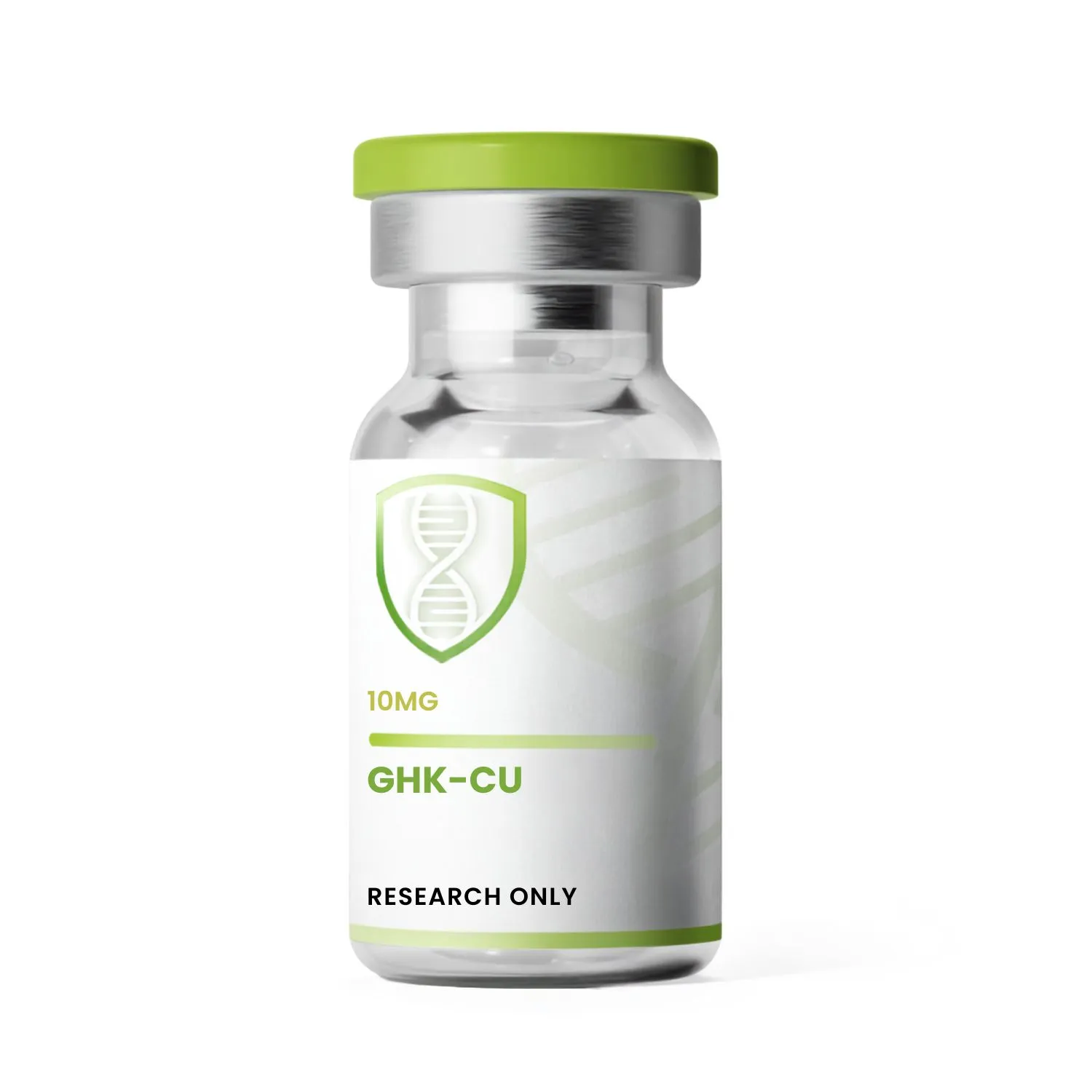
GHK-Cu – 10mg
GHK-Cu is a small cosmetic peptide that naturally binds copper. It is found in human blood, saliva, and urine. In the lab, researchers use it to study how cells respond to copper and small peptides.
Research background: GHK-Cu research profile
This peptide is not a drug or supplement. It is intended strictly for research use. Scientists investigate how it interacts with cells, proteins, and other molecules, examining its effects on biochemical pathways and cellular processes.
Buy GHK-Cu – 10 mg Now at Orion Peptides
Biochemical Characteristics of GHK-Cu Peptide
GHK-Cu peptide consists of three amino acids: glycine, histidine, and lysine. When it binds copper, it becomes GHK-Cu.
- Amino acid sequence: Gly-His-Lys
- Molecular formula: C14H24N6O4Cu
- Molecular weight: ~340.3 g/mol
In laboratory studies, researchers monitor how GHK-Cu binds copper and how the complex behaves in cells. They also observe changes in proteins, enzymes, and other markers when added to experimental systems.
Research Applications of GHK-Cu
Researchers add GHK-Cu to cells and observe biological responses over time. Experiments may evaluate cell growth, gene expression, protein/enzyme activity, and copper-mediated processes in cells.
Results vary depending on cell type, tissue model, peptide concentration, and experimental design. Each study may show slightly different outcomes.
These studies aim to observe basic chemical and cellular behavior, not clinical or applied effects.
Mechanistic and Pathway Context
GHK-Cu interacts with cellular components sensitive to copper. This may influence intracellular copper processing. Researchers observe effects on cell signaling, protein function, and gene activity over time in controlled lab settings.
Some studies also examine tissue-level responses in experimental models. All work is preclinical and exploratory.
Preclinical Research Summary
Preclinical studies use cell or animal models to evaluate GHK-Cu activity in the lab. Researchers often measure copper levels, enzyme activity, and cellular responses. They also monitor protein or gene changes upon peptide exposure.
Results depend on the system, dose, and experimental setup. These studies are exploratory and are not intended to predict human effects.
Formulation and Analytical Testing
GHK-Cu is supplied as a lyophilized powder, 50 mg per vial or 10 mg per vial, for precise laboratory experiments.
Analytical verification typically includes:
- Confirming identity
- Testing purity
- Verifying copper content
Store in a cool, dry place following standard laboratory safety protocols. Not intended for injection or human use.
Buy GHK-Cu – 10 mg Now at Orion Peptides
Batch testing & COA
Every batch of Orion Peptides GHK-Cu is tested by a third-party laboratory, Hyte Research Division. Each certificate reports identity and purity by HPLC, measured quantity per vial, and endotoxin screening. Certificates are published on our COA Verification page.
How to read a certificate: GHK-Cu COA guide · 7-point COA credibility check
References
Pickart L, Thaler MM: Copper peptide in human plasma. Science. 1973;180(4088):868–870.
Hong SJ, Kang SS, Dan DH: Effects of copper-peptide complexes on cultured cells: biochemical modulation studies.
Pickart L: Peptide-copper complexes and gene expression modulation. Mol Cell Biochem. 2006;286(1–2):1–15.