

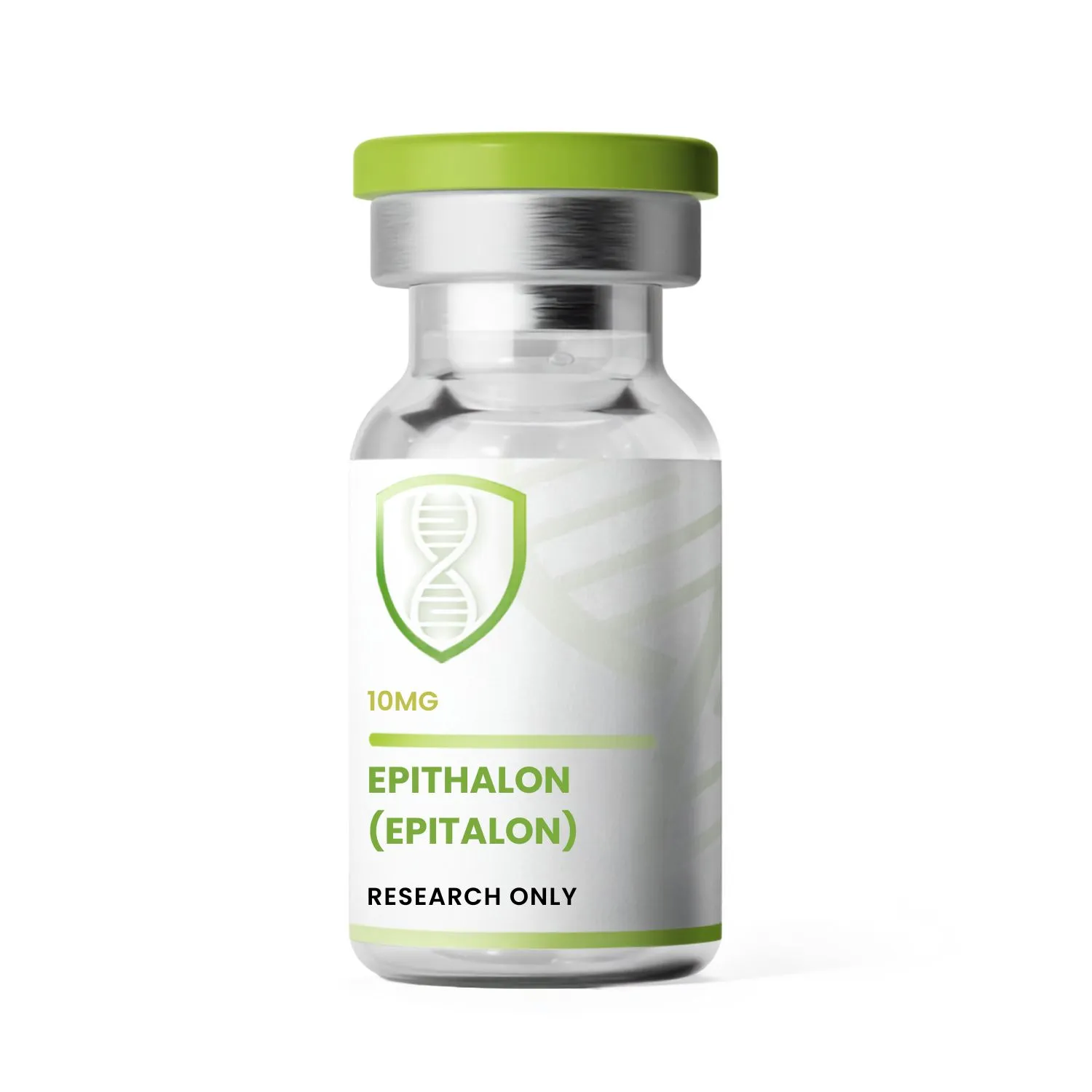
Before introducing Epitalon into a laboratory workflow, researchers need to answer two practical questions: What does the analytical documentation establish, and how should the material be stored?
An Epitalon Certificate of Analysis, or COA, helps document the tested sample and its reported characteristics. Storage instructions address how the supplied material should be maintained. These documents serve different purposes, and neither should be interpreted beyond the information it provides.
This guide explains how to review an Epitalon COA, distinguish purity from identity and quantity, and assess storage requirements for dry peptide and laboratory-prepared solutions.
What Is an Epitalon COA?
A Certificate of Analysis is a document reporting analytical results for an identified sample or batch. Depending on its scope, it may include identity testing, chromatographic purity, quantity measurements, and other tests.
A useful COA connects the reported results to the material being evaluated. A percentage without a sample identifier, test method, or traceable report provides limited information.
When reviewing documentation, start with the batch connection before focusing on the purity figure.
Details to check on the report
| COA detail | What to check |
|---|---|
| Compound name | Does it identify the material you ordered? |
| Sample or batch identifier | Can it be connected to the supplied vial or lot? |
| Testing laboratory | Is the laboratory clearly identified? |
| Report reference | Is there a report number or verification reference? |
| Testing date | When was the sample analyzed? |
| Analytical methods | Which methods support each reported result? |
| Results and units | Are percentages, quantities, and other measurements clearly distinguished? |
| Specifications, where provided | What acceptance criteria were applied? |
Not every report includes every possible test. If your experiment requires a measurement that is absent, request it rather than assuming the material meets that requirement.
Confirming Epitalon’s Identity
Epitalon is a synthetic tetrapeptide with the amino acid sequence Ala-Glu-Asp-Gly, abbreviated AEDG. It is also commonly called Epithalon.
A difference in spelling does not necessarily indicate a different compound. However, researchers should still check the sequence, supplied form, and sample identifiers.
For more detail about the terminology, read Is Epitalon the Same as Epithalon?.
The name alone cannot establish whether two samples have the same purity, counterion content, quantity, or storage history.
Understanding HPLC Purity on an Epitalon COA
High-performance liquid chromatography, or HPLC, separates components under a defined analytical method. The resulting chromatogram can support a reported purity measurement.
When purity is calculated from chromatographic peak areas, the percentage describes the target peak’s contribution relative to the integrated signals under that method. Detection conditions and how the peaks are integrated matter.
Bachem’s analytical FAQ explains that HPLC purity measured using UV detection must be distinguished from net peptide content. Water, counterions, and other components can affect the composition of the supplied material without being represented in the same way by the chromatographic purity figure.
Does 99% purity mean a vial contains 99% peptide by weight?
Not necessarily.
An HPLC area percentage is not automatically a measurement of peptide mass fraction. It also does not independently confirm the number of milligrams in a vial.
For example, a nominal quantity statement and an HPLC purity result answer different questions:
- Nominal quantity: How much material is stated to be supplied?
- Chromatographic purity: What proportion of the measured chromatographic signal is assigned to the target component?
- Quantitative assay: What amount or concentration was established using an appropriate measurement method?
For concentration-sensitive research, determine which quantity or content measurement supports your calculations.
What Does Mass Spectrometry Show?
Mass spectrometry, or MS, provides information about detected ions and their mass-to-charge ratios. Interpreted appropriately, it can support assessment of whether a sample is consistent with the expected peptide.
HPLC and MS are complementary. One helps separate and assess components; the other supplies mass-related information useful for identification. JPT describes this combination in its guide to peptide quality and purity.
When reviewing an MS result, check whether the report clearly distinguishes the expected value from the observed result and explains the assigned ion where relevant.
A matching mass alone should not be treated as a complete characterization of every aspect of a sample.
What an Epitalon COA Does Not Automatically Establish
Only draw conclusions supported by the tests listed.
A report containing HPLC and MS results should not automatically be interpreted as proof of:
- Sterility or acceptable endotoxin levels.
- A verified quantity per vial.
- Stability after dissolution.
- Suitability for every laboratory assay.
- A particular biological effect.
These characteristics require their own evidence or assessment.
Similarly, a testing date is not automatically an expiration date. A COA documenting an earlier analysis does not show how a sample has been handled since testing.
Epitalon Storage Guidelines: Start With the Supplied Documentation
The appropriate storage conditions depend on the supplied material and its supporting documentation.
For Orion’s research material, review the instructions associated with the specific batch and formulation. If the vial label, compound page, and accompanying documents differ, ask for written clarification before establishing your laboratory’s storage procedure.
Avoid assigning an Epitalon shelf life from a generic peptide chart. General recommendations can inform handling practices, but they do not constitute a stability study for a particular compound.
Storing Lyophilized Epitalon
Lyophilization produces a dry material, but it does not eliminate the need for controlled handling.
For a documented laboratory workflow:
- Keep the container securely closed when it is not being accessed.
- Follow the specified storage temperature and exposure precautions.
- Limit unnecessary opening and environmental exposure.
- Record the date received and the storage location.
- Document any known departure from the required conditions.
MilliporeSigma’s peptide handling guidance emphasizes tightly capped containers, limited opening, and avoiding repeated freeze–thaw cycles. These are general handling principles; they do not establish a validated storage period for Orion’s Epitalon.
Storage After Preparing a Laboratory Solution
Once a peptide is dissolved, the storage question changes. The solution’s stability may depend on the solvent, pH, concentration, container, temperature, and handling history.
Published recommendations for peptides used in mass spectrometry assays emphasize that suitable storage and handling conditions depend on the peptide and that stability may need to be evaluated under the intended analytical conditions.
For each prepared research solution, record:
| Record | Why it matters |
|---|---|
| Source batch | Links the preparation to its analytical documentation |
| Preparation date | Establishes the start of its handling history |
| Solvent or buffer | Identifies the solution conditions |
| Concentration and calculation basis | Makes preparation reproducible |
| Container and aliquot identifiers | Maintains traceability |
| Storage conditions | Documents the conditions actually used |
| Supported use period or retest point | Connects continued use to available evidence |
Where an approved protocol calls for frozen solutions, appropriately sized aliquots can reduce repeated thawing of the main stock. Whether freezing is suitable must still be established for that preparation.
Does Appearance Show Whether Epitalon Is Still Suitable?
Visual inspection can identify obvious changes, such as unexpected discoloration or precipitation. It cannot replace analytical assessment.
A clear solution does not prove that peptide identity, concentration, and purity remain unchanged. Likewise, a dry powder’s appearance cannot establish its remaining shelf life.
If a material experiences an unexplained change or a storage excursion, document the event and follow your laboratory’s procedure for review, retesting, or exclusion from use.
Where to Find Orion’s Epitalon Documentation
The Epithalon (Epitalon) 10mg compound page provides the compound specifications and links to analytical documentation.
Use Orion’s COA verification page to review available reports. Before relying on a document, confirm that its sample or batch identifier corresponds to the material supplied. If that connection is unclear, request confirmation from the team.
Retain the applicable report alongside your laboratory’s receipt, preparation, and storage records.
Frequently Asked Questions
Is an Epitalon COA the same as an Epithalon COA?
The names commonly refer to the same AEDG peptide. However, reports are sample- or batch-specific. Matching names do not make reports interchangeable.
Does an HPLC purity result confirm the amount in the vial?
No. Chromatographic purity and quantity are different measurements. Check whether a separate quantitative result is available.
Does a COA confirm storage stability?
Only if it includes relevant stability information. Routine identity and purity testing alone does not establish a shelf life.
Should Epitalon be refrigerated or frozen?
Follow the documented requirements for the supplied batch and physical form. Dry material and prepared solutions may have different requirements; resolve conflicting instructions with the supplier.
How long can a prepared Epitalon solution be stored?
There is no universal duration established by a standard COA. Use a period supported by the preparation’s documentation, stability evidence, or validated laboratory procedure.
Epitalon supplied by Orion Peptides is intended exclusively for laboratory research. This guide addresses analytical documentation and research-material handling.

