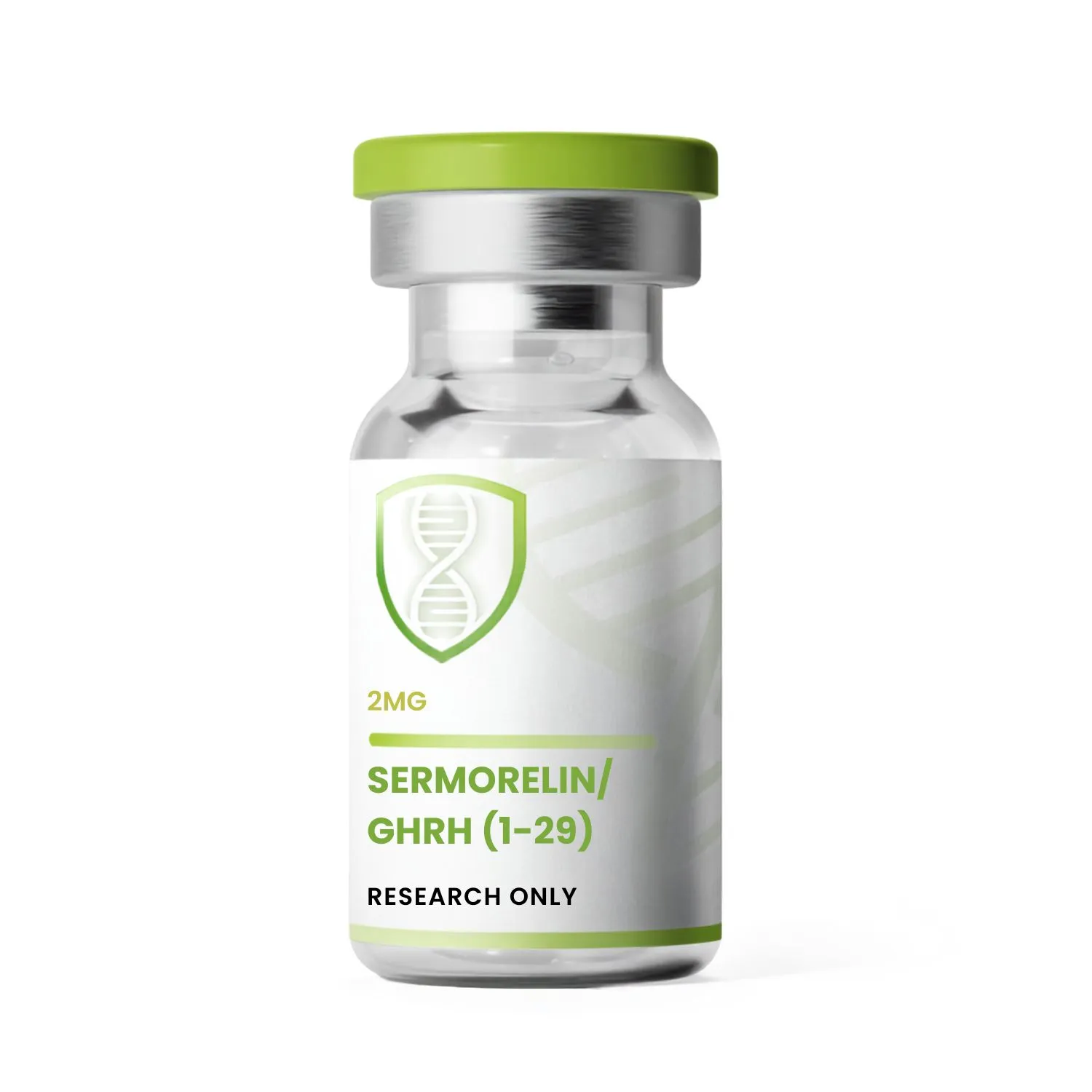
Buy Sermorelin/GHRH (1-29) – 2mg
Sermorelin, also known as GHRH (1-29), is a synthetic peptide developed exclusively for laboratory and scientific research. It represents the first 29 amino acids of naturally occurring growth hormone-releasing hormone (GHRH), produced by the hypothalamus and signaling the pituitary gland to release growth hormone.
Research background: Sermorelin research profile
This 29-amino-acid fragment contains the complete biologically active region required to stimulate growth hormone release in experimental models. Due to its shorter length, Sermorelin is more stable and easier to handle than the full-length hormone while retaining functional activity. The peptide is produced under controlled laboratory conditions to ensure high purity and batch consistency. Researchers use Sermorelin to study growth hormone signaling pathways, pituitary regulation, and associated metabolic mechanisms in controlled in vitro and preclinical research environments only.
Sermorelin (GHRH 1-29) Molecular Structure and Chemical Properties
Sermorelin is a synthetic peptide containing 29 amino acids. Its sequence corresponds to the first 29 amino acids of naturally occurring human growth hormone-releasing hormone (GHRH), which contains 44 amino acids. Sermorelin retains the ability to bind to and activate GHRH receptors.
Sermorelin Chemical Properties Table
| Property | Correct Information |
| Compound Name | Sermorelin |
| Alternative Names | GHRH (1-29), GRF (1-29) |
| Molecular Formula | C₁₄₉H₂₄₆N₄₄O₄₂S |
| Molecular Weight | 3,357.9 g/mol |
| CAS Number | 86168-78-7 |
| PubChem CID | 16132413 |
| Amino Acid Length | 29 amino acids |
| Peptide Classification | Synthetic polypeptide |
| One-Letter Sequence | YADAIFTNSYRKVLGQLSARKLLQDIMSR |
| C-Terminal Modification | Amidation (–NH₂) |
| Peptide Structure | Linear |
| Disulfide Bonds | None |
| Primary Receptor | GHRH receptor (GHRHR) |
| Research Focus | Growth hormone signaling and GHRH receptor activity |
The molecular formula, molecular weight, CAS number, and sequence match the
PubChem record for sermorelin.
Mechanism of Action
In experimental models, Sermorelin binds to growth hormone-releasing hormone receptors on somatotroph cells of the anterior pituitary. This receptor interaction activates intracellular signaling pathways, primarily via adenylate cyclase stimulation and increased cyclic AMP (cAMP) production. The rise in cAMP triggers regulated synthesis and release of endogenous growth hormone. Acting indirectly, Sermorelin preserves the pulsatile GH release pattern observed physiologically. This mechanism allows researchers to study growth hormone pathways related to metabolism, protein synthesis, tissue development, and regenerative processes in controlled laboratory and preclinical research settings.
Research Applications
Sermorelin is widely used in laboratory research to examine GH secretion regulation and downstream biological effects. Its stability and receptor specificity make it a reliable tool for studying pituitary-mediated pathways.
Growth Hormone Secretion Studies
Used in cell-based assays and isolated pituitary models, Sermorelin allows measurement of receptor-driven GH release. Studies assess dose-response relationships, secretion timing, and pulsatile patterns that mimic natural signaling.
Pituitary Function Research
Laboratories use Sermorelin to evaluate pituitary responsiveness under various conditions, including aging, stress, or altered endocrine signaling, providing insight into GH regulation mechanisms.
Metabolic and Anti-Aging Research
Experimental models investigate GH-related effects on protein turnover, lipid and glucose metabolism, and energy balance. These studies help clarify connections between GH signaling and long-term metabolic regulation.
Preclinical Research Applications
In approved animal research, Sermorelin is used to study growth, tissue repair, bone density, and recovery from stress or injury. Research focuses on effects of increased endogenous GH release without administering exogenous hormones.
Compound Form and Specification
Sermorelin / GHRH (1-29) is supplied as white lyophilized powder in sterile glass vials. Each vial contains 2 mg of peptide with typical purity exceeding 99%, verified via HPLC or mass spectrometry. The compound contains no fillers, preservatives, or stabilizers, supporting accurate measurement and reproducible outcomes in laboratory and preclinical studies.
Intended Research Use
Sermorelin / GHRH (1-29) is intended exclusively for laboratory and scientific research. It may be used in in vitro experiments such as cell culture or approved preclinical animal models conducted by qualified researchers. This compound is not intended for human or veterinary use, diagnostics, or therapeutic development. Handling, storage, and experimental use must comply with institutional protocols, ethical standards, and applicable regulations.
Storage and Handling
Store the lyophilized peptide at -20°C in a dry, dark environment, protected from moisture and light. Under these conditions, the compound remains stable for extended periods. Limit air exposure after opening; use immediately or return to frozen storage. Reconstitute using sterile bacteriostatic water or sterile injectable water, swirling gently without shaking. After reconstitution, store at 2–8°C and use within 14–30 days. For long-term storage, aliquot and freeze at -20°C or lower. Avoid repeated freeze-thaw cycles. Always use aseptic techniques, protective equipment, and a clean, controlled laboratory environment.
Regulatory and Safety Disclaimer
Sermorelin (GHRH 1-29) supplied by
Orion Peptides is intended strictly for laboratory research and scientific investigation. It is not intended for human or animal consumption, self-administration, diagnostic procedures, or therapeutic applications.
Research-grade Sermorelin sold by Orion Peptides is not an FDA-approved drug compound. Its safety, effectiveness, and suitability for clinical or personal use have not been established.