

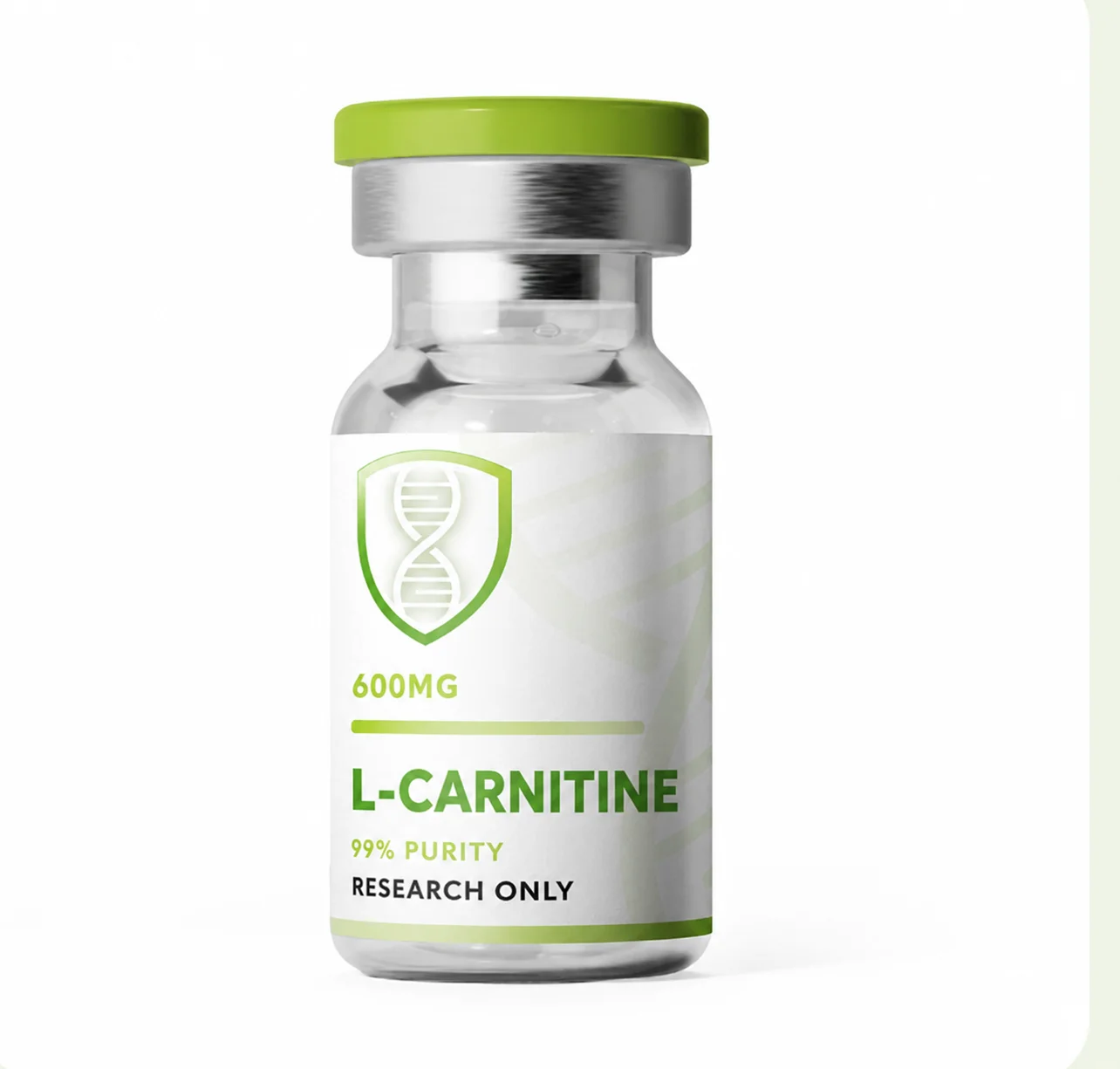
L-Carnitine and Acetyl-L-Carnitine are closely related compounds, but they are not chemically identical. Both participate in cellular energy metabolism, yet their structural differences influence how they interact with metabolic pathways, transport systems, and intracellular acetyl groups.
The primary difference between L-Carnitine vs. Acetyl-L-Carnitine lies in their molecular structure. L-Carnitine is the non-esterified form of carnitine, whereas Acetyl-L-Carnitine contains an additional acetyl group attached to its hydroxyl group.
This modification gives Acetyl-L-Carnitine distinct biochemical properties and a role in acetyl-group metabolism. Meanwhile, free L-Carnitine is particularly important for transporting long-chain fatty acids into mitochondria, where they can undergo β-oxidation.
Researchers study these two compounds to better understand mitochondrial activity, lipid metabolism, energy production, and cellular responses to metabolic stress.
This article explores their chemical structures, biological functions, differences in research applications, and the scientific evidence surrounding both compounds.
What Is L-Carnitine?
L-Carnitine is a naturally occurring, amino-acid-derived compound found in many mammalian tissues. It is synthesized from precursors derived from lysine and methionine, with important biosynthetic activity occurring in the liver, kidneys, and brain.
Although L-Carnitine originates from amino acid precursors, it is not itself a peptide or a conventional protein-building amino acid.
Its best-established biochemical function is supporting the transport of long-chain fatty acids into mitochondria.
Mitochondria are cellular structures responsible for producing much of the energy needed for biological processes. However, long-chain fatty acyl-CoA molecules cannot cross the inner mitochondrial membrane directly.
L-Carnitine helps overcome this transport limitation through a series of enzymatic reactions collectively known as the carnitine shuttle.
Researchers investigating mitochondrial fatty acid oxidation, cellular energy regulation, and metabolic processes frequently examine L-Carnitine and its associated transport systems.
Chemical Properties of L-Carnitine
- Molecular formula: C₇H₁₅NO₃
- Molecular weight: 161.20 g/mol
- CAS number: 541-15-1
- PubChem CID: 10917
- Chemical classification: Quaternary ammonium compound
- Biochemical role: Fatty acid transport and acyl-group metabolism
The structure of L-Carnitine includes a permanently positively charged quaternary ammonium group and a negatively charged carboxylate group.
This combination makes L-Carnitine a zwitterionic compound.
Its chemical characteristics contribute to interactions with biological transport proteins and enzymes involved in energy metabolism.
Researchers studying the compound can explore Orion Peptides’ L-Carnitine 600mg research compound for compound-specific information and available analytical documentation.
For additional structural information, consult the PubChem L-Carnitine database.
What Is Acetyl-L-Carnitine?
Acetyl-L-Carnitine, commonly abbreviated as ALCAR, is an acetylated derivative of L-Carnitine.
The compound is formed when an acetyl group is attached to the hydroxyl group of L-Carnitine through an ester linkage.
This process produces an acetylcarnitine molecule that participates in cellular acetyl-group transport and metabolic regulation.
Acetyl-L-Carnitine occurs naturally in mammalian tissues and is part of the broader family of acylcarnitines.
Unlike free L-Carnitine, which is required as a carrier in long-chain fatty acid transport, Acetyl-L-Carnitine already carries a two-carbon acetyl group.
Its formation and breakdown are associated with the activity of carnitine acetyltransferase enzymes.
This makes Acetyl-L-Carnitine particularly interesting in research examining:
- Mitochondrial acetyl-group metabolism
- Acetyl-CoA and free CoA balance
- Cellular energy regulation
- Neuronal metabolism
- Metabolic stress responses
- Acylcarnitine profiling
Acetyl-L-Carnitine has also been studied in experimental neurological and mitochondrial research. However, its biological effects depend on the research model and should not be generalized into established clinical outcomes.
Chemical Properties of Acetyl-L-Carnitine
- Molecular formula: C₉H₁₇NO₄
- Molecular weight: 203.24 g/mol
- CAS number: 3040-38-8
- PubChem CID: 7045767
- Chemical classification: Acetylated carnitine ester
- Biochemical role: Acetyl-group metabolism and mitochondrial metabolic regulation
Acetyl-L-Carnitine has two additional carbon atoms, two additional hydrogen atoms, and one additional oxygen atom compared with L-Carnitine.
These differences result from the addition of the acetyl group.
More information about its chemical identity is available through the PubChem Acetyl-L-Carnitine record.
L-Carnitine vs. Acetyl-L-Carnitine: Key Differences at a Glance
Although the compounds share a common molecular backbone, several important differences distinguish their chemical and biochemical characteristics.
| Property | L-Carnitine | Acetyl-L-Carnitine |
|---|---|---|
| Molecular formula | C₇H₁₅NO₃ | C₉H₁₇NO₄ |
| Molecular weight | 161.20 g/mol | 203.24 g/mol |
| CAS number | 541-15-1 | 3040-38-8 |
| PubChem CID | 10917 | 7045767 |
| Chemical form | Free carnitine | Acetylated carnitine |
| Additional acetyl group | No | Yes |
| Primary metabolic significance | Carnitine shuttle and fatty acid transport | Acetyl-group exchange and metabolic balance |
| Research focus | Fatty acid oxidation and mitochondrial metabolism | Acetyl-CoA balance, energy metabolism, and neuronal research |
| Relationship | Parent compound | Acetyl ester of L-Carnitine |
The most important distinction is functional rather than simply molecular: L-Carnitine supplies the free carnitine required for acyl-group transport, while Acetyl-L-Carnitine is an acetylated form that participates in the transfer and regulation of acetyl groups.
Both compounds belong to interconnected metabolic pathways.
Molecular Structure: How Does Acetylation Change L-Carnitine?
To understand the difference between these compounds, researchers must first examine their molecular structures.
1. L-Carnitine Has a Free Hydroxyl Group
L-Carnitine contains a hydroxyl group attached to its carbon backbone.
This hydroxyl group can participate in enzyme-mediated reactions involving acyl groups.
The molecule also contains a quaternary ammonium group, which remains positively charged under ordinary physiological conditions.
Because the molecule contains both positive and negative charges, it behaves as a zwitterion.
2. Acetyl-L-Carnitine Contains an Acetyl Ester
Acetyl-L-Carnitine is formed when an acetyl group is attached to the hydroxyl oxygen of L-Carnitine.
This modification creates an ester bond.
The molecular transformation can be represented conceptually as:
L-Carnitine + acetyl group ⇌ Acetyl-L-Carnitine
In cells, the interconversion is associated with reactions involving acetyl-CoA, free CoA, and carnitine acetyltransferase enzymes.
Acetylation increases the molecular weight from 161.20 g/mol to 203.24 g/mol.
It also changes the molecule’s chemical properties and interactions with metabolic pathways.
However, researchers should not assume that the additional acetyl group automatically makes Acetyl-L-Carnitine more effective in every biological system.
The significance of this structural modification depends on the tissue, transport mechanism, enzyme activity, and experimental conditions.
How L-Carnitine Supports Mitochondrial Fatty Acid Transport
L-Carnitine is an essential component of the pathway responsible for transporting long-chain fatty acyl groups into the mitochondrial matrix.
This pathway is important because long-chain fatty acids must enter mitochondria before their carbon chains can be broken down through β-oxidation.
The process involves three major components.
Step 1: Carnitine Palmitoyltransferase I (CPT1)
CPT1 is located on the outer mitochondrial membrane.
It catalyzes the transfer of a long-chain fatty acyl group from fatty acyl-CoA to L-Carnitine.
This reaction produces long-chain acylcarnitine and releases free CoA.
Step 2: Carnitine-Acylcarnitine Translocase (CACT)
The acylcarnitine molecule is transported across the inner mitochondrial membrane by carnitine-acylcarnitine translocase.
This transporter exchanges acylcarnitine entering the mitochondrial matrix with free carnitine moving in the opposite direction.
Step 3: Carnitine Palmitoyltransferase II (CPT2)
Within the mitochondrial matrix, CPT2 transfers the fatty acyl group from acylcarnitine back to CoA.
This regenerates fatty acyl-CoA.
The fatty acyl-CoA molecule can then enter the β-oxidation pathway.
During β-oxidation, fatty acids are progressively broken down, generating acetyl-CoA and reduced electron carriers that contribute to ATP production.
This mechanism explains why L-Carnitine is so important in mitochondrial fatty acid metabolism.
It does not mean that increasing extracellular L-Carnitine always increases fatty acid oxidation. Metabolic outcomes are also influenced by substrate availability, transporter activity, regulatory enzymes, and the metabolic state of the cell.
How Acetyl-L-Carnitine Participates in Cellular Energy Metabolism
Acetyl-L-Carnitine has a distinct but closely connected role in mitochondrial metabolism.
Its biochemical significance is primarily associated with the transfer and regulation of acetyl groups.
Acetyl-CoA and Free CoA Regulation
Acetyl-CoA is an important metabolic intermediate involved in numerous cellular processes.
It is generated during carbohydrate metabolism, fatty acid oxidation, and the metabolism of certain amino acids.
However, cells must maintain an appropriate balance between acetyl-CoA and free CoA.
Carnitine acetyltransferase can catalyze the reversible transfer of an acetyl group between acetyl-CoA and L-Carnitine.
This reaction produces Acetyl-L-Carnitine and free CoA in one direction, or regenerates acetyl-CoA and L-Carnitine in the reverse direction.
By participating in this reversible reaction, Acetyl-L-Carnitine contributes to the regulation of intracellular acetyl-group availability.
Mitochondrial Metabolic Flexibility
Mitochondria process multiple energy substrates, including fatty acids, carbohydrates, and certain amino acids.
The balance between these substrates changes according to cellular energy demand.
Acetylcarnitine formation can help buffer changes in acetyl-CoA availability.
For this reason, Acetyl-L-Carnitine is studied in research concerning mitochondrial metabolic flexibility and substrate utilization.
Acylcarnitine Metabolism
Acetyl-L-Carnitine is one member of a larger family of acylcarnitines.
These compounds contain different acyl groups attached to carnitine.
Researchers frequently measure acylcarnitine profiles to investigate fatty acid oxidation, organic acid metabolism, and mitochondrial metabolic states.
Acetyl-L-Carnitine is commonly designated C2 acylcarnitine because it carries a two-carbon acetyl group.
Its concentration can provide useful metabolic information, although interpreting results requires consideration of the broader biochemical context.
L-Carnitine vs. Acetyl-L-Carnitine in Neurological Research
One area where the research literature differs between these compounds is neurological metabolism.
Acetyl-L-Carnitine has received considerable attention in experimental studies examining neuronal energy metabolism, mitochondrial function, and responses to neurological stress.
L-Carnitine is also relevant to neural metabolism, but its established transport-related functions should be distinguished from findings specifically involving acetylated derivatives.
Why Is Acetyl-L-Carnitine Studied in Brain Research?
Neurons require substantial amounts of energy to maintain membrane potentials, neurotransmission, and normal cellular activity.
Disruption of mitochondrial processes can affect these energy-dependent functions.
Researchers have therefore investigated acetylcarnitine metabolism in relation to:
- Neuronal mitochondrial activity
- Acetyl-group availability
- Cellular oxidative stress
- Experimental neurodegenerative models
- Metabolic responses to neuronal injury
- Changes in brain energy metabolism
Acetyl-L-Carnitine can be transported into the central nervous system through regulated transport processes. However, the presence of these transport pathways does not establish that it reliably produces neuroprotective outcomes.
Does Acetyl-L-Carnitine Cross the Blood-Brain Barrier?
Research indicates that acetylcarnitine is capable of entering the central nervous system through carrier-mediated transport mechanisms.
However, the degree of transport and subsequent tissue exposure depends on factors such as transport activity, circulating concentrations, and experimental conditions.
It is therefore inaccurate to suggest that Acetyl-L-Carnitine freely crosses the blood-brain barrier simply because it has an acetyl group.
Its neurological research profile is influenced by both molecular structure and biological transport mechanisms.
Is L-Carnitine Less Important for the Brain?
Not necessarily.
L-Carnitine is also involved in metabolic processes relevant to neural cells.
However, the available research concerning L-Carnitine and Acetyl-L-Carnitine involves different experimental questions, models, and outcomes.
Findings involving one compound should not automatically be attributed to the other.
Comparing Research Applications of L-Carnitine and Acetyl-L-Carnitine
The two compounds have overlapping but distinguishable areas of scientific investigation.
1. Fatty Acid Oxidation Research
L-Carnitine is particularly relevant to studies examining the carnitine shuttle and long-chain fatty acid transport.
Researchers may investigate CPT1, CACT, CPT2, and the relationship between carnitine availability and mitochondrial β-oxidation.
Acetyl-L-Carnitine may also be measured as part of broader studies examining acylcarnitine metabolism.
However, it should not be described as a direct replacement for the free carnitine component of the long-chain fatty acid transport pathway.
2. Mitochondrial Energy Research
Both compounds are relevant to mitochondrial function.
L-Carnitine is associated with the movement of fatty acyl groups into mitochondria.
Acetyl-L-Carnitine is associated with acetyl-group exchange and the balance between acetyl-CoA and free CoA.
These mechanisms interact within the wider network of cellular energy metabolism.
3. Skeletal Muscle Metabolism
Skeletal muscle contains substantial amounts of carnitine and depends on efficient mitochondrial energy production.
Researchers investigating muscle metabolism may examine free carnitine concentrations, acetylcarnitine formation, fatty acid oxidation, and the relationship between metabolic activity and energy demand.
The distinction between free carnitine and acetylcarnitine is particularly relevant when interpreting changes in intramuscular acyl-group balance.
4. Oxidative Stress Research
Both compounds have been investigated in experimental models involving oxidative stress.
Some studies have examined changes in mitochondrial oxidative stress markers, cellular antioxidant responses, and associated metabolic pathways.
However, results vary between experimental models.
It is important to distinguish observed biochemical changes from demonstrated therapeutic effects.
5. Metabolomics and Analytical Research
Metabolomics involves measuring small molecules and metabolic intermediates within biological samples.
Both L-Carnitine and Acetyl-L-Carnitine can be included in metabolomic investigations.
Researchers may measure these compounds using techniques such as liquid chromatography coupled with mass spectrometry (LC-MS).
Because their molecular masses differ, analytical methods can distinguish the compounds when appropriately validated.
Measurements of free carnitine and acylcarnitines can contribute to the investigation of metabolic pathway activity.
Are L-Carnitine and Acetyl-L-Carnitine Interchangeable?
No. Although closely related, L-Carnitine and Acetyl-L-Carnitine should not automatically be treated as interchangeable research compounds.
There are several reasons for this distinction.
First, they have different chemical structures. Acetyl-L-Carnitine contains an additional acetyl group, resulting in a different molecular formula and molecular weight.
Second, their immediate biochemical roles differ. Free L-Carnitine is involved in the carnitine shuttle, while acetylcarnitine participates in acetyl-group exchange and metabolic regulation.
Third, their distribution and metabolism may differ. Transport processes, enzymatic activity, and tissue-specific conditions can influence the behavior of each compound.
Fourth, study findings are compound-specific. Results obtained using Acetyl-L-Carnitine should not automatically be used to support claims about L-Carnitine.
Researchers should therefore consider the specific biochemical pathway and experimental objective when interpreting studies involving these compounds.
Are L-Carnitine and Acetyl-L-Carnitine Peptides?
Neither L-Carnitine nor Acetyl-L-Carnitine is chemically classified as a peptide.
Peptides consist of amino acid residues connected through peptide bonds.
L-Carnitine is derived from amino acid precursors but does not contain the peptide-bond structure required for peptide classification.
Acetyl-L-Carnitine is an acetyl ester of L-Carnitine and is likewise not a peptide.
The terms L-Carnitine peptide and LC600 peptide may appear in online searches or research-supplier catalogs, but they do not represent accurate chemical classifications.
Researchers examining L-Carnitine should rely on its molecular formula, chemical identifiers, and analytical documentation rather than informal commercial naming conventions.
L-Carnitine in Laboratory Research: Compound Identity and Analytical Verification
When studying L-Carnitine, accurate compound identification is essential.
Research documentation should clearly distinguish L-Carnitine free base from its salts, derivatives, and esterified forms.
For example, Acetyl-L-Carnitine is chemically different from L-Carnitine, while L-Carnitine L-tartrate is a salt form containing carnitine and tartaric acid.
These differences influence molecular composition and how analytical results should be interpreted.
Researchers assessing L-Carnitine materials should review:
- Compound name and chemical form
- Molecular formula and molecular weight
- CAS number
- Batch identification
- Analytical identity testing
- Reported purity and the method used to determine it
- Applicable storage requirements
- Certificate of Analysis, where available
Orion Peptides lists L-Carnitine 600mg for laboratory research. The compound page provides an entry point for reviewing compound information and requesting available analytical documentation.
The precise supplied chemical form and batch-specific characteristics should be confirmed before experimental interpretation.
Orion Peptides supplies research materials for laboratory use only, not for human or veterinary consumption.
Frequently Asked Questions
1. What is the main difference between L-Carnitine and Acetyl-L-Carnitine?
The main difference is that Acetyl-L-Carnitine contains an acetyl group attached to the L-Carnitine molecule.
L-Carnitine has a molecular weight of 161.20 g/mol, while Acetyl-L-Carnitine has a molecular weight of 203.24 g/mol.
This structural modification influences their biochemical behavior and metabolic roles.
2. Is Acetyl-L-Carnitine the same as L-Carnitine?
No. Acetyl-L-Carnitine is an acetylated derivative of L-Carnitine.
The compounds share a common molecular backbone but differ in their chemical composition and immediate metabolic functions.
3. What does L-Carnitine do in mitochondria?
L-Carnitine supports the transport of long-chain fatty acyl groups into the mitochondrial matrix.
This process enables fatty acids to undergo β-oxidation and contribute to cellular energy production.
4. What does Acetyl-L-Carnitine do in cells?
Acetyl-L-Carnitine participates in reversible acetyl-group transfer reactions.
These reactions are relevant to acetyl-CoA metabolism, free CoA availability, and mitochondrial energy regulation.
5. Why is Acetyl-L-Carnitine studied in neurological research?
Acetyl-L-Carnitine is investigated in neurological research because of its involvement in mitochondrial metabolism, acetyl-group regulation, and cellular energy pathways.
Its potential effects in neurological models remain an active area of investigation.
6. Is L-Carnitine or Acetyl-L-Carnitine better for mitochondrial research?
Neither compound is universally better.
L-Carnitine is particularly relevant to research examining long-chain fatty acid transport.
Acetyl-L-Carnitine is particularly relevant to investigations involving acetyl-group exchange and related metabolic processes.
The appropriate compound depends on the scientific question being studied.
7. Can L-Carnitine be converted into Acetyl-L-Carnitine?
Yes. Cells can form Acetyl-L-Carnitine through enzyme-mediated transfer of an acetyl group from acetyl-CoA to L-Carnitine.
The reaction is reversible and involves carnitine acetyltransferase activity.
8. Does Acetyl-L-Carnitine cross the blood-brain barrier?
Acetyl-L-Carnitine can enter the central nervous system through regulated transport mechanisms.
However, its transport is not unrestricted, and the extent of entry can depend on physiological and experimental conditions.
9. Is LC600 a peptide?
No. LC600 is a term sometimes associated with L-Carnitine 600mg compounds, but L-Carnitine is not chemically classified as a peptide.
It is an amino-acid-derived quaternary ammonium compound.
10. Where can researchers find L-Carnitine 600mg?
Researchers can review the L-Carnitine 600mg listing at Orion Peptides for research-compound information and available analytical documentation.
The material is intended strictly for laboratory research and is not intended for human or animal consumption.
Conclusion
The comparison of L-Carnitine vs. Acetyl-L-Carnitine demonstrates how a relatively small molecular modification can influence biochemical function.
Both compounds participate in mitochondrial energy metabolism, but their immediate roles are different.
L-Carnitine is particularly important for the transport of long-chain fatty acyl groups into mitochondria, supporting fatty acid β-oxidation.
Acetyl-L-Carnitine contains an additional acetyl group and plays a role in acetyl-group exchange, acetyl-CoA regulation, and broader metabolic processes.
Their overlapping metabolic pathways make both compounds relevant to laboratory investigations involving mitochondrial activity, cellular metabolism, and acylcarnitine regulation.
Understanding these distinctions can help researchers interpret experimental findings more accurately and avoid treating chemically related compounds as identical.
For laboratory investigations involving L-Carnitine, researchers can explore the Orion Peptides L-Carnitine 600mg compound page and review the available compound specifications and analytical records.
Scientific References
- Rebouche, C. J. (2004). Kinetics, Pharmacokinetics, and Regulation of L-Carnitine and Acetyl-L-Carnitine Metabolism. Annals of the New York Academy of Sciences, 1033, 30–41. DOI: 10.1196/annals.1320.003.
- Flanagan, J. L., Simmons, P. A., Vehige, J., Willcox, M. D. P., & Garrett, Q. (2010). Role of Carnitine in Disease. Nutrition & Metabolism, 7, Article 30. DOI: 10.1186/1743-7075-7-30.
- National Institutes of Health, Office of Dietary Supplements. Carnitine: Fact Sheet for Health Professionals. Overview of carnitine metabolism, physiological functions, and scientific research.
- National Center for Biotechnology Information. PubChem Compound Summary for CID 10917: L-Carnitine. Chemical properties, structure, identifiers, and molecular information.
- National Center for Biotechnology Information. PubChem Compound Summary for CID 7045767: Acetyl-L-Carnitine. Chemical properties, structure, identifiers, and molecular information.
Research Use Only (RUO) Disclaimer
All research compounds offered by Orion Peptides are intended strictly for laboratory research, analytical investigation, and scientific evaluation.
These compounds are not intended for human or veterinary consumption, clinical administration, diagnosis, treatment, cure, or prevention of any disease.
Information presented in this article is provided exclusively for scientific and educational purposes. Discussion of biochemical mechanisms, preclinical findings, or published clinical research does not establish the safety or effectiveness of Orion Peptides compounds for human use.
All research materials should be handled by qualified personnel in accordance with applicable laboratory safety procedures, regulations, and institutional requirements.

