

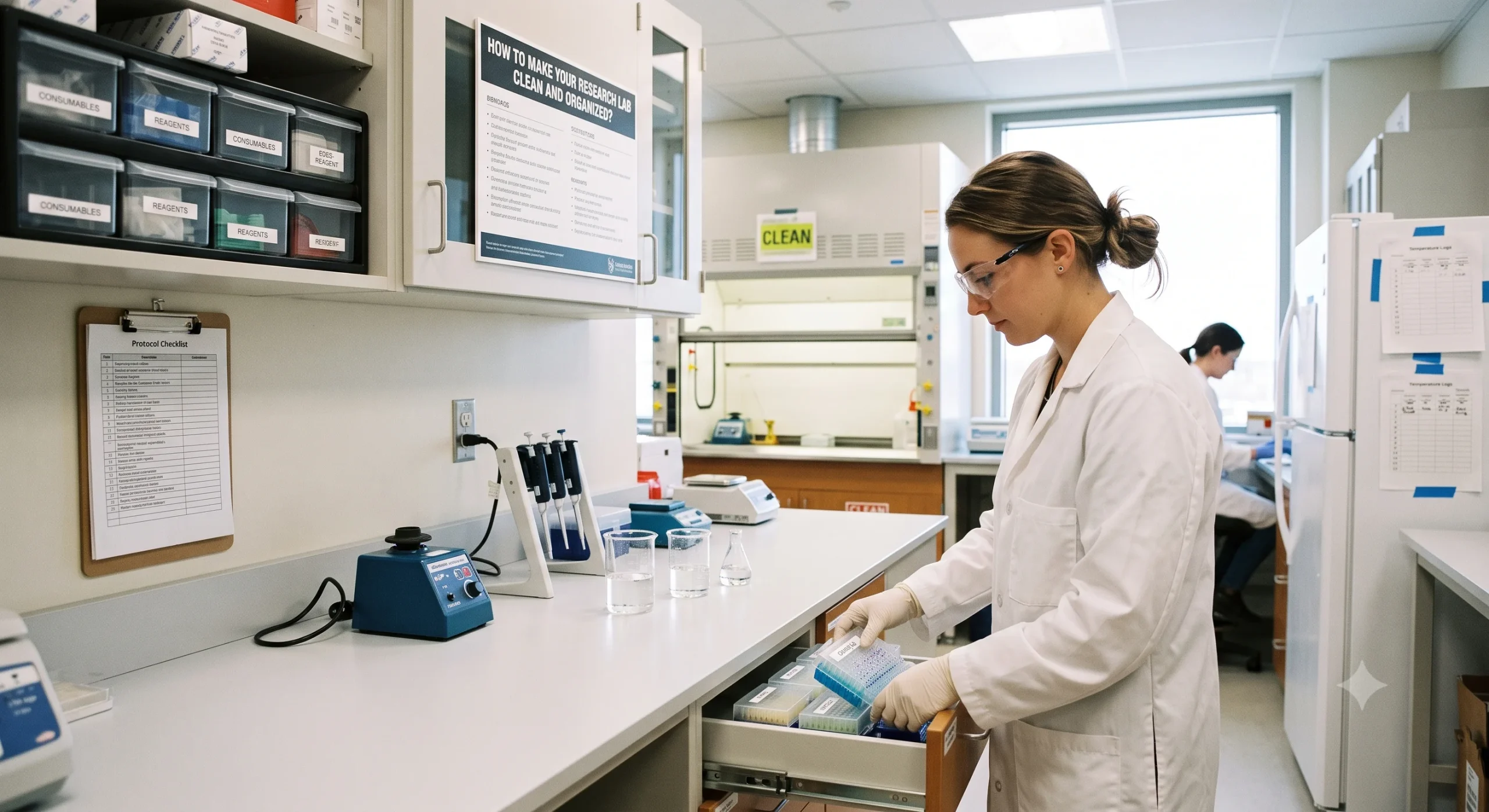
Finding a peptide that interacts with a particular protein can take considerable laboratory work. Researchers must choose molecules to investigate, measure their behavior, and decide which results deserve further study.
OpenPep is a new research project designed to make those decisions better informed. It aims to bring experimental peptide-binding data together with artificial intelligence, creating a shared resource for peptide discovery.
The University of Toronto announced the initiative in October 2026. Led by Joseph Brown, the project received US$2.3 million through the Google.org Impact Challenge: AI for Science. Its central goal is to help researchers predict which peptides may bind to particular proteins. You can read the University of Toronto’s OpenPep announcement. University of Toronto
For readers new to peptide science, the project raises several questions. What does peptide binding mean? How can AI help? And is OpenPep already available to use?
What Is OpenPep?
OpenPep is an initiative developing an open peptide–protein binding dataset and AI models for peptide discovery. The plan is to measure interactions in the laboratory, share the results, and use those measurements to guide predictions about other peptide–protein pairs.
The official OpenPep website describes three connected activities: producing target proteins, measuring peptide binding, and training predictive models. openpep.com
Think of it as building a shared experimental reference.
Instead of recording only a peptide’s name, the resource is intended to connect a molecule with a measured interaction. That makes the information more useful for questions such as: “Which candidate should we test against this protein next?”
The aim is to improve research decisions. A prediction would still need experimental confirmation.
Is OpenPep Available Yet?
As of 27 October 2026, OpenPep’s public data page lists its database and models as planned. It states that no public datasets have been released yet.
That means the project has been announced, but readers should not assume that a finished database or downloadable AI model is already available.
The best place to check for changes is the OpenPep data and model release page. OpenPep
This distinction is important when reading news about AI research. Funding, project development, public release, and demonstrated performance are separate milestones.
A Simple Introduction to Peptides and Protein Binding
Peptides are chains of amino acids. Their sequence—the order of those amino acids—is one part of what defines the molecule.
For a beginner-friendly explanation of how scientists determine that order, see Orion’s guide to peptide sequencing and amino acid identification.
A protein target is a protein researchers want to investigate. Peptide–protein binding describes an interaction in which a peptide associates with that protein.
Several related terms appear in this field:
| Term | Simple meaning |
|---|---|
| Peptide sequence | The order of amino acids in a peptide |
| Target protein | The protein being investigated |
| Binding affinity | A measure of how strongly molecules associate under defined conditions |
| Selectivity | Preference for one target over others |
| Peptide library | A collection of different peptides |
| AI model | Software trained to recognize patterns and make predictions |
| Experimental validation | Laboratory testing used to check a prediction |
Binding is only one research question. Scientists may also need to determine whether the interaction changes the protein’s activity, whether it occurs selectively, and whether it remains measurable in a more complex experimental system.
Who Is Behind OpenPep?
OpenPep combines expertise in experimental biology, chemistry, and machine learning.
Its official team page identifies four core researchers:
| Researcher | Affiliation | Relevant expertise |
|---|---|---|
| Joseph Brown | University of Toronto | Peptide discovery, mass spectrometry, and automated research |
| Christopher Ing | ProteinQure | Computational approaches to peptide discovery |
| Philip Kim | University of Toronto | Machine learning, structural biology, and screening |
| Keith Pardee | University of Toronto | Cell-free synthetic biology |
Together, their work connects physical experiments with computational analysis. That combination matters because useful AI predictions depend on reliable measurements. OpenPep
How Is OpenPep Intended to Work?
The project follows a cycle in which experiments produce data, models learn from those data, and predictions help guide further experiments.
1. Produce Target Proteins
The university announcement describes plans to produce up to 500 disease-relevant proteins using cell-free systems.
The number is a project aim, not a claim that 500 targets have already been completed. pharmacy.utoronto.ca
Cell-free protein synthesis uses biological machinery outside intact living cells to produce proteins. It gives researchers a way to prepare targets for measurement without relying on growing cells for each production step.
2. Measure Peptide Binding
OpenPep plans to examine synthetic peptide libraries, including molecules containing building blocks beyond the usual 20 amino acids.
Its methods include affinity-selection mass spectrometry, or AS-MS. In simple terms, this helps identify peptides recovered through their association with a target protein. Follow-up measurements are intended to quantify binding.
Readers can explore the planned approach on the OpenPep science page. OpenPep
3. Train AI Models
The experimental results will be used to train models that look for patterns connecting peptide chemistry with protein binding.
The intended benefit is prioritization: helping researchers choose promising candidates from a large number of possibilities.
4. Test Predictions and Add New Evidence
The team plans to test predictions experimentally and feed new results back into the resource.
This makes the project a continuing learning process. The university describes an approach in which additional measurements help refine later predictions. University of Toronto
Why Test AI on Proteins It Has Not Seen Before?
A model may perform well on familiar examples but struggle when the research question changes.
OpenPep’s stated evaluation plan includes keeping some proteins out of model training and then testing predictions against those targets. This is intended to examine whether the model can apply what it has learned to unfamiliar proteins. OpenPep
A simple comparison is a student learning mathematics.
If the student repeats answers to questions already practiced, that shows familiarity. Solving a new question provides stronger evidence that the student understands the underlying idea.
For AI peptide discovery, the equivalent question is whether a model helps with a target beyond the examples it learned from.
Future performance reports will matter more than broad claims that a system is “AI-powered.”
Why Does Open Access Matter for Peptide Research?
Experimental data often remain spread across laboratories and individual projects. That can make it difficult for other researchers to build on the work.
OpenPep’s stated ambition is to create a resource that researchers can use and contribute to over time. University of Toronto
There are several practical reasons shared data could be valuable:
- Comparison: Researchers can examine results against a common reference.
- Reuse: Measurements can support questions beyond the original experiment.
- Independent assessment: Other teams can inspect the evidence behind a model.
- Method development: Different computational approaches can be tested using shared examples.
These are potential benefits of well-documented open research. Their value depends on the quality, coverage, and usability of the eventual releases.
An open-access dataset also needs clear instructions. Users must understand what was measured, how results are represented, and which conditions apply to reuse.
OpenPep says public releases will include file information, column descriptions, and release-specific licensing details. Readers should check those terms when materials become available rather than assuming every form of reuse is unrestricted. OpenPep
Does AI Peptide Design Replace Laboratory Testing?
No. A computational prediction and a measured result are different forms of evidence.
Imagine that software ranks three peptides as likely binders for a target. The ranking helps decide what to investigate first. It does not establish that all three bind, behave selectively, or produce a particular biological effect.
Researchers still need to ask:
- Is the tested molecule correctly identified?
- Does it interact with the intended target?
- How reproducible is the result?
- Does it bind to other targets?
- Does binding change a measurable function?
This distinction also appears in other areas of peptide science. Orion’s article on how researchers study antimicrobial peptides and bacteria explains why surface binding, cellular entry, and functional effects require different measurements.
That broader lesson applies here: one positive result does not answer every scientific question.
Why Accurate Peptide Identification Matters for AI
A model can only learn from the information provided to it.
If an experimental record describes the wrong molecule, the model may connect an observed result with an incorrect chemical identity. If measurements from different conditions are treated as directly equivalent, comparisons can also become misleading.
For readers evaluating peptide research, useful questions include:
- Is the amino acid sequence clearly reported?
- Are chemical modifications recorded?
- Is the tested sample linked to an identifiable batch?
- Are the measurement conditions described?
- Are uncertain or incomplete results marked clearly?
These questions concern data quality generally; they should not be read as claims about problems in OpenPep.
Orion’s peptide research library provides introductory compound profiles and analytical references for readers building this background.
How Does This Relate to Familiar Research Peptides?
A discovery platform and a research-compound catalogue serve different purposes.
OpenPep is developing data and models to investigate peptide–protein binding. Catalogue pages describe particular compounds supplied for laboratory research.
For example, Orion’s GHK-Cu 100 mg compound page provides a concrete example of how a peptide-related compound is presented with chemical information. The GHK-Cu vs. AHK-Cu comparison offers additional background on related copper-peptide structures.
These links are background resources. Their inclusion does not mean that OpenPep has studied, validated, or endorsed these compounds or Orion’s compounds.
For this article, the scientific connection is the importance of clearly defined molecules and measured interactions—not an assumed commercial relationship.
Can Researchers Suggest Targets to OpenPep?
Yes. OpenPep currently provides a target nomination page.
The page allows researchers to select up to five targets using reviewed human UniProt entries. Users can search by protein name, gene name, or accession and explain why the targets are of interest.
A nomination is a suggestion for the research team, not a guarantee that the protein will be included. OpenPep
What Should Readers Watch for Next?
The most useful future updates will be concrete releases and experimental results.
| Milestone | Why it matters |
|---|---|
| First public dataset | Shows what information researchers can actually access |
| Dataset documentation | Explains how to interpret and reuse measurements |
| Model release | Makes computational tools available for assessment |
| Results on unseen targets | Tests whether predictions extend beyond familiar examples |
| Independent use | Shows whether other laboratories can benefit from the resource |
These are useful evaluation points, not announced completion dates.
As the project develops, readers should distinguish between what the team intends to build and what has been released and tested.
Frequently Asked Questions
What is OpenPep used for?
OpenPep is being developed to support peptide discovery through shared binding measurements and AI models. Its aim is to help researchers identify candidates worth testing against protein targets.
Who funds OpenPep?
The University of Toronto announced US$2.3 million in support through the Google.org Impact Challenge: AI for Science. University of Toronto
Can I download the OpenPep database now?
As of 27 October 2026, the official data page states that no public datasets have been released. Check that page for later updates. OpenPep
Does OpenPep prove that a peptide works?
A binding measurement or prediction addresses a specific interaction. It does not establish every property or possible use of a peptide. Additional experimental evidence is needed for broader conclusions.
Is OpenPep connected to Orion Peptides?
The sources reviewed for this article do not establish a partnership or affiliation. Orion’s links are included as educational and catalogue references.
What makes OpenPep worth following?
The project connects experimental data generation with open sharing and model development. Its future value will depend on the quality of its releases and how well its predictions hold up in independent experiments.
OpenPep’s next important step is turning its plans into accessible data and tested tools. For anyone following AI peptide discovery, that is where the most informative evidence will emerge.
This article provides scientific education and research news. Orion Peptides’ compounds are intended for laboratory research only, not for human or veterinary use.

