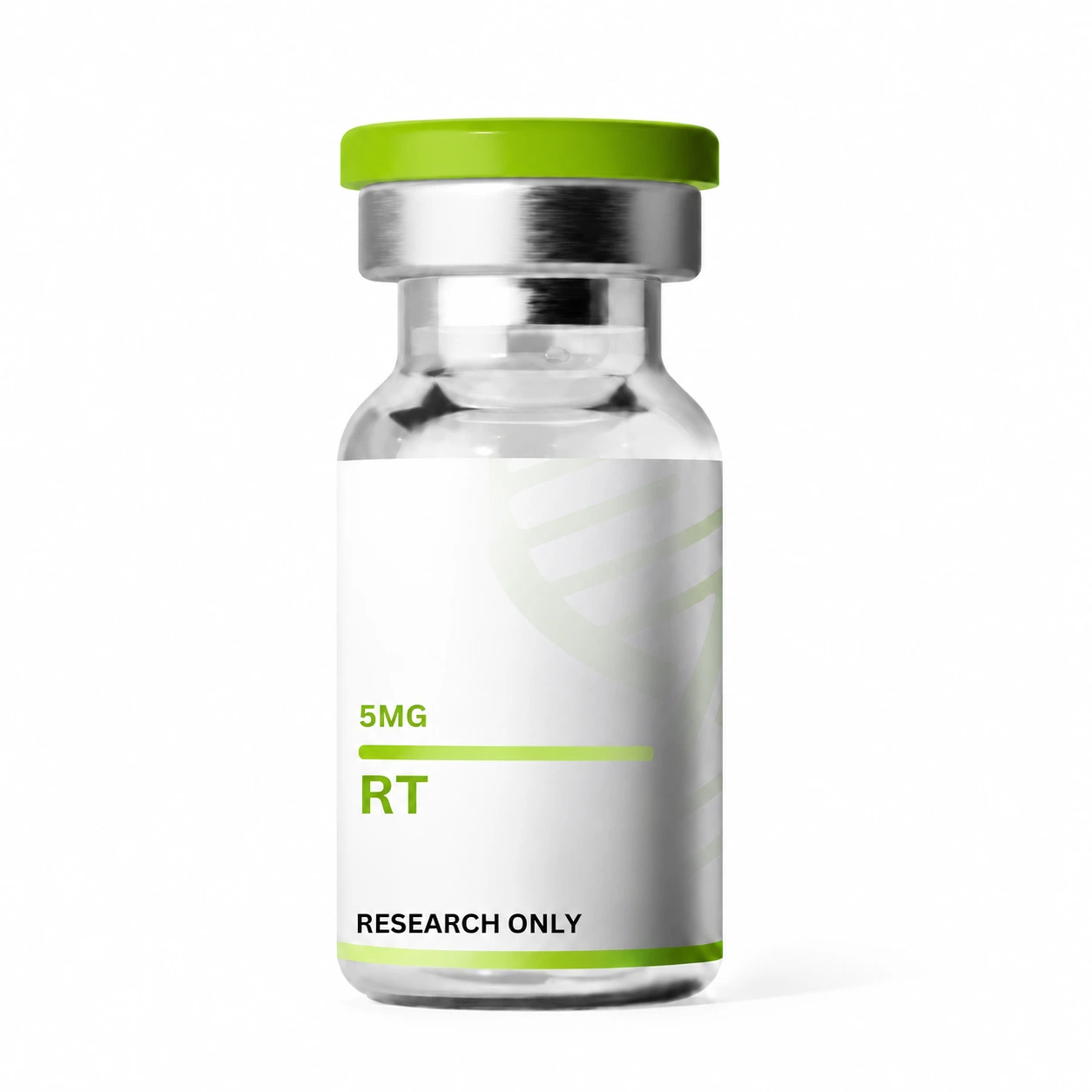
Buy RT 5 mg| 99% Purity| COA Available
RT (LY3437943) is an investigational peptide studied by research. It is designed to act on three key receptors in the body: G.L.P-1, G.I.P, and glucagon. Because of this, researchers are studying it for weight management, type 2 diabetes, and other metabolic conditions such as NAFLD and MASH.
Research background: Retatrutide research profile · Retatrutide Release Date
The 5 mg presentation refers to the total peptide content in the vial. Like other versions, RT is a long-acting compound with an approximate half-life of six days. In research settings, it is commonly administered through subcutaneous injection, which supports once-weekly dosing protocols.
This peptide is provided as a lyophilized (freeze-dried) powder. Before use in research, it must be properly reconstituted under controlled conditions.
As of 2026, RT is still in phase 3 clinical trials under the TRIUMPH program. It has not been approved by the FDA, EMA, or MHRA. It is not available for medical use, compounding, or personal consumption. RT is strictly intended for laboratory research, including in vitro studies, animal testing, and approved clinical trials.
How RT Works in Research
RT functions as a triple receptor agonist with differentiated activity across G.L.P-1, G.I.P, and glucagon receptors. Binding affinity occurs at nanomolar levels.
Reported EC50 values include:
G.I.P receptor: Approximately 0.064 nM
G.L.P-1 receptor: Approximately 0.775 nM
Glucagon receptor: Approximately 5.79 nM
In research models, RT activates several metabolic pathways.
- G.L.P-1 receptor activation reduces appetite through central signaling. It slows gastric emptying. It increases glucose-dependent insulin secretion. It also suppresses glucagon during hyperglycemia.
- G.I.P receptor activation enhances insulin release. It supports beta-cell function. It influences fat storage and metabolism.
- Glucagon receptor activation may increase energy expenditure and lipid metabolism, though its effects on glucose levels are carefully monitored in clinical trials.
This combined activity reduces food intake and improves insulin sensitivity. It also increases metabolic rate. Studies suggest a greater proportion of fat mass reduction compared to lean mass, though body composition outcomes may vary. This profile differs from single or dual agonists.
RT Peptide Structure and Properties
RT (LY3437943) is a synthetic peptide containing 39 amino acids. It is designed to interact with three receptors: G.L.P-1, G.I.P, and glucagon receptors. Its structure includes amino acid modifications and a fatty acid side chain that influence its stability and receptor activity.
Chemical Properties of RT
| Property | Correct Information |
| Compound Name | RT |
| Research Code | LY3437943 |
| Molecular Formula | C₂₂₁H₃₄₂N₄₆O₆₈ |
| Molecular Weight | Approximately 4,731 g/mol |
| CAS Number | 2381089-83-2 |
| PubChem CID | 171390338 (Triple G structural record) |
| Amino Acid Length | 39 residues |
| Peptide Type | Synthetic lipidated peptide |
| Receptor Targets | G.L.P-1R, GIPR, and GCGR |
| Physical Form | Lyophilized powder (supplier-dependent) |
| Research Status | Investigational compound |
The molecular formula, molecular weight, and CAS number are supported by published chemical records.
Findings from RT Studies
RT shows strong results in metabolic research. Data come from preclinical studies and phase 2 trials.
1. Obesity Research About RT
A phase 2 randomized trial published in NEJM included 338 adults. Participants had obesity or overweight with comorbidities. Once-weekly RT produced dose-dependent weight loss. At 48 weeks, the 12 mg dose achieved about 24 percent weight reduction. Placebo groups showed minimal change.
Most participants reached significant milestones. Over 90 percent lost at least 10 percent body weight, and more than 80 percent lost at least 15 percent. Improvements were also noted in waist size, lipid levels, and blood pressure.
2. Type 2 Diabetes Research About RT
HbA1c reductions up to 2.02 percent were in phase 2 trials. Results exceeded those of the placebo and some comparator arms. Participants also experienced substantial weight loss.
3. Liver Fat and NAFLD Models
In participants with elevated liver fat, RT reduced hepatic fat by over 80 percent. Most high-dose participants reached normal liver fat levels.
Additional Research Areas Where RT May Benefit
Phase 3 TRIUMPH trials study osteoarthritis, cardiovascular risk, kidney disease, and MASH. Some late-stage trial reports suggest weight reductions approaching 25–29% at higher doses over extended periods.
Safety data show mostly mild gastrointestinal effects. These include nausea, diarrhea, and vomiting. Events are dose-related and often improve with titration. Serious hypoglycemia and major cardiac events remain rare in trials.
Early data suggest greater efficacy than dual agonists. RT serves as a benchmark compound in triple-hormone research.
RT Peptide Prices at Orion Peptides
Batch testing & COA
Every batch of Orion Peptides retatrutide is tested by a third-party laboratory, Hyte Research Division. Each certificate reports identity and purity by HPLC, measured quantity per vial, and endotoxin screening. Certificates are published on our COA Verification page.
How to read a certificate: Retatrutide COA guide · 7-point COA credibility check
Disclaimer
RT is an investigational research compound. Currently, in 2026, it remains in phase 3 clinical trials. It is not approved for prescription or commercial use. Any non-trial compounds labeled as RT may be counterfeit. Such compounds pose serious safety risks. Clinical and preclinical data do not guarantee future approval.
No claims are made regarding safety or efficacy. Use is limited to qualified research settings. IRB or ethics approval is required for human studies. Regulatory restrictions may apply.
Referenced Citations